HOME        |        ABOUT        |        COPYRIGHT        |        CONTACT        |         RECIPE INDEX        |         INDIAN THAALIS        |         MILLET RECIPES        |        EVENTS' ROUNDUP        

Showing posts with label Amaranth Flour / Rajgira Flour. Show all posts

Sunday, July 4, 2021

Rajgira Kadhi / Vrat Ki Kadhi / Farali Kadhi

A Indian kadhi generally is a spicy, yogurt based gravy which is thickened by the use of chickpea flour. Other flours are substituted for chickpea flour aka besan especially during the Navratri fasting season, a tidbit I have learnt from the blogging world over the years. I tried recently amaranth flour based kadhi aka rajgira kadhi and it turns out that even a basic version kadhi without all the frills can taste good too. No chickpea flour, onions, tomatoes, asafoetida, mustard seeds, turmeric or dried mango powder in this version but one wouldn't call this gluten free gravy a flavorless one. We at least didn't mind even a bit and I am sure that any kadhi lover would enjoy this amaranth flour kadhi as well. The lackluster color of the kadhi may be a giveaway that it may not be the regular version kadhi but one would probably just assume the lack of turmeric in it.

Whisk the yogurt well to a uniform consistency. I was lazy to do so when I made this and that's why the kadhi looks curdled but it is not so. If not using this as a fasting meal, feel free too use turmeric, mustard seeds, asafoetida, onion, salt and other stuff one would prefer in a kadhi. Even buckwheat flour or chestnut flours can be used in place of amaranth flour in the recipe.

Ingredients: (2 servings)
1 cup yogurt
3/4 cup water
1/4 cup amaranth flour
2 tsp. ghee / oil
1 tsp. cumin seeds
1 tsp. ginger paste or grated ginger
2 finely minced green chillies or 1 tsp. green chili paste
Rock salt to taste
Minced cilantro to garnish

Directions:
* Whisk yogurt well in a bowl. Add amaranth flour to the yogurt and mix until there are no lumps. Yogurt and flour together can be whisked in a blender as well.
* Heat oil in a pan and add cumin seeds. When they start to brown add ginger and chillies. Saute for few seconds and then add water.  Next add yogurt - amaranth flour mixture and rock salt to the pan. Continue to cook on low flame stirring intermittently until the mixture thickens. If the mixture appears to be thicker than the preferred consistency, add extra water and bring the mixture again to a boil and turn off the stove.
* Garnish with cilantro and serve warm. It can be served with any cooked grains allowed during fasting or rice / rotis.

Friday, October 12, 2018

Rajgira Sheera / Amaranth Flour Halwa

Coinciding with the Navratri season, here is one more dish associated with it and the fasting regimen. This halwa / sheera is prepared using amaranth flour / rajgira atta and seems to be a popular dessert fit for the season. Not a tricky one to prepare but patiently roasting the flour in ghee without burning it until it turns light brown is important. 
The halwa can be prepared with either milk or water. It is rich because of the ghee and milk used and therefore eaten in small quantities. I used jaggery instead of sugar and 1/4 cup of it makes it not an overtly sweet dish but one can increase the sweetener by a couple of tbsp. more if one prefers a sweeter halwa. The consistency of this halwa would be smoother compared to the sooji halwa since flour is the base here.

Ingredients
1/4 cup ghee (I used less.)
1/2 cup rajgire ka atta / amaranth flour
1 and 1/4 cup milk
4 - 6 tbsp. sugar (I used jaggery instead.)
2 pinches of ground cardamom
Nuts to garnish

Directions:
* Heat ghee in a pan and add amaranth flour to it. Start toasting until you notice the aroma and the mixture changes to light brown color, about 6 to 8 minutes.
* Meanwhile, heat milk and sugar in a microwave or in a pan and keep aside. No need to boil the milk.
* Add milk and cardamom to the toasted flour gradually in small increments from the sides of the pan, stirring continuously and quickly to avoid forming lumps. Cook on low flame covered until the mixture thickens and the ghee starts to release along the edges.
* Garnish with slivered almonds / any other nuts and serve warm.

Comments

Wednesday, October 10, 2018

Amaranth & Wheat Flour Rotis

Amaranth is a pseudocereal like quinoa and buckwheat and has been cultivated over thousands of years in various parts of the world. It is a protein rich grain with low glycemic index and the cooked seeds, flour and greens are all edible. It is gluten free making it an healthier substitute over wheat for people with gluten  intolerance. I am not new to the plant since a couple of species of amaranth leaves are eaten through out India and it happens to be in fact, one of my favorite greens while growing up.

On the other hand, amaranth flour is not consumed in south India but seems to be a staple ingredient during fasting days of Navratri in many northern and western kitchens of India, where it goes by the name rajgire ka atta. The seeds by the way are called ramdana / rajgira. Coincidentally, Navratri began yesterday and people who practice the fasting ritual (which is in a way to detoxify one's system) abstain from grains / millets during this period and replace them with ingredients like amaranth flour, buckwheat flour, chestnut flour and tapioca pearls which are not typical pantry staples of Indian kitchens excepting the last one.  

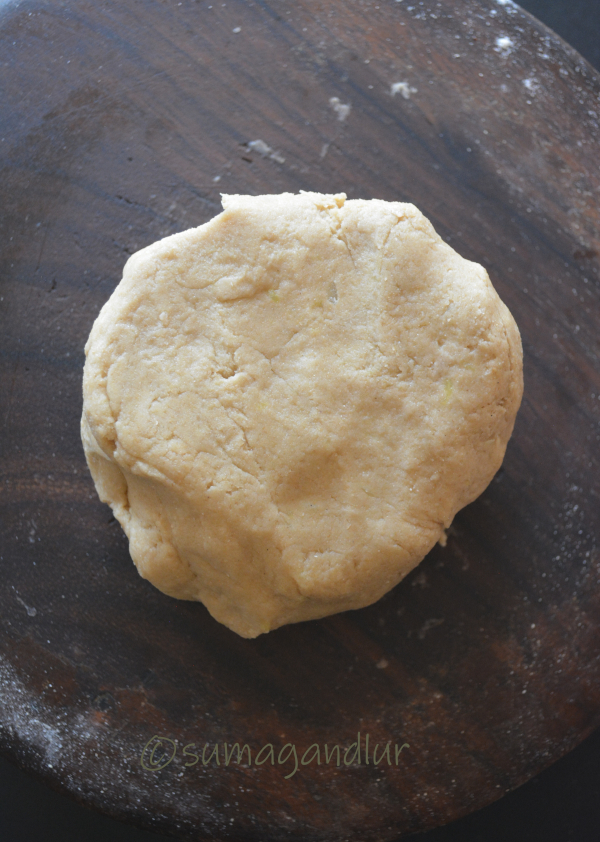
I have started using amaranth flour in my kitchen about an year ago and it goes mainly in making rotis like these or thalipeeth. If one is new to roti making, amaranth flour is not the right choice to start your practice with. That would be atta aka the Indian wheat flour. Amaranth flour is gluten free and so some starch like mashed potatoes need to go along with it to form a dough. If adhering to the fasting rituals, omit the wheat flour and salt from the recipe and use rock salt instead. The resulting rotis with this dough are thinner and softer than the regular rotis. They can be served with a spicy curry / lentil based gravy. Or make rotis spicier by adding minced green chillies & ginger / red chili powder to the dough while preparing and serve with plain yogurt.
Ingredients: (Yield 15 rotis)
1 big sized potato
2 cups amaranth flour (rajgira atta)
1/2 cup wheat flour (atta) + extra for dusting
1/8 tsp. salt (optional)
About 1/4 cup oil (I used canola oil.)

Directions:
* Peel and boil the potato in a microwave. Let it come to room temperature and mash the potato finely, leaving no lumps. Don't throw away the water used to boil the potato as it can be used to make the roti dough. (I had slightly less than 1/2 cup of mashed potato. It doesn't matter if  the potato is slightly less or more than the quantity I used.)

* Combine flours, salt and mashed potato in a mixing bowl. Rub the potato well into the flour. Grease your palms if  needed since the mixture tends to get sticky while making the dough. Add water gradually in slow increments and make a soft, pliable dough. (I needed slightly less than 1/2 cup water.) Add a tbsp. or two of oil to the dough and work the dough for about 30 seconds. Cover and let the dough rest for about 30 minutes. (I rested it for about 90 minutes.) 
* Heat a skillet / rimless non-stick pan on medium flame. (Don't heat the griddle yet if not well versed with the routine of rolling and toasting parts simultaneously. One can roll out some dough circles prior to heating a griddle.) 
* Grease your palms with oil and divide the mixture into 12 - 15 portions and roll them into balls and keep the covered.  Grease your palms again if needed and work with one ball at a time. Press the ball into a disc between palms and gently roll into a thin circle on a dusted rolling board / clean counter top using a rolling pin. Dust a little extra flour in between, only if needed.
 
* Place the rolled out dough circle on the hot griddle. When the surface starts to dry out and bubbles appear on the bottom side, flip it with a spatula. Gently press it with the spatula all over. Pour 1/4 tsp of oil around the edges and surface and flip again. Press again with the spatula and flip. Toast it until both sides have brown spots developed all over. It would take a few seconds on each side to cook once the skillet is hot. Transfer the cooked roti onto a clean plate and repeat the process with the rolling and toasting parts. Keep the cooked rotis covered until serving.
* Serve them with a spicy accompaniment.

Comments

Saturday, March 17, 2018

Amaranth Flour - Pistachio Balls / Rajgira Ke Atta - Pista laddu

Here are some nutritious and healthy laddu for adults and kids alike. These are gluten free and are easy to make. I thought of using a millet flour for this week's theme and zeroed on amaranth flour. I added pistachios but any or a mixture of nuts can be substituted here. We felt that they tasted similar to the classic sunnundalu of Andhra which are made using husked black gram / sabut urad dal and jaggery and had a hint of milk powder texture.

Ingredients: (Yield 8 laddus)
3 tbsp. Ghee
1/2 cup Rajgira ke atta / Amaranth flour
1/4 cup shelled pistachios
6 to 8 tbsp. powdered jaggery
1/8 tsp. ground cardamom
Method:
* Heat a pan and add ghee. When ghee melts, add amaranth flour and toast it on low flame until you start to smell the aroma, about five minutes.
* Lightly toast the pistachios and keep them aside to cool.
* Add the pistachios to a food processor or a blender and grind them coarsely. Next add the remaining ingredients and pulse a few times to combine.
* Transfer the ingredients onto a plate or bowl. When the mixture is cool enough to handle, shape them into balls. Shape the laddus when the mixture is still warm.
* Let them cool and store them in an airtight container.
bmlogo
This goes to Blogging marathon #86, under the theme 'All that come round are laddus?'. Check out the page to read what other marathoners are cooking.

Comments

Monday, October 10, 2016

Rajgira Thalipeeth / Upvaas Thalipeeth / Amaranth Flour Flatbread


Fasting during religious holidays, abstaining from certain or all food as a means to spiritual growth is common in many cultures around the world and Indians too are not an exception to this. Depending upon where you live in India, the word 'fasting' goes by the terms upavas, upavaasa, upavaasam and so on. As a south Indian, I have seen my mother and sometimes my father fasting a couple of times in a year like on a Vaikunta Ekadashi day or during Mahashivaratri. All my parents would have on a fasting day is a cup of coffee once or twice until they broke their fast in the evening after visiting a temple. My would prepare a simple meal like upma and sooji halwa or something along the lines of it to avoid rice. 

I have learnt over the years through friends and acquaintances from the other parts of India that they do fast on other occasions like Navratri for example, which is going on right now and have dietary restrictions set for the day. My Gujarati neighbor was once lamenting that his mother is always fasting in the name of one god or another. In fact, once during our initial days of acquaintance, she asked about my fasting rituals only to be left surprised to hear that I never fast. Hindus usually stick to a vegetarian diet during religious holidays and avoid stuff like onion and garlic. Some regions avoid the salt too and use rock salt instead. And folks mainly try to avoid the grains which they eat on a regular basis like wheat and rice. In south, they try to avoid rice since their usual meals are set around it and many will get through the day only consuming fruits and milk during the fasting period. They don't have any particular 'fasting diet' as North / Western or Central regions of India do which is called 'Vrat ka Khaana'. Buckwheat flour, Chestnut flour, Sago pearls, Amaranth flour, Dairy products are some of the ingredients around which a fasting diet is built. 
 
I have prepared these rajgira thalipeeth following this sabudana thalipeeth recipe and they qualify for the fasting diet. They remain soft once they cool down unlike the other thalipeeth/rotti versions and so they make a great lunch box option as well. These healthy and yummy thalipeeths are made with amaranth flour and are a great gluten free option. I made them spicier and did not need any accompaniments. However they can be had with a spicy pickle or something spicy that meets the dietary restrictions. 

Ingredients: (Yields 3 thalipeeth)
1 cup rajgira flour / amaranth flour
About 1/2 cup cooked and mashed potato 
2 tbsp. toasted, skinned and roughly crushed peanuts
1 tsp. cumin seeds
2 green chilies, finely chopped
1 tsp. grated ginger
2 tbsp. finely minced cilantro
Rock salt / Sendha namak to taste (or salt if not fasting.)
Ghee / Oil to make thalipeeth

Method:
* Grease your palms and combine everything except the ghee / oil in a mixing bowl. Add a tsp. of oil and roll into a firm dough. There is no need to add any water since the moisture from the cooked potato would be enough to bring the mixture together. In case, if the mixture appears dry, add warm water in tsp. increments and work the dough.
 
* Divide the mixture into three portions and shape them into balls. Work with one ball at a time and keep the rest covered. Pour 1/2 tsp. of ghee / oil at the center of a shallow pan / griddle.
* Place one dough ball directly at the center of the pan. Wet your fingers with water and gently pat the ball into a thin circle. Sprinkle 1/2 tsp. oil over and around the edges the thalipeeth and cover. 
Thalipeeth dough can also be shaped on a thick greased plastic sheet instead of doing it directly on the pan. Once shaped, the dough circle can be transferred to the griddle by placing the dough side on the plan and peeling the plastic sheet away from the pan.
* Switch on the stove and cook on medium flame until the bottom side turns golden brown. Flip and cook until the other side turns golden brown too.
* Repeat the process with the remaining dough balls.
 
This goes to Blogging marathon #69, under the theme 'Flatbreads'. Check here to find out what the other marathoners are cooking as part of the BM.

Comments