Amaranth & Wheat Flour Rotis


I have started using amaranth flour in my kitchen about an year ago and it goes mainly in making rotis like these or thalipeeth. If one is new to roti making, amaranth flour is not the right choice to start your practice with. That would be atta aka the Indian wheat flour. Amaranth flour is gluten free and so some starch like mashed potatoes need to go along with it to form a dough. If adhering to the fasting rituals, omit the wheat flour and salt from the recipe and use rock salt instead. The resulting rotis with this dough are thinner and softer than the regular rotis. They can be served with a spicy curry / lentil based gravy. Or make rotis spicier by adding minced green chillies & ginger / red chili powder to the dough while preparing and serve with plain yogurt.

1 big sized potato
2 cups amaranth flour (rajgira atta)
1/2 cup wheat flour (atta) + extra for dusting
1/8 tsp. salt (optional)
About 1/4 cup oil (I used canola oil.)
Directions:
* Peel and boil the potato in a microwave. Let it come to room temperature and mash the potato finely, leaving no lumps. Don't throw away the water used to boil the potato as it can be used to make the roti dough. (I had slightly less than 1/2 cup of mashed potato. It doesn't matter if the potato is slightly less or more than the quantity I used.)
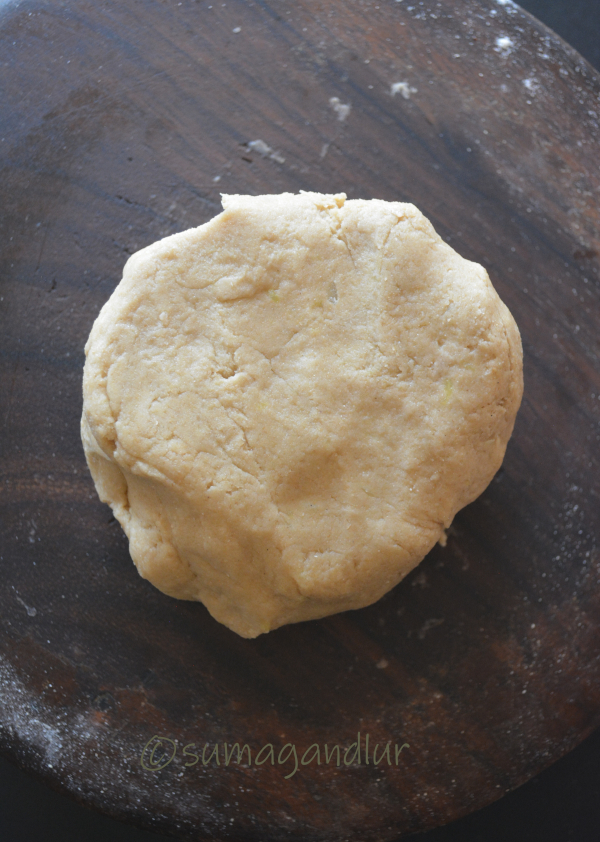
* Combine flours, salt and mashed potato in a mixing bowl. Rub the potato well into the flour. Grease your palms if needed since the mixture tends to get sticky while making the dough. Add water gradually in slow increments and make a soft, pliable dough. (I needed slightly less than 1/2 cup water.) Add a tbsp. or two of oil to the dough and work the dough for about 30 seconds. Cover and let the dough rest for about 30 minutes. (I rested it for about 90 minutes.)
* Heat a skillet / rimless non-stick pan on medium flame. (Don't heat the griddle yet if not well versed with the routine of rolling and toasting parts simultaneously. One can roll out some dough circles prior to heating a griddle.)
* Grease your palms with oil and divide the mixture into 12 - 15 portions and roll them into balls and keep the covered. Grease your palms again if needed and work with one ball at a time. Press the ball into a disc between palms and gently roll into a thin circle on a dusted rolling board / clean counter top using a rolling pin. Dust a little extra flour in between, only if needed.

* Place the rolled out dough circle on the hot griddle. When the surface starts to dry out and bubbles appear on the bottom side, flip it with a spatula. Gently press it with the spatula all over. Pour 1/4 tsp of oil around the edges and surface and flip again. Press again with the spatula and flip. Toast it until both sides have brown spots developed all over. It would take a few seconds on each side to cook once the skillet is hot. Transfer the cooked roti onto a clean plate and repeat the process with the rolling and toasting parts. Keep the cooked rotis covered until serving.
* Serve them with a spicy accompaniment.
Comments