Avarekaalu Gojju
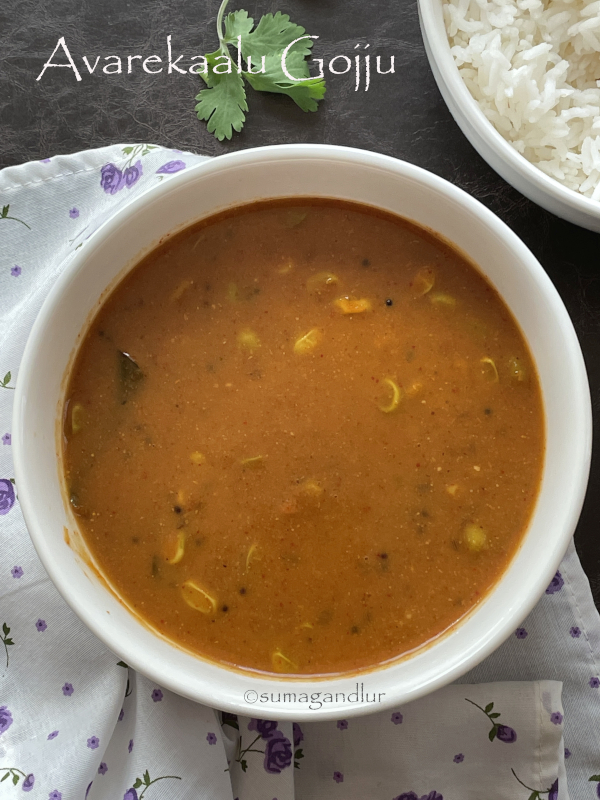
Avarekaalu, the fresh field beans is the most awaited winter produce in and around Bangalore. Come December, every kitchen is flooded with avarekalu preparations, ranging from breakfast dishes to desserts. In fact, 'thindi beedi' aka eat street in V.V.Puram which has become a focal point for street food in Bangalore in the recent years hosts an annual 'avarekayi mela'. It has been a hit among patrons, which showcases avarekayi delicacies.
Here are some of the recipes I have posted previously featuring avare kaalu aka fresh field beans.
Today, I thought of posting a gojju recipe using avarekaalu. Gojju, a sweet and spicy gravy made with some select vegetables or even fruits is a side dish from Karnataka. A special spice powder goes into the preparation and is commonly prepared at homes or even served at functions / festive meals in the region. I have made this gojju following the traditional method but I have seen preparations online using tomato, onions and other spices.
Here are some of the gojju recipes I have posted previously.
The preparation is quite simple and don't be put off by the long list of the ingredients given here. Some go into tempering and some for grinding. Try this if you haven't earlier and you would not be disappointed. A large batch of gojju pudi can be prepared in advance and stored, which makes this gojju preparation, a quick and easy one.
Ingredients for spice powder / gojju pudi:
1 tbsp. Bengal gram / split chickpeas / chana dal
1/2 tbsp. skinned black gram / urad dal
1 tbsp. coriander seeds / sabut dhaniya
3 red chilis, spicy variety
2 Byadagi red chilis
1 tsp. white sesame seeds
1/4 cup grated, dry coconut
1/2 tbsp. skinned black gram / urad dal
1 tbsp. coriander seeds / sabut dhaniya
3 red chilis, spicy variety
2 Byadagi red chilis
1 tsp. white sesame seeds
1/4 cup grated, dry coconut
Ingredients for gojju:
1 tsp. oil
1/2 tsp. mustard seeds
2 pinches asafetida powder
1 sprig of curry leaves
1/8 tsp. turmeric powder
1/2 tsp. salt
Jaggery to taste (I used 2 stevia packets.)
1 cup water
2 tbsp. thick, tamarind pulp or to taste*
1/2 cup avarekaalu
1/4 cup gojju powder
1 tsp. oil
1/2 tsp. mustard seeds
2 pinches asafetida powder
1 sprig of curry leaves
1/8 tsp. turmeric powder
1/2 tsp. salt
Jaggery to taste (I used 2 stevia packets.)
1 cup water
2 tbsp. thick, tamarind pulp or to taste*
1/2 cup avarekaalu
1/4 cup gojju powder
* Use tamarind to taste
* Toast Bengal gram and skinned black gram separately in a sauté pan till they turn reddish and remove. Add coriander seeds to the pan and sauté on low flame till they turn a few shades darker. Similarly toast sesame seeds, methi seeds and chilies for a few seconds.
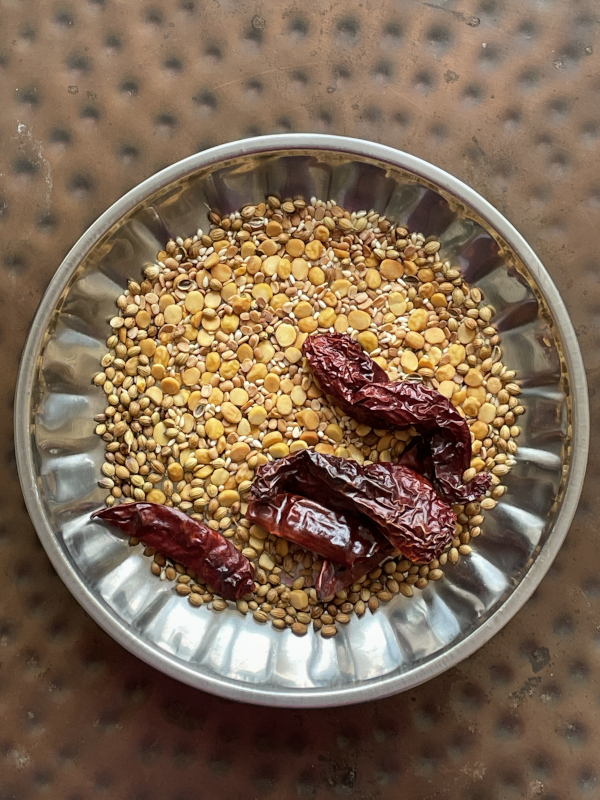
* Cool the toasted ingredients and grind into a fine powder adding coconut. (Oil can be used to toast the spices but I skip it.)

Preparing gojju:
* Soak a big lemon sized tamarind in water, in advance. Squeeze The tamarind well using fingers to collect the thick pulp.
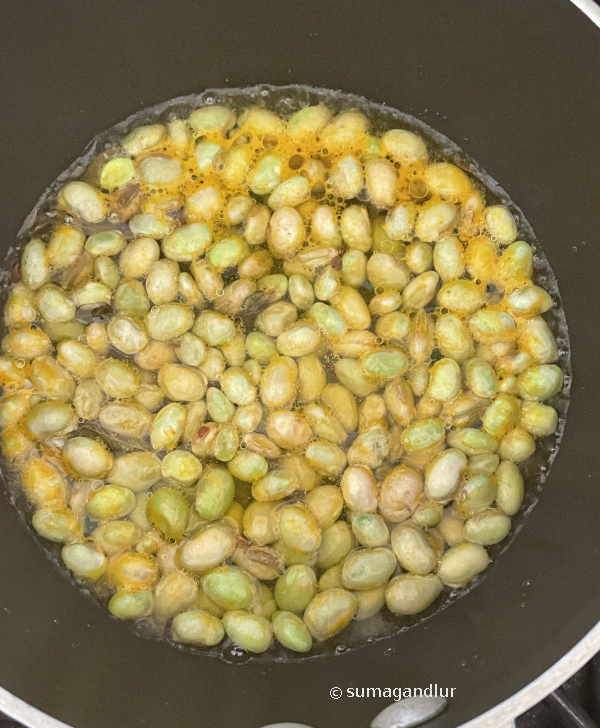
* Heat oil in a kadai/pan and add mustard seeds. When the they start to sputter, add asafetida powder and curry leaves. Then add the avare kaalu / fresh field beans, turmeric powder, salt and about 1/2 cup of water. Cook until the avarekaalu turn fork tender. (Avarekaalu can be cooked in advance in a microwave with a little water.)
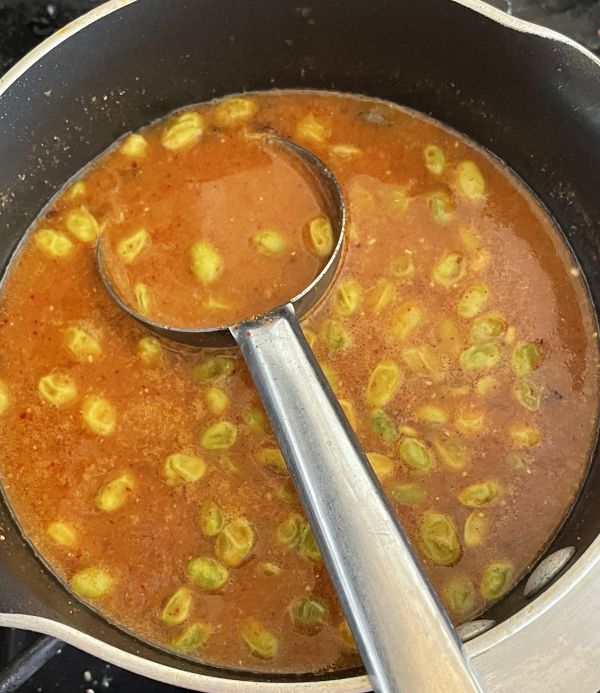
* Then add the gojju powder, tamarind, jaggery, and about a cup of water (or as needed). Stir well and let the mixture cook on medium flame. Check the flavor and adjust the seasonings, if any needed.
* Let the mixture come to a boil. Lower the heat setting and cook until the gojju thickens.
* Serve it warm with rotis / rice.
This is going to be my contribution to this week's Blogging marathon, with the theme 'Winter Produce'. Check the page link to see what other marathoners are cooking.

