HOME        |        ABOUT        |        COPYRIGHT        |        CONTACT        |         RECIPE INDEX        |         INDIAN THAALIS        |         MILLET RECIPES        |        EVENTS' ROUNDUP        

Showing posts with label Easy Side Dishes. Show all posts

Monday, January 10, 2022

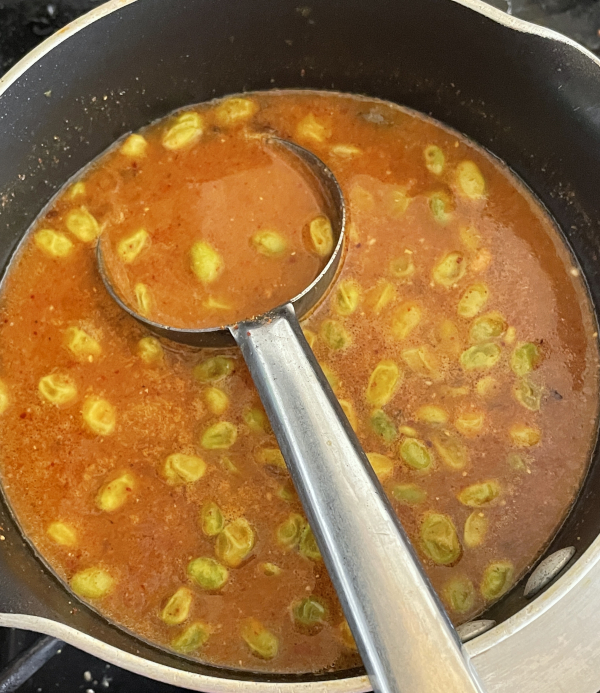
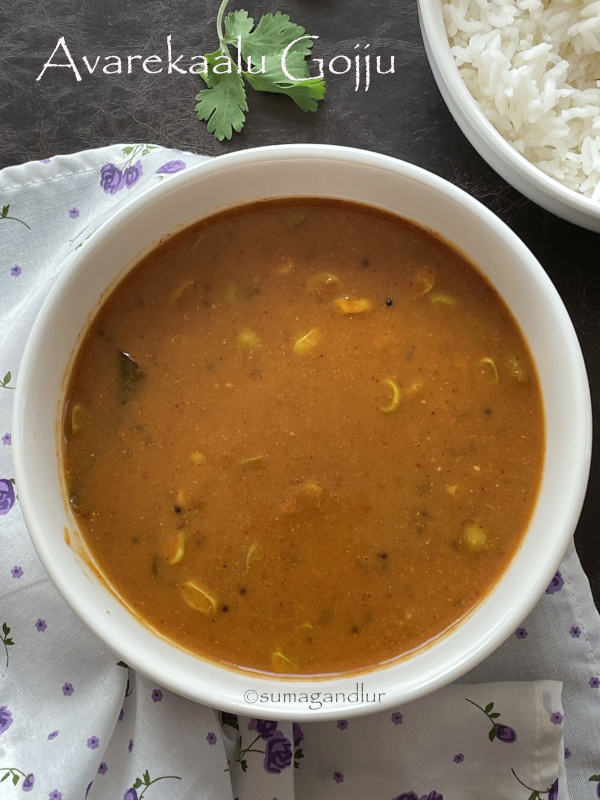
Avarekaalu Gojju

Avarekaalu, the fresh field beans is the most awaited winter produce in and around Bangalore. Come December, every kitchen is flooded  with avarekalu preparations, ranging from breakfast dishes to desserts. In fact, 'thindi beedi' aka eat street in V.V.Puram which has become a focal point for street food in Bangalore in the recent years hosts an annual 'avarekayi mela'. It has been a hit among patrons, which showcases avarekayi delicacies. 

Here are some of the recipes I have posted previously featuring avare kaalu aka fresh field beans.

Today, I thought of posting a gojju recipe using avarekaalu. Gojju, a sweet and spicy gravy made with some select vegetables or even fruits is a side dish from Karnataka. A special spice powder goes into the preparation and is commonly prepared at homes or even served at functions / festive meals in the region. I have made this gojju following the traditional method but I have seen preparations online using tomato, onions and other spices.

Here are some of the gojju recipes I have posted previously.

The preparation is quite simple and don't be put off by the long list of the ingredients given here. Some go into tempering and some for grinding. Try this if you haven't earlier and you would not be disappointed. A large batch of gojju pudi can be prepared in advance and stored, which makes this gojju preparation, a quick and easy one. 

Ingredients for spice powder / gojju pudi:
1 tbsp. Bengal gram / split chickpeas / chana dal
1/2 tbsp. skinned black gram / urad dal
1 tbsp. coriander seeds / sabut dhaniya
3 red chilis, spicy variety
2 Byadagi red chilis
1 tsp. white sesame seeds
1/4 cup grated, dry coconut

Ingredients for gojju:
1 tsp. oil
1/2 tsp. mustard seeds
2 pinches asafetida powder
1 sprig of curry leaves
1/8 tsp. turmeric powder
1/2 tsp. salt
Jaggery to taste (I used 2 stevia packets.)
1 cup water
2 tbsp. thick, tamarind pulp or to taste* 
1/2 cup avarekaalu
1/4 cup gojju powder
* Use tamarind to taste

Preparing spice powder:
* Toast Bengal gram and skinned black gram separately in a sauté pan till they turn reddish and remove. Add coriander seeds to the pan and sauté on low flame till they turn a few shades darker. Similarly toast sesame seeds, methi seeds and chilies for a few seconds.
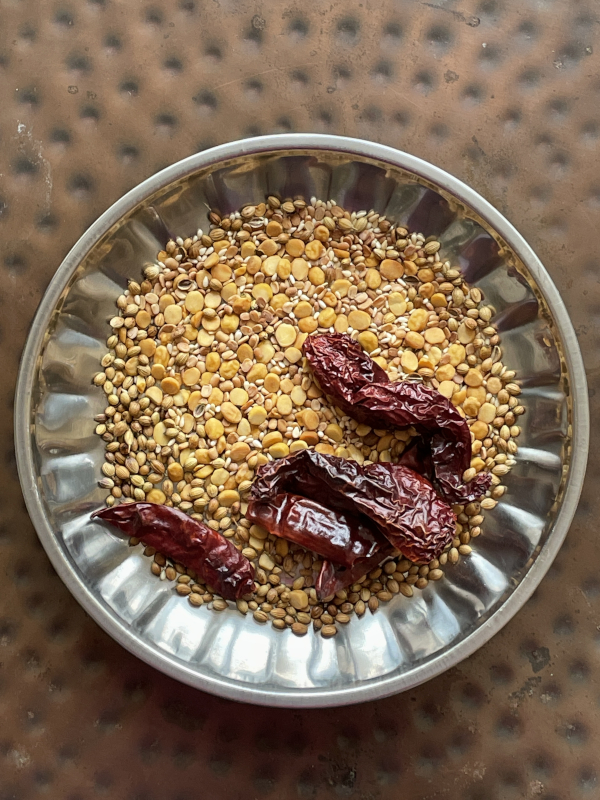
 
* Cool the toasted ingredients and grind into a fine powder adding coconut. (Oil can be used to toast the spices but I skip it.)
Preparing gojju:
* Soak a big lemon sized tamarind in water, in advance. Squeeze The tamarind well using fingers to collect the thick pulp.  
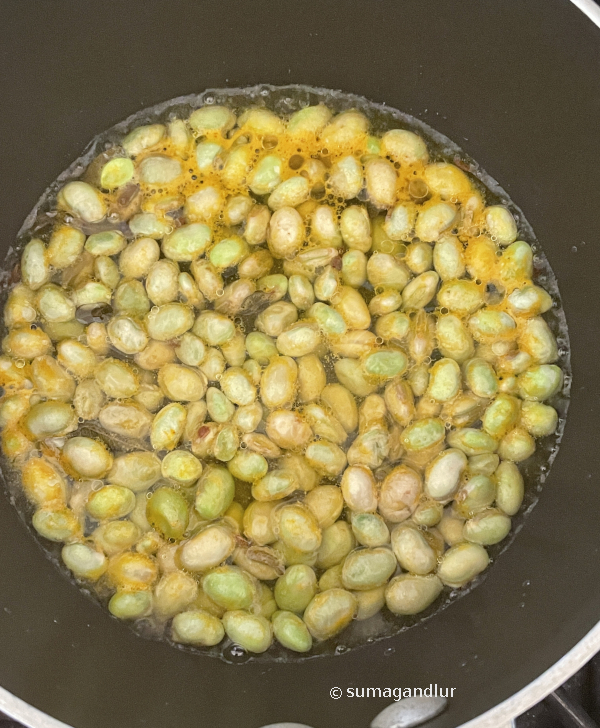
* Heat oil in a kadai/pan and add mustard seeds. When the they start to sputter, add asafetida powder and curry leaves. Then add the avare kaalu / fresh field beans, turmeric powder, salt and about 1/2 cup of water. Cook until the avarekaalu turn fork tender. (Avarekaalu can be cooked in advance in a microwave with a little water.)
* Then add the gojju powder, tamarind, jaggery, and about a cup of water (or as needed). Stir well and let the mixture cook on medium flame. Check the flavor and adjust the seasonings, if any needed.
* Let the mixture come to a boil. Lower the heat setting and cook until the gojju thickens.
* Serve it warm with rotis / rice.

This is going to be my contribution to this week's Blogging marathon, with the theme 'Winter Produce'. Check the page link to see what other marathoners are cooking.

Sunday, September 5, 2021

Dahi Aloo ~ Potatoes in Spicy Yogurt Gravy

 
Today's recipe 'dahi aloo' is a quick and easy side dish that has it's roots in the North Indian cuisine. As the name indicates, the two main ingredients of this recipe are dahi and aloo which are yogurt and potatoes and the rest of the ingredients used are a few spices / spice powders, which are all staples of an Indian kitchen. The dish can be cooked under 15 minutes if one has cooked potatoes handy.  

Dahi aloo is prepared in the north Indian states with minor variations. The preparation is along similar lines of a 'kadhi' sans chickpea flour. Using onions and tomatoes in the dish is optional. Garam masala / kasuri methi can be added as well for flavoring if preferred. The cooked potatoes are roughly mashed and used in the recipe. The potatoes are neither completely mashed into a mush nor cooked as in a potato fry recipe. The whisked yogurt along with spices is added and cooked on a low heat setting. The flavors used in the recipe are quite basic ones and this dish is a perfect example of  a 'home cooked meal' where simple flavors shine through. 

Use yogurt which is slightly on the sour side or add some amchur / lemon juice to the dish for some tanginess. One of the things to keep in mind while cooking dahi aloo is not to curdle the yogurt. Avoid adding yogurt to the hot pot since chances of it curdling are high if done so. Whisking a tsp. of chickpea flour / rice flour / corn starch, along with yogurt also helps. I have added some tips in the recipe directions below, that I use to avoid curdling yogurt when making these kind of dishes.

Ingredients: (yield 2 servings)
2 big potatoes / 4 small ones
2 tsp. ghee / oil
1 tsp minced / grated ginger
1 green chili, finely chopped
A pinch of asafoetida
1/2 cup yogurt 
1 cup or slightly more water
1 tsp. chickpea flour / besan
Salt to taste
1/8 tsp. turmeric powder
1/2 tsp. coriander powder to taste
1/4 tsp. chili powder or to taste
Minced cilantro to garnish

Directions:
* Peel and cut potatoes into big cubes. Pressure cook them for 2 or 3 whistles adding enough water. Or alternatively, they can be cooked in a pot on stove top or in a microwave until fork tender. Add the potatoes to a colander and drain. Run cold water over them. (I do this to keep everything at room temperature when adding the yogurt to avoid it from curdling.)
* Add ghee / oil to a pan and heat it. Don't bring it to a smoking point. Add cumin seeds and when they start to brown, add chilies and ginger. Saute for 30 to 40 seconds and add asafoetida powder. Stir well once and turn off the stove. 
* Transfer the pan to another burner which is not hot or place on a trivet and add the cold, drained potatoes and 1/4 cup water to it. It is to make sure that the pan is not hot while adding the yogurt to it. 
* Whisk yogurt, remaining water and chickpea flour together. (I use a blender for a homogeneous mixture.) 
* Now add yogurt mixture, salt, turmeric, coriander powder to the pan. Stir well and taste. Next add chili powder as needed.
* Turn on the heat and put the pan on stove. Cook on low flame, stirring quite often. If the heat used to cook is high, the yogurt mixture starts to curdle. Cook until the mixture slightly thickens, about 10 - 12 minutes. Taste and cook longer if needed.  Also note that the mixture thickens slightly after cooling.
* Garnish with chopped cilantro and serve hot with rotis / pooris / rice.

bmlogo
This post is an entry for Blogging Marathon and check what other marathoners are cooking, clicking at the link.

Comments

Saturday, July 3, 2021

Aloo Raita / Indian Potato Yogurt Dip

Potato is one of the limited vegetables that is allowed during fasting in some parts of India. Plantain, sweet potato, colocasia, bottle gourd, pumpkin, cucumber, raw papaya and yam are the other ones. Fruits, dairy products and a few spices are allowed as well. I made this quick and nutritious raita using aloo / potato and other allowed 'vrat' ingredients.

Freshly made, full fat yogurt is what used in raita preparations but I went with fat-free yogurt as that is what eaten at our home. Sendha namak / saindhava lavanam / rock salt is used instead of regular salt during fasting in some parts of India and that is what I have used in this raita. Regular salt can be added if not following the fasting diet. 

The raita can be made just with the base recipe I mentioned below, without adding any optional ingredients, the one which I personally prefer. Cumin powder and black pepper are 'allowed' during fasting and I have added those as well to my raita bowl as my husband absolutely loves them. 

My husband always sprinkles chili powder, black salt and chaat masala to any raita I make and he enjoyed this raita adding those to his portion. Some consume these spice powders and some don't while fasting and so they can be added accordingly. I personally don't prefer that much of spices in my raita and omit them. 

Ingredients:
1 cup peeled and cubed potato cubes
1 tsp. oil
1/2 tsp. cumin seeds
1 spicy green chili, finely chopped
1 cup yogurt (I used homemade fat-free yogurt.)
Sendha namak / rock salt to taste or use regular salt
1 tsp. grated ginger
Minced cilantro to garnish

Optional ingredients that can be added if fasting:
1/2 tsp. toasted and ground cumin 
Ground black pepper to taste 

Optional ingredients that can be added if not fasting:
Chili powder
Black salt 
Chaat masala 

Directions:
* Cook potatoes adding water as needed, in a microwave or on stove-top until done. Drain them and keep aside. Mash the potato when they come to room temperature.
* Heat oil in a small pan and add cumin seeds. When they start to change color, add green chillies and sauté for 20 to 30 seconds and turn off the stove.
* Add yogurt and sendha namak / rock salt to a bowl. (Use regular salt if not fasting.) Beat the yogurt with a spoon for a smooth consistency.
* Add the mashed potatoes, cumin -green chili tadka, grated ginger and minced cilantro to the bowl. Mix them with a spoon to combine. (One can certainly stop at this point and serve this.)
* Add ground cumin and black pepper if preferred and stir to combine. (These are allowed during fasting.)
* Chili powder, black salt and chaat masala are other flavorful additions that can be used if not fasting. (Some eat these spice powders as well during fasting and so need to be used accordingly. I added these spice powders to a portion of raita which is not pictured here.) 
* Serve this with 'allowed breads' during fasting like parathas made with amaranth flour, water chestnut flour or barnyard millet pulao and such.
This post is an entry for Blogging Marathon and check the link to find out what other marathoners are cooking.

Tuesday, November 24, 2020

Yogiratna / Valval

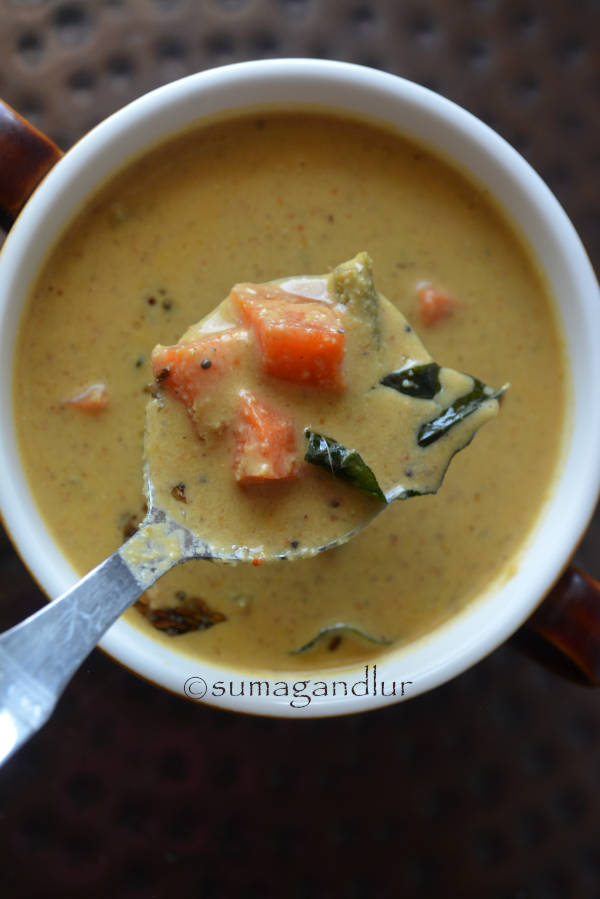
Yogiratna is a popular vegetable curry preparation from the Konkani cuisine. This coconut milk based mixed vegetable curry which also goes by the name valval is traditionally reserved for special occasions and festive days. This mildly spicy, delicious curry goes well with rice and is a simple dish to prepare. 

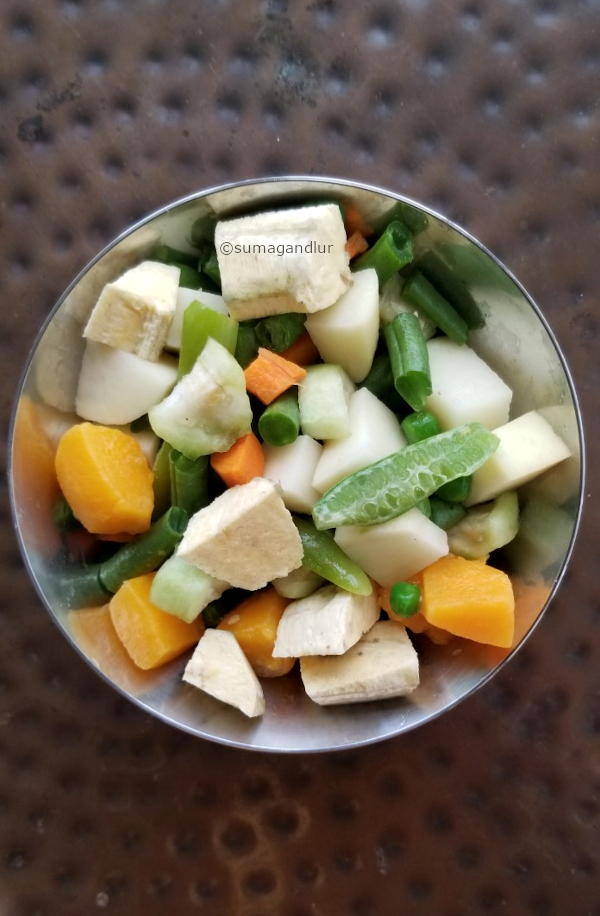
Most of the local variety vegetables on hand were originally used in this preparation as long as they are not the bitter / sour / tough variety. No onion or garlic is used in the recipe. Some of the local vegetables that go in this dish are bread fruit, tender / dried cashews, pumpkin, yam, ash gourd, bottle gourd, ivy gourd, ridge gourd, snake gourd, yard long beans, plantain, the yellow colored cucumber, and sweet potato. I used carrots, beans, potatoes, green peas, butternut squash, ivy gourd, ridge gourd and plantain for my yogiratna / valval. 

Fresh or frozen coconut can be used to prepare coconut milk. If using frozen coconut, thaw it before using. The coconut is ground with water twice to get the first time 'thick' milk and the second time 'thinner milk'. Usually the vegetables are cooked in the thin coconut milk and water mixture in a pot. I made a small portion and pressure cooked them in water. Yogiratna / valval needs to be slightly on a thicker side (and so avoid cooking vegetables in water more than needed or throw away / save the extra water.) Mixed vegetables and coconut milk can be used in an average 1:1 ratio in the recipe. 

Ingredients:
1 cup mixed vegetables, chopped *
2 - 3 green chilies, sliced
1/2 cup shredded coconut / 1 cup coconut milk
1 tsp. rice flour / all purpose flour
Salt to taste
Ingredients for seasoning:
1 tsp. ghee
1/2 tsp. mustard seeds
1/2 tsp. cumin seeds
Few curry leaves

* I used carrots, beans, potatoes, green peas, pumpkin, ivy gourd, ridge gourd and plantain.

Directions:
* Pressure cook the prepared vegetables along with green chilies for one whistle, adding about 1/2 cup of water.
* If preparing coconut milk from scratch, grind the coconut adding about a cup of water. Pass the ground coconut mixture through a sieve and collect the thick milk. Add the coconut residue back to the blender and add about 1/4 cup of water and grind again for few seconds and collect the thin milk. (The milk extracted this time will be thinner than the one extracted the first time.)
* Combine flour and the thin coconut milk in a small cup and mix well. 
* Add the cooked vegetables, the thin coconut milk - flour slurry, and salt to a pan. Cook for 2 or 3 minutes. Add the thick coconut milk and bring the mixture to a boil. Lower the heat once the mixture starts boiling and simmer it for about four to five minutes. Turn off the stove. (I added both the coconut milks at the same time.)
* Heat ghee in a small pan and add mustard seeds and cumin seeds. When mustard seeds start to splutter and cumin seeds turn a shade darker, add curry leaves and turn off the stove. 
* Add this seasoning to the above cooked vegetable mixture and stir well. Serve warm with rice.

So far in my 'A - Z' Karnataka Recipe Series,
Akki Halbai
Biscuit Roti
Congress Kadalekayi
Davanagere Benne Dose

Tuesday, November 3, 2020

Peanut - Onion Chutney

Peanut based chutney is one of the common chutneys prepared in south Indian homes besides the coconut chutney and roasted gram chutney. The thick, creamy and richly flavorful chutney goes well with breakfast dishes like idlis, dosa, upma, pongal and such. 

Peanuts that are roasted on low heat until the rawness is gone is used in this chutney. The low heat is the key here. If peanuts are roasted on high flame then only the skins get blackened faster but the peanuts still would taste raw. The chutney doesn't taste good when the peanuts are not roasted well. The roasted peanuts are cooled and then usually skinned by rubbing between the palms, before getting used in the chutney. It is absolutely fine if one wishes to skip this step and use them with the skin intact. Peanuts can be roasted ahead and stored to use later. Or if using store bought skinned peanuts, these steps can be skipped altogether which makes the chutney making a quick and simple task.

Peanut chutney is made in many versions. I usually stick to the basic one that needs just roasted peanuts, green chilies and salt. Many add garlic too to this chutney. Coconut, ginger, cilantro, tamarind can go into this chutney as well. Here is a version that one of my sister-in-law prepares using fried onion. She adds sautéed onion at the end while grinding but I add directly to the chutney. An extras step to the basic version but adds flavor to the chutney. I served dosas with peanut chutney and ginger - tamarind chutney. 
Ingredients:
2 - 3 tsp. oil
1 tsp. mustard seeds
1 tsp. skinned black gram / urad dal
1 tsp. split chickpeas / chana dal
1 sprig of curry leaves
1 onion, finely chopped
1 cup roasted and skinned peanuts
2 green chilies or to taste
Salt to taste
1 cup water

Directions:
* Heat oil in a small pan and add mustard seeds, black gram and split chick peas. Stir once and when mustard seeds start to splutter and split chickpeas start to turn reddish, add curry leaves and onion. Sauté on low flame until onion turns translucent. (Or the sautéing of onions and tadka can be done separately.)
* Grind peanuts, green chilies and salt together adding water, finely or slightly grainy, depending upon one's preference.
* Transfer the ground peanut chutney to a bowl and add the sautéed onion mixture. Mix well and serve as a side dish to south Indian breakfast dishes like dosa, idli, or upma.

Tuesday, May 19, 2020

A - Z Karnataka Recipe Series ~ L for Limbe Hannina Gojju


So far in my 'A - Z' Karnataka recipe series,
A - Akki Halbai
B - Biscuit Roti
C - Congress Kadalekayi
D - Davanagere Benne Dose
E - Ellu Pajji
F - Field Beans / Avarekalu Payasa
G - Girmit
H - Hitakida Avarekalu Huli
I - Iyengar Bakery Style Masala Toast
J - Jolada Vade
K - Kumbalakayi Idli

It's time for my 'L' dish and this gojju was my plan B to be honest. To start with, I did not have many recipes or ingredients to choose from for today's alphabet. The traditional and popular sweet dish laddu is called laadu in Kannada and in fact there is one north Karnataka laadu recipe that starts with the letter 'L'. I was fixated on it until my first attempt to make those traditional laadu turned out to be a disaster and I did not have enough sweetener for the next attempt. Then I had to resort to use 'limbe hannu' aka 'nimbe hannu' which is lemon in Kannada as we hardly are making any trips to Indian grocers these days. 

Among the few lemon recipes I could think of, gojju seemed to be the one exclusively linked to the regional cuisine of Karnataka and is a classic dish of the region. A gojju is a tasty gravy with loads of flavors, that is usually served with plain steamed rice. It can range from those varieties than can perk up a simple everyday meal to those that appear in a wedding feast. It is usually prepared using a single variety of vegetable / fruit. Bitter gourd, okra, cucumber, pineapple are the commonly used ones though today's version contains no vegetables. Toasted and ground spices and coconut form the base of a gojju. Well balanced flavors is the key to a good gojju and may be a little tricky if one is preparing it for the first time.

Balancing the sourness from the tamarind, sweetness from the jaggery and the heat from the chillies is the key to a tasty gojju, as I mentioned above. Tamarind is replaced with lemon juice in this particular gojju recipe. It is added at the end as cooking after the addition of lemon juice may turn the dish bitter. One should keep this fact in mind and add the other ingredients accordingly. If not sure, taste and add ingredients accordingly. 

Ingredients:

To toast and grind:
1 tbsp. split chickpeas / chana dal
1 tbsp. skinned black gram / urad dal
1.5 tbsp. coriander seeds
A pinch of fenugreek seeds
A pinch of black peppercorns
2 spicy variety dried red chillies 
4 less spicy variety chillies (I used Byadagi for color.)
A handful of grated, fresh coconut
For tempering:
1 tsp. oil
1/2 tsp. mustard seeds
A sprig of curry leaves
A pinch of asafoetida powder
Other ingredients:
About 1.5 cup water or more
Salt to taste
2 - 3 tbsp. jaggery 
2 tsp. lemon juice
Chili powder if needed

Directions:
* Add split chickpeas and split black gram to a pan and toast until they start to change color. Next add coriander seeds, fenugreek seeds, black pepper corns, red chillies to pan and toast until coriander seeds turn a shade darker. Add coconut next and saute for a minute. Turn off the stove and let the ingredients cool. 
* Grind toasted ingredients to a fine paste adding water as needed.

* Heat oil in a pan / pot and add mustard seeds. When they start to splutter add curry leaves and asafoetida. 

* Add the ground paste, water, salt and jaggery to the pan. The water quantity depends upon the consistency preferred. Add more water than mentioned in the list if you prefer a gojju of thinner consistency.

* Bring the mixture to a boil. Lemon juice is added at the end and so adjust the seasonings as needed. Taste and add chili powder, if needed. Simmer the mixture for a couple of minutes more and turn off the stove. 

* Add lemon juice as needed and mix well. (Start with a tsp. lemon juice, mix into the gravy, taste and add as much as needed.)

Comments

Sunday, April 26, 2020

Peanut Sambhar

This recipe had been on my to do list since I noticed it at Pavani's space and am glad that I decided to try it. It was so good that even my coconut hating husband loved it and my mother who watched it over our video chaat found it very appetizing just by the looks of it.

It is not the kind of sambhar where a handful of peanuts are thrown in but is an interesting variation with a peanut base. This delicious sambhar doesn't use any lentils or any kind of beans and makes a flavorful and spicy side dish. The original recipe had sauteed onion, tomato and garlic which I omitted and added some vegetables. One can choose to go either way or one can add vegetables on hand. I also reduced the cumin seeds' quantity and added a little sweetener. 


Ingredients:

For the paste:
1/4 cup peanuts
1 tbsp. coriander seeds
1/2 tsp. cumin seeds
1/8 tsp. fenugreek seeds
3 dried red chillies
1/4 cup dry coconut, grated
For tempering:
1 tsp. oil
1/2 tsp. mustard seeds
1/2 tsp. cumin seeds
A sprig of curry leaves
A pinch of asafoetida powder
For sambhar:
1 cup chopped, mixed vegetables *
1/8 tsp. turmeric powder
Salt to taste
1 tbsp. thick tamarind puree or to taste
1/4 tsp. jaggery / sugar (optional)
* I used peeled and diced carrots and chopped beans. The original recipe had sauteed onion and tomato instead.

Directions:
* Cook the vegetables adding enough water in a microwave, pressure cooker or in a pan on stove top. Keep them aside.
* Dry roast peanuts on low flame, continuously stirring for 3 - 4 minutes. Add coriander seeds, cumin seeds, fenugreek seeds and red chillies next and toast until fragrant and the seeds start to change a shade darker. Add coconut and stir once. Turn off the stove and let the ingredients cool. Grind the ingredients to a smooth paste adding enough water.

* Heat oil in a pan and add mustard seeds, and cumin seeds. When mustard seeds start to splutter, add curry leaves, turmeric, asafoetida and stir. Immediately add the cooked vegetables along with water used to cook them, the peanut paste, salt, tamarind and sweetener if using. Add water to reach the desired consistency like a sambhar / stew. Taste and adjust the seasonings if needed. Simmer the sambhar for 7 to 8 minutes and serve hot with rice.

Comments

Tuesday, November 5, 2019

Aloo Jhol / Aloo - Tamatar ki Jhol

I have eaten this aloo jhol in my sister in law's home a few times, cooked by her husband who happens to be from Uttar Pradesh. I had no idea what it was called then but it turned out to be aloo jhol. Aloo jhol meaning a thin potato gravy has it's origin in Uttar Pradesh and the dish is cooked in the neighboring regions as well. It is one of the popular dishes to pair with pooris in the region and I guess it is their version of potato masala. At first glance, a south Indian style potato masala and this jhol may appear similar because of the ingredients used. However with a couple of extra additions, aloo jhol differs distinctively taste wise from aloo bhaji. 

The dish is quite simple and easy in terms of preparation and uses just the basic ingredients found in any Indian pantry. Garlic can be included in the preparation though it was not added in the version I had eaten before. Add a little amchur / dry mango powder if preferring the curry to be a little tangy. I cooked the curry in a kadai, a small Indian version wok but the final stage of cooking potatoes can be done in a pressure cooker too for a quick version. Or the potatoes can be boiled in a microwave while the onions and tomatoes are getting cooked and then added to hasten the preparation. The consistency of the curry was thinner in my sister in law's place but mine looks thicker as I mashed a few potato pieces since my husband prefers the curry that way.

Ingredients:
2 - 3 tsp. oil
1 tsp. cumin seeds
1/2 tsp. ginger paste / finely grated ginger
1 green chilli, chopped
1 big or 2 small onions, chopped fine (I had about 2/3 cup.)
1 tomato, finely chopped (About 1/2 cup)
Turmeric to taste
Salt to taste
2 big sized potatoes (2 heaped cups of cubed potatoes)
Chili powder to taste
1/2 tsp. coriander powder
1/2 tsp. garam masala
Cilantro to garnish

Directions:
* Heat oil in a pan and ad cumin seeds. When they start to brown add ginger and green chilli. Saute for few seconds and add onion. Cook until onion turns translucent and then add tomatoes. Cook until tomatoes turn mushy.
* Add turmeric, salt, chili powder, roasted coriander powder to the pan and mix well. 
* Next add peeled and cubed potatoes and about 2 cups of water to the pan. Cook on medium flame until the potatoes turn soft. Add  1/4 cup more water if needed at the final stages of the cooking. 
* Finally sprinkle garam masala and stir to combine. Taste and adjust the seasonigs if needed. Simmer for a couple of minutes more.
* Garnish with cilantro leaves and serve.

Comments

Saturday, October 5, 2019

Capsicum Gravy Curry

The final dish of the week under the theme 'easy side dishes' is this yummy curry where capsicum is cooked in a spicy, flavorful gravy made with peanuts and sesame seeds. This gravy happens to be my personal favorite and can be used as a base for other vegetables as well. The base is perfect without being nauseatingly cloying and the powder can be prepared in advance. The peanut and sesame seeds combo add body to the gravy and tastes rich without the addition of any cashews / nuts or cream which happen to be a constant presence in such gravies. 

Ingredients:
2 to 3 tsp. oil
1/2 tsp. mustard seeds
1/2 tsp. cumin seeds
1 big onion, finely chopped / 1/2 cup minced onion
1 big or 2 small tomatoes, roughly chopped
1/2 inch ginger piece
1 green chili, finely minced
A pinch of turmeric powder
1 big sized capsicum (I had slightly more than 1 cup chopped capsicum.)
Salt to taste
Chili powder to taste
A pinch of sugar //stevia (optional)
3/4 cup water or as needed
Ingredients for the paste:
1/2 tsp. coriander seeds
1/2 tsp. cumin seeds
1 tsp. white sesame seeds
1/4 cup toasted and skinned peanuts

Directions:
1. Heat oil in a pan and add mustard seeds and cumin seeds. When the mustard seeds start to splutter, add onions and saute on low heat until they start to brown.
2. Mean while, toast coriander seeds, cumin seeds and sesame seeds together and saute until the coriander seeds start to change a shade of color. Transfer them to a plate and let them cool. If not using pre-toasted peanuts, place them in a microwave safe bowl and toast for 5 to 6 minutes, giving short breaks in between to avoid burning. Or toast on stove-top in a pan on low flame. Let them cool and rub between your palms and remove the skins. Grind all the ingredients together to a fine powder.
3. Grind tomatoes, ginger and green chilli in a blender. If not able to run the blender, use a little quantity of water to grind.
4. Add the above tomato paste and turmeric to the onion pan and cook until it slightly thickens.
5. Next add capsicum pieces and salt. Cook until capsicum is almost done. 
6. Add the peanut mixture powder from step 2, chili powder, sugar if using and water. 
7. Continue to cook on low flame stirring intermittently. Taste and adjust any seasonings if needed. Also adjust the water quantity if needed to form a gravy with consistency on a slightly thicker side. Cook until the gravy thickens, about 6 - 8 minutes.
8. Serve it hot with rotis / phulkas. 

Comments

Sunday, May 12, 2019

Menthe Thambuli

Thambuli, a side dish from the state of Karnataka is a yogurt / butter milk based one and can even be loosely called a raita. The word thambuli comes from combining two Kannada words 'thampu' and 'huli'. Thampu literally means cool and this dish is normally preferred in the summer months for it's cooling properties. The dish is usually on a milder side and involves minimal cooking. The thambuli / thambli varieties are mostly prepared using herbs or some seasonal vegetables and adding a few simple, roasted spices. Today's version is a healthy one and uses fenugreek seeds / menthya kaalu. 

Ingredients:
1 tsp. ghee
1/2 tsp. fenugreek seeds 
1/2 tsp. cumin seeds
2 - 3 byadagi chillies
A fistful of fresh coconut, grated
Salt to taste
1 cup yogurt 
Ingredients for tempering:
1 tsp. ghee / oil
1/2 tsp. split black gram / urad dal
1/2 tsp. mustard seeds
1/2 tsp. cumin seeds
Few curry leaves

Directions:
* Whisk the yogurt well in a bowl.
* Heat ghee in a small pan and add fenugreek seeds, cumin seeds and red chillies. When the fenugreek starts to change color, add the coconut to the pan. Stir well and turn off the stove. Let it cool a bit.
* Grind the above mixture to a fine paste adding salt and little yogurt. Finally add the remaining yogurt and pulse once to combine.
* Heat ghee / oil in a small pan for tempering and add all othe other ingredients mentioned under tempering. When urad dal starts to turn brownish, turn off the stove. Let it cool a bit and add it to the yogurt mixture and mix well to combine.
* Serve it with hot rice.

bmlogo

This post is an entry for Blogging Marathon #100 under 'Regional Side Dishes' theme.

Comments