HOME        |        ABOUT        |        COPYRIGHT        |        CONTACT        |         RECIPE INDEX        |         INDIAN THAALIS        |         MILLET RECIPES        |        EVENTS' ROUNDUP        

Showing posts with label Beans. Show all posts

Sunday, April 26, 2020

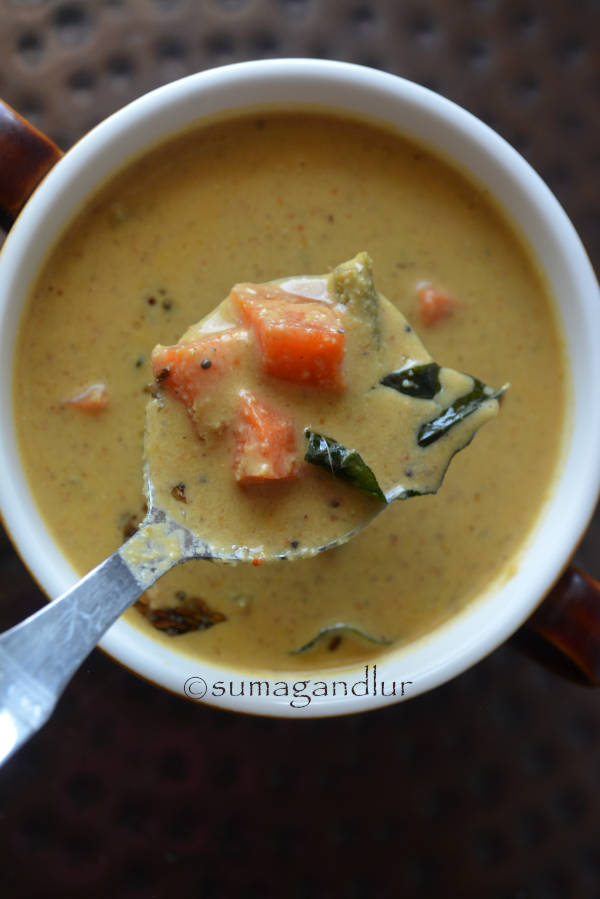
Peanut Sambhar

This recipe had been on my to do list since I noticed it at Pavani's space and am glad that I decided to try it. It was so good that even my coconut hating husband loved it and my mother who watched it over our video chaat found it very appetizing just by the looks of it.

It is not the kind of sambhar where a handful of peanuts are thrown in but is an interesting variation with a peanut base. This delicious sambhar doesn't use any lentils or any kind of beans and makes a flavorful and spicy side dish. The original recipe had sauteed onion, tomato and garlic which I omitted and added some vegetables. One can choose to go either way or one can add vegetables on hand. I also reduced the cumin seeds' quantity and added a little sweetener. 


Ingredients:

For the paste:
1/4 cup peanuts
1 tbsp. coriander seeds
1/2 tsp. cumin seeds
1/8 tsp. fenugreek seeds
3 dried red chillies
1/4 cup dry coconut, grated
For tempering:
1 tsp. oil
1/2 tsp. mustard seeds
1/2 tsp. cumin seeds
A sprig of curry leaves
A pinch of asafoetida powder
For sambhar:
1 cup chopped, mixed vegetables *
1/8 tsp. turmeric powder
Salt to taste
1 tbsp. thick tamarind puree or to taste
1/4 tsp. jaggery / sugar (optional)
* I used peeled and diced carrots and chopped beans. The original recipe had sauteed onion and tomato instead.

Directions:
* Cook the vegetables adding enough water in a microwave, pressure cooker or in a pan on stove top. Keep them aside.
* Dry roast peanuts on low flame, continuously stirring for 3 - 4 minutes. Add coriander seeds, cumin seeds, fenugreek seeds and red chillies next and toast until fragrant and the seeds start to change a shade darker. Add coconut and stir once. Turn off the stove and let the ingredients cool. Grind the ingredients to a smooth paste adding enough water.

* Heat oil in a pan and add mustard seeds, and cumin seeds. When mustard seeds start to splutter, add curry leaves, turmeric, asafoetida and stir. Immediately add the cooked vegetables along with water used to cook them, the peanut paste, salt, tamarind and sweetener if using. Add water to reach the desired consistency like a sambhar / stew. Taste and adjust the seasonings if needed. Simmer the sambhar for 7 to 8 minutes and serve hot with rice.
Comments

Tuesday, February 11, 2020

Black Eyed Peas Rice / Lobia Pulao

Today's recipe makes a spicy one pot meal that is filling and nutritious. Vegetables like beans, carrots, potatoes and peas can go as well into it to make it more healthier but I wanted the beans to take the lead role here. If one had soaked black eyed peas handy or even the canned ones, the dish is a breeze to make. I like onions in these kind of dishes in fried form rather than sauteing along with the spices and so have used them as garnish. A chopped onion can be sauteed before the addition of the tomato in the recipe and the garnish can be left out. 
The rice is spicy on it's own and doesn't need any side dish to go with it. A simple raita can be prepared if preferred though a plain yogurt made a perfect accompaniment for the very spicy version I cooked.
Ingredients:
1/4 cup black eyed peas
3/4 cup basmati rice
1 sliced onion + oil for frying
1 tbsp. ghee / oil
1 green cardamom pod
2 whole cloves
1/2 inch cinnamon stick
1 inch piece ginger, crushed
1/8 tsp. turmeric
1/2 tsp. coriander powder
1/2 tsp. cumin powder
1/4 to 1/2 tsp. chili powder
1 tomato chopped
1/2 tsp. garam masala
Salt to taste
1 and 3/4 cups of water
Chopped cilantro to garnish

Prep work:
* Soak beans for about 4 to 5 hours. If not pressure cooking, soak overnight to cut down the cooking time.
* Soak rice in water for about 15 to 30 minutes and drain the soaking water. Rinse rice in several changes of water until clear and leave it in a colander to dry.
 * Heat oil in a pan and fry onion until crisp and golden, stirring frequently. Remove them with a slotted spoon, draining oil as much as possible and spread them out on a paper towel to drain. Keep aside for garnish

Directions:
* Heat oil directly in a small sized pressure cooker and add cardamom, cloves and cinnamon and cook for few seconds over medium heat. Next add ginger and saute for 30 seconds. Some chopped garlic can be added at this point if preferred. Add turmeric, ground cumin and coriander, chili powder and saute for few seconds. 
* Next add tomato and cook until it turns into mush. 
* Add the drained rice and garam masala, saute for about a minute, stirring gently not to break the grains. 
* Next add the drained beans, salt and water and close the lid. Pressure cook the mixture fro two whistles.
* Let the rice sit for few minutes after the valve pressure is gone. Garnish with fried onions and chopped cilantro. Serve it with some yogurt on the side. 

Tuesday, January 19, 2016

Paddu


Paddu is a rice-lentil based breakfast dish from Karnataka, that goes by the names ponganalu and paniyaram in other south Indian states. The rice and lentils are soaked, ground, fermented over the night and then the batter is poured into and cooked in a special mold pan, similar to an aebleskiver pan. I prepare ponganalu / paniyaram at least once a week for our breakfast but when a friend mentioned about this particular recipe, I had to jot down the proportions since it was a different version than the one I am used to. I use a small quantity of black gram in my regular versions but this paddu had rice and medley of lentils in equal proportions. I was glad to try them as now I have one more nutritious and yummy version to rotate. And also the original version uses just the batter without the seasonings or onion. I added them anyway since they enhance the flavor of this yummy breakfast.

Links below for the other versions posted before.
Guntha Ponganalu
Kuzhi Paniyaram

Ingredients:
1 cup rice (I used extra long rice & idli rice.)
1/2 cup urad dal / skinned black gram
1/4 cup chana dal / split chickpeas
1/4 cup moong dal
Salt to taste
Oil to make paddu
2 onions - peeled and finely chopped
For seasoning / tadka:
2 tsp oil, 1 tsp mustard seeds, 1 tbsp chana dal, 1 tbsp urad dal, few minced curry leaves and 2 minced green chillies if not serving kids
Method:
* Soak rice and dals in sufficient quantity of water for 4 - 5 hours and discard the water. Rinse the mixture with fresh batch of water.
* Grind the rice-dal mixture fine adding water as needed to form a thick batter. The batter should not be runny. Add salt and mix well. Allow it to ferment overnight in a warm place or about 8 - 10 hours.
* When ready to prepare paddu, heat oil in a small pan. Add mustard seeds, urad and chana dals to the oil. When dals start turning reddish, add the minced curry leaves and green chillies if using.
* Add this tadka, minced onion to the fermented batter and mix well.
 
Making paddus:
* Heat the paddu / ponganalu skillet when ready to make paddu. Add a few drops of oil in each mould. Then fill them with batter.
* Cover the ponganalu skillet with a lid and cook on medium heat. Cook until the ponganalu batter doesn't appear raw on the surface.
 
* Then flip them, add a drop or two of oil and cook till the other side lightly brown as well.

* Remove them once done and repeat the process with the remaining batter. Serve them warm with chutney.  
* They store well in refrigerator for 2- 3 days. And they freeze well too for a handy breakfast on a busy work day.

This goes to Blogging marathon #60 under the theme 'Regional Cuisine - Karnataka'. Check the link to see what other marathoners are cooking.


Comments

Sunday, February 15, 2015

Chettinad Vegetable Biryani / Kaikari Biryani


We have no aversion towards pulaos / biryanis but we are not great fans either of this rice genre. It may seem surprising coming from an Indian but it is true that they get made once in a blue moon in my kitchen. And so I was contemplating whether to try this Chettinad Vegetable Biryani or not for this month's Indian Cooking Challenge.

I know that a wonderful dish like this biryani do not deserve such a lousy introduction. :) However I would like to point out that we, out of all the people who prefer to stay away from overtly spicy dishes got sold by this biryani. I had thought of giving this dish a try only because I have been missing the recent ICC challenges and oh boy, I am glad that I did. The husband started reminiscing about the biryani he used to eat in his college canteen and applauded it, while my house filled with an aroma that I usually associate with the Indian restaurants. The spice levels were perfect in this dish, tasted wonderful and we thoroughly enjoyed it.

This biryani comes from the Chettinad cuisine, from the south Indian state of Tamil Nadu. Another version I saw on Sanjeev Kapoor's cook show also included coconut, fennel seeds and other spices typical to the region but since this recipe comes from a person native to the region, I did not play with the recipe. This is an apt kind of dish to prepare, when you have company. Even this halved recipe yields a substantial amount of biryani to feed at least 6 - 8, given that you have other dishes to feed them.This recipe uses samba rice that is grown in Tamil Nadu region in India. This grain supposedly has a distinct aroma and is shorter in size. Basmati would be a typical substitute if there is no access to the samba variety. I had only brown Basmati at home and so substituted sona masuri instead.  And of course don't get intimidated by the long list of ingredients mentioned below. Many go in tadka and some are added at the final stages.
Ingredients:
1.5 cups Jeera Samba rice
1 tbsp. ghee
2 tbsp. cashews
1 tbsp oil
3 cloves
2 cardamom
1 inch piece of cinnamon
1 star anise
1 bay leaf
2 Maratha moggu
2 green chillies (I used 1 chilli as they were hot.)
2 pieces of stone flower / dagad phool / rathi puvvu (optional)
1/2 cup minced shallots or 1 big onion, finely minced
1 tsp. ginger-garlic paste
A handful of coriander leaves + extra for garnishing
A handful of mint leaves + extra for garnishing
1 tomato
2 cups mixed vegetables (green beans, carrot, potato and green peas)
1/4 tsp turmeric powder
1 tsp. coriander powder
1 tsp. red chili powder (My chili powder is really hot and so I used 1/2 tsp.)
Salt to taste
2 & 1/4 cups water

Preparation:
* Wash and soak the rice in water for about 30 minutes. Drain and keep it aside.
* Peel and chop shallots / onion. Chop tomatoes. Peel and cube potato and carrot. String and cut the green beans into one inch pieces. Chop green chillies into big pieces.
* Chop finely mint and coriander leaves.

Method:
* Heat ghee in a deep saute pan or directly in a pressure cooker and toast the cashews until golden brown. Remove the toasted cashews with a slotted spoon and keep them aside.
* To the same pan, add oil and heat it. Add cloves, cardamom, cinnamon, star anise, bay leaf, moggu and stone flower. 
* Saute for few seconds and add green chillies and shallots/onion. Fry until the onion turns translucent. 
* Next add ginger-garlic paste and saute until the raw smell leaves. Then add the chopped leaves and saute for about a minute.
* Add vegetables now and fry for about 3 minutes. Next add tomatoes, turmeric powder, chili powder, coriander powder and salt. Continue to cook until the tomatoes turn softer.
* Add about 1/4 cup water to the vegetables and bring the mixture to a boil. 
* Then add the (soaked and drained) rice and water. Stir well and cover with the lid if using pressure cooker and cook for 3 whistles. 
Or if using a saute pan, just cover with a lid and cook on low flame until done. It would take around 15 - 20 minutes to cook this way and don't be tempted to stir and peek often.
(I used a saute pan to fry the vegetables and transferred the whole mixture into a container that could fit in my pressure cooker. I put the container in the pressure cooker without the pressure valve on and steamed the mixture.)
* Once the rice is cooked, garnish with ghee fried cashews and coarsely minced cilantro - mint leaves.
* Serve with onion raita.

Notes:
* Either you can use 1.5 cup (standard American measuring cup size) or about 3 cups (that comes along with the rice cooker) rice.
* The original recipe mentions to use 4 & 1/2 cups water for 3 cups of jeera samba rice. I used sona masuri rice and used about 2 & 1/2 cups of water for 1 & 1/2 cups rice.

Comments

Tuesday, June 11, 2013

Sambhar Sadam


Sambhar sadam aka sambhar rice is an easy breezy one pot meal from Tamilnadu region and as the name suggests rice and mixed vegetable sambhar are prepared together here. However in the taste department, I put sambhar sadam a couple of levels higher than the the mundane sambhar and rice combo. It tastes delicious and can be prepared with the common ingredients found in any Indian kitchen. One can use any combination of vegetables that usually work in a sambhar dish.
I didn't know this particular dish was called sambahr sadam until a few years ago. My sister-in-law cooks this dish with masoor dal exactly the same way and calls it khichdi. Masoordal and rice cook almost at the same time and quickly. And so that version doesn't even need a pressure cooker. 
And also wanted to add that a sambhar sadam is not the bisibelebhath of Karnataka. Technically huli (as in bisibelehulianna) and sambhar are supposedly one and the same. However a sambhar sadam and bisibelebhath are not. The spice powders that go into these dishes makes them entirely different dishes. An authentic bisibelebhath dish doesn't have onions and also doesn't taste the same as sambhar sadam.  

Ingredients:
1.5 cups rice
3/4 cup toordal
1/8 tsp turmeric powder 
2 cups chopped mixed vegetables (I used beans, carrot, potato and green peas)
1 Onion, chopped fine
2 Tbsp sambhar powder
Salt to taste 
Tamarind puree to taste (I left out the quantity on purpose since the levels of sourness preferred varies. Soak a lemon sized tamarind and extract the puree.)
Minced cilantro to garnish

Ingredients for tadka:
1 Tbsp oil
1 tsp mustard seeds
1 tsp cumin seeds
A pinch of asafoetida / hing
A sprig of curry leaves


Method:
1. Wash rice and dal separately, drain and keep aside.
2. Heat oil in a pan or a small pressure cooker directly and add the tadka ingredients. When mustard seeds start to pop, add onion and fry until translucent. 
* At this point if using a pressure cooker, you can add vegetables, rice, dal, turmeric powder and about 5 cups of water, put the weight on and cook for upto 3 whistles. 
The dal I get locally doesn't cook at the same time as rice does and so I cook rice and dal separately in a pressure cooker.
* If you don't own a pressure cooker, you can add dal and turmeric powder to the pan adding sufficient water.When it is half cooked, add rice and vegetables and continue to cook until done, adding water intermittently as needed.

*  Whatever method you use, basically you need the rice cooked, dal cooked until mushy and the vegetables cooked but not mushy.
3. Add the cooked rice, dal, vegetables, salt, sambhar powder and tamarind paste to the onion mixture. Add water if needed and taste the mixture. adjust the seasonings if needed. Bring the mixture to a boil and turn off the stove. 
4. Garnish with cilantro and serve with papad / chips.

Check here to find out what other marathoners are cooking during blogging marathon #29.


Comments

Monday, October 17, 2011

Black-Eyed Peas Soup


While yesterday's soup was western whimsy, this colorful soup is redolent with Indian flavors. Beans and vegetables combine to form a hearty, wholesome and spicy meal on it's own.
This is going to be my second day BM#9 entry.

Ingredients:
2 tsp oil
1 clove garlic
1 onion
1 green chili
1 tomato
A pinch of turmeric powder
1/4 cup black-eyed peas (cooked or canned)
1&1/2 cup vegetable broth
1/4 cup mixed vegetables (I added carrot, beans & potato)
Salt to taste
1/4 tsp cumin powder
Cilantro minced


Method:
* Heat oil and add the minced garlic; fry until golden brown.
* Add the minced chilli and minced onion. Fry until the onion turns soft.
* Next add the tomatoes and cook until mush.
* Then add the veggies and saute for a couple of minutes.
* Add the vegetable broth and turmeric. Cook until the vegetables are tender.
* Add the cooked beans, salt and cumin powder. Adjust the seasonings if needed.
* Simmer for a few minutes for the flavors to mingle.
* Garnish with cilantro and serve.

This is going to Susan's MLLA, hosted by me this month.


This also goes to
1. "Global Food Festival" by Kalyani
2. "Soups & Salads Mela" by Srivalli.