HOME        |        ABOUT        |        COPYRIGHT        |        CONTACT        |         RECIPE INDEX        |         INDIAN THAALIS        |         MILLET RECIPES        |        EVENTS' ROUNDUP        

Showing posts with label Vegetables. Show all posts

Friday, February 11, 2022

Brown Rice Flour & Vegetable Rotti

 
Rotti is a staple of Karnataka cuisine and these unleavened flat breads are usually prepared using rice flour or finger millet flour or sorghum flour. Jolada rotti / Sorghum flour rotti are a specialty of the North Karnataka region and they are commonly eaten for meals there whereas akki rotti, the rice flour based ones are commonly prepared through out the state with variations. These akki rottis are frequently eaten as a breakfast at homes and they also become convenient lunch box item for kids. ('Akki' is rice in the local language). 

I replaced a portion of white rice flour with brown rice one in these rotti to make them healthier. (The brown rice flour I buy at 'Whole Foods' is not very fine ground and so need some regular rice flour to bind the dough.) Rotti can be kept simple with the addition of green chilis, salt, onions and coconut, which are called masale rotti in some parts. Or vegetables can be added to add nutition. Fenugreek leaves can be substituted with amaranth or spinach leaves. The combination of veggies I have added here, especially the cucumber helps in keeping the rotti softer longer. 

The dough can be prepared the previous night and refrigerated which saves time during the morning rush. The dough can be taken out and used in the morning even without thawing. The rottis can be made thinner than what I have made here. Each rotti takes less than 10 minutes to make and doesn't even need constant supervision. One standard tawa / griddle sized rotti would be sufficient if packing a kids' lunch box. These rotti do not need any side dishes in general. They are served with jaggery or some chutney pudi (for older kids / adults), which are staples in any south Indian kitchen. 

Ingredients: (Yield - 5 rotti)
1 cup brown rice flour
1/2 cup rice flour (Store bought can be used.)
Salt to taste
1 carrot
1 small cucumber
1/4 to 1/2 cup fenugreek leaves / methi leaves
1 or 2 green chili
1/4 to 1/2 cup shredded, fresh coconut
A handful of cilantro leaves, finely minced
Oil to make rotti


Preparing the dough:
*
Peel and grate the cucumbers. If the cucumbers are not tender, quarter them vertically, remove the seeds and then grate.

* Peel and grate the carrot. Wash and roughly chop the fenugreek leaves.
* Chop green chili very finely. (Green chili can be pulsed with  coconut in a food processor / mixer without adding water, to avoid biting on them. This method is helpful, if especially cooking for kids.)
* First combine the flours and salt in a mixing bowl. Then add all the other ingredients except oil in a mixing bowl.

* Add water as needed to form a firm dough. The rotti can be made immediately at this point, following the below method. Or the dough can be refrigerated in a container with a tight fitting lid. Plan to use the dough within a couple of days.
 
* Divide the dough into 5 equal portions. Work with one portion at a time and keep the rest covered. Shape one portion into a ball.
* Pour a tsp. of oil in the center of a griddle / skillet you are going to use to make rottis. Place the dough ball at the center of the griddle and pat with your fingers till you form a thin, flat circle. (There is no need to make it super thin like pancakes.) The rotti size depends on one's preference. Some prefer to make it griddle sized and some go with smaller ones. Poke a hole in the middle with your index finger if you wish or just leave it out.
 
* Pour a tsp. of oil around the edges of the dough circle and over it. Cover with a lid and turn on the stove. Let it cook on a low - medium flame and flip it when golden brown spots develop on the bottom side and the upper side doesn't look raw. It may take around 5 to 6 minutes. 
 
 * Add 1/2 tsp.  of oil around the edges again if needed. Cover it again and cook for about 3 -4 minutes or until the other side turns light brown too. Turn off the stove and remove the cooked rotti with a spatula.
* Repeat the above steps with the remaining dough balls. However be sure to turn off the stove and cool the griddle before using it again. If in a hurry, the hot griddle can be held under running water to cool it down quickly. Or simultaneously 2 griddles can be used to quicken the cooking process.
* Rotti are usually served with chutney pudi. Some even serve with butter or yogurt, especially ragi / fingermillet rottis. When serving kids, they go with a combo of jaggery and ghee. The latter combo remains my favorite even though I am no longer a kid. :)

This is going to be my contribution to this week's Blogging marathon, with the theme 'Quick Breakfasts'. Check the page link to see what other marathoners are cooking.


Comment

Tuesday, January 18, 2022

A - Z Tamil Nadu Recipe Series ~ B for Brinji / Tamilnadu Style Brinji Rice Cooked in Coconut Milk

Brinji or vegetable brinji is a simple, delicious and easy one pot meal made with rice and mixed veggies, with it's origins in Tamil Nadu. Some believe the dish has Persian roots, since rice is called berenj in Iran, thus indicating that the dish might be a borrowed one. This rice dish is considered to be in existence way before biryani/pulao arrived in the region. Being older, the south Indian ingredients like coconut and pepper are incorporated into the recipe, thus making it different than biryani / pulao / tahiri dishes. Also the Tamil word for bay leaves, brinji elai comes from being generously used in the preparation of brinji.  
South Indian style short grain rice is preferred to make brinji. Flavored rice like seeraga samba would be a perfect fit but Basmati would be a nice substitution which is easy to source. It is possible that the earlier version used little or no vegetables but the modern versions uses the standard vegetables used in a pulao recipe. Also the early recipe must have relied only on pepper for the heat since chilies were still an unknown ingredient in the Indian subcontinent. A garnish of fried bread cubes or soya nuggets chunks to the finished dish is also common.

Over the years, I have been seeing brinji recipe where the standard spices like cloves, cinnamon and cardamom being used and onions get sautéed. I made a small portion following the recipe here which does not use those spices and also onion or tomatoes do not get sautéed. It is hard to even notice the fact that they were not sautéed.  I even skipped the garlic from the recipe as I am not a fan of it's flavor. The recipe still is a keeper as the dish is absolutely delicious and very easy to remember or follow. This is a fuss-free dish where all you do is chop a few vegetables and layer it to pressure cook. The recipe is a quick one if you overlook the one hour wait time that is needed for marinating the veggies in coconut-ginger-garlic paste and soaking the rice part. 

Here are some other rice based dishes from Tamil Nadu for you to enjoy.
Ingredients for marinating: (Yield 4 servings)
1/2 cup peeled and cubed potatoes
1/2 cup peeled and chopped carrot
1/2 cup shelled fresh / frozen peas
1/2 cup chopped mint leaves (I used both mint & cilantro)
1 tsp. red chili powder
1/2 tsp. ground pepper
1/2 cup coconut paste *
2 tbsp. ginger-garlic paste **(I omitted garlic.)
1 tsp. salt
* Grind 1/4 cup coconut to a paste using 1/4 cup water
** 6 garlic cloves and an inch piece of ginger ground to paste with little water. Use 1 tbsp. paste if using store bought one.

Ingredients for brinji:
1 cup Basmati rice
1 tbsp. ghee
3 bay leaves, crushed
2 medium sized onions, chopped
1 tomato, chopped
1/3 cup light coconut milk
2/3 cup water

Directions:
1. Add all ingredients mentioned under marination list to a wide bowl and mix well. Cover and leave it aside to marinate for about an hour. The mixture would release liquid after marination.
2. Rinse and soak rice in water for about an hour. Drain the rice after soaking period.
3. Add ghee to a 3 liter sized / small pressure cooker and add the torn bay leaves. 
4. Top it with chopped onions and tomatoes uniformly.
5. Spread half of the marinated vegetables along with the liquid over onion and tomato mixture.
6. Next add rice over the veggies in an even layer.
7. Layer it again with the remaining veggies.
8. Pour the coconut milk and water over it and close the lid.
9. Cook on medium flame for two whistles and turn off the stove. Wait until the cooker's valve pressure is gone. 
10. Wait for 15 - 20 minutes and open the lid. Fluff and serve with raita or vegetable korma.

This is going to be my contribution to this week's Blogging marathon, with the theme 'A -Z Series'. Check the page link to see what other marathoners are cooking.


Tuesday, January 11, 2022

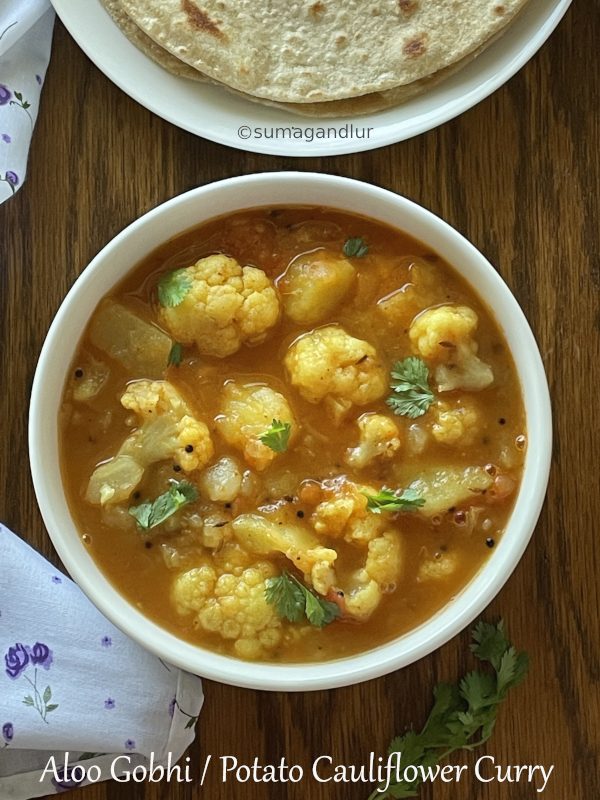
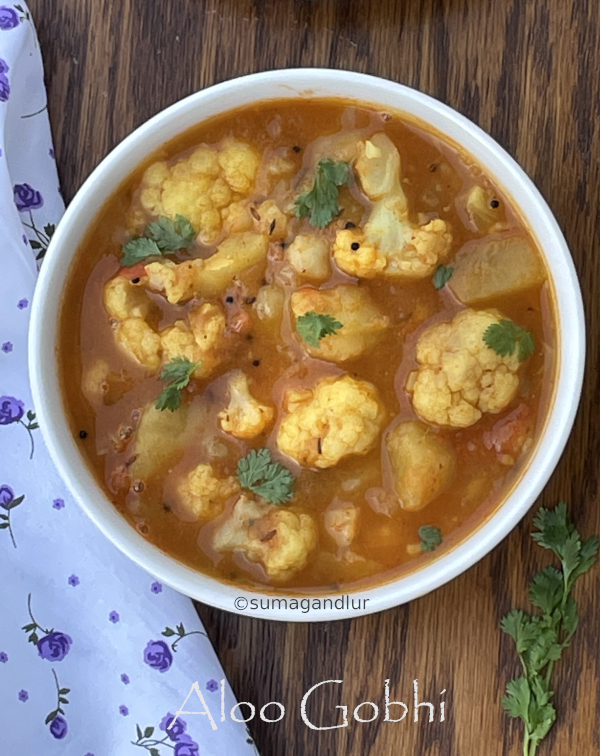
Aloo Gobhi / North Indian Style Potato & Cauliflower Curry

 (Originally published on 2/23/2011)

Aloo gobhi is a delicious, home style vegetable preparation from North India that has become popular through out the Indian subcontinent. In fact, it is so popular that it has made its way into the Indian restaurants everywhere. This is reflected in the fact that it is one of the mandatory side dishes you will find on any Indian restaurant menu in the western hemisphere and an equally ubiquitous one even in our blog world. :) Simple enough in terms of preparation even to a novice cook and palate pleasing, it's no surprise that aloo gobhi is a favorite to many.

There are no hard and fast rules when it comes to aloo gobhi preparation. It can be prepared dry or with some gravy clinging to potato - cauliflower mixture. Onions & / tomatoes can be added or omitted. It can be prepared according to one's taste preference and here is my version of our favorite "aloo gobhi".

Ingredients: (Yield - 4 servings)
1 big sized onion (about 1/2 cup chopped)
2 tomatoes (1 cup chopped)
1 small sized cauliflower (2 cups florets after the leaves and hard parts removed)
3 medium sized potatoes (2 cups peeled & cubed potatoes)
1 tsp grated ginger
1 tbsp. oil
1 tsp cumin seeds
1/8 tsp. turmeric powder
1 tsp. coriander powder
1 tsp. chili powder
1/2 tsp. garam masala
Salt to taste
Minced cilantro to garnish
Directions:
* Heat oil in a kadai / pan and add grated ginger and cumin seeds to it. Add turmeric powder and chopped onions when they slightly brown. Cook them covered until they turn translucent. 
* Next add the tomatoes and cook until they turn slightly mush.
* Add potato cubes and about a cup of water and. Continue to cook until potatoes are 3/4th done. 
* Add the cauliflower florets and salt. Add some more water if needed. When the cauliflower turn almost tender, add chili powder, coriander powder and garam masala to it and mix well. Mash  cooked potatoes cubes slightly without mashing cauliflower. Simmer the curry for a couple of minutes more and turn off the stove. Garnish with cilantro. (I add cauliflower almost at the end as cauliflower gets cooked in about 5 to 6 minutes and softens furthen even after turning off the stove.) 
* Serve the curry warm with some hot roti / phulka and yogurt for a complete meal.

This is going to be my contribution to this week's Blogging marathon, with the theme 'Winter Produce'. Check the page link to see what other marathoners are cooking.


Friday, November 26, 2021

'Quinoa' Maavinakayi Chitranna / Mango - Coconut Quinoa


(This was originally posted on 5 /3/2011.)

Quinoa can be incorporated into Indian cuisine effortlessly. It can be used to replace rice in most of the dishes that need it and this post happens to be one such recipe. Mango chitranna / pulihora is a simple yet delicious dish from South India that uses rice and green mango. It is prepared especially during summer times when green mangoes are available in abundance. I have replaced rice with quinoa in this popular, tongue- tickling dish and here is the method.
And don't worry about the long list of ingredients mentioned. Most of them go in the tadka / tempering.

Below are some other quinoa based dishes that I have already posted.
Quinoa Bisebele
Quinoa Khichdi
Quinoa - Masoordal Soup
Quinoa Panchkuti Dal Khichdi
Quinoa Pilaf
Quinoa Pongal
Quinoa Sweet Pongal
Quinoa Upma

Ingredients: (Yield - 3 servings)
1 cup quinoa
1 - 2 tbsp. oil
1/4 cup. peanuts
1 tbsp. Bengal gram / chana dal
1 tbsp. skinned black gram / urad dal
1 tsp. mustard seeds
A sprig of curry leaves 
2 green chilies (I used Serrano peppers. If using other varieties, adjust the quantity according to the spiciness preferred.)
2 -3 dried red chilies, broken into small pieces
1/4 tsp. turmeric powder
A pinch of asafoetida powder
3/4 cup grated raw mango
1/2 cup shredded fresh coconut (thaw if using frozen)
Salt to taste
1/2 tsp mustard seeds powder +  1/4 tsp fenugreek seeds
/ methi powder (optional but recommended. The quantities can be increased if preferred. Lightly toast mustard and fenugreek seeds and powder them fine.)
Minced cilantro for garnish


Method:
* Wash quinoa in several exchanges of water. Add quinoa and 1 & 3/4 cups of water to a pressure cooker and cook until done. (2 - 3 whistles). Cool and fluff.
Alternatively, it can be cooked on stovetop. Bring the water to a rolling boil and then add quinoa. Cover and cook until done, about 20 minutes. When done, the seeds become translucent and the white germ would partially detach itself, appearing like a tail.
* Heat oil in a thick bottomed pan or a kadai. Add the peanuts, Bengal gram, skinned black gram and mustard seeds. When peanuts start to turn reddish, add green & red chilies and curry leaves. Sauté for a few seconds and then add the turmeric powder, asafoetida powder, mango and coconut and stir well. Turn off the stove.
* Next add the cooked quinoa, salt, mustard and fenugreek powders to the pan and mix well to combine.
* Garnish with cilantro and serve.

Thursday, November 25, 2021

Barley Khichdi / Spicy Barley - Lentil Stew

(This was originally published on 3/13/2011.)

When trying out new grains and that too when I am not sure how well our palates are going to receive the new textures, I prefer to go back to my own cuisine to borrow ideas. The south Indian cuisine, the familiar zone seems so comforting and forgiving like a mother. When I have to deal with the unfamiliar grains for the first time, I prefer to combine the typical ingredients used in my (south Indian) kitchen and add spices for more layers of flavor. This barley dish is a proof of it.

Though barley is available in India, it was never used in my mother's or any relatives' kitchens. I used barley for the first time when I prepared this barley - raisin bread. The barley I have been left with has gone in to the preparation of typical Indian style dishes.

Barley has a chewy texture when cooked that I am not very fond of. I have therefore allowed the barley to cook until it reached a fall apart stage, where you don't feel its texture at all. As I mentioned above, this dish relies on South Indian style cooking and is somewhat a cross between Karnataka's Bisibelebhath and Tamilnadu's Kadamba Saadam. I simply called it a khichdi since I didn't want to wreck my brains in search of a perfect name for this dish. This was a wholesome, healthy and hearty meal that was liked by everyone at our home.

 Ingredients: (Yield - 4 servings)
1/2 cup barley
1/2 cup pigeon peas / toordal
1 cup chopped mixed veggies (I used carrots, green beans, potatoes, peas)
A pinch of ground turmeric 
Salt to taste
2 to 3 tbsp. thick tamarind juice (extracted by soaking about lemon sized tamarind in water) 
Ingredients for seasoning:
2 tsp. ghee / oil
1 tsp. mustard seeds
A sprig of curry leaves
Ingredients for spice powder:
2 tbsp. split chickpeas / bengal gram / chanadal
1 tbsp. skinned black gram / uraddal
1 tbsp. coriander seeds
1/4. tsp fenugreek seeds / methi seeds, 
6 - 8  or to taste, dried red chilies, 
2 tbsp. grated dry coconut 
3 - 4 black stone flower / dagad phool / rathi puvvu

Directions:
* Soak barley for at least an hour and this step is optional if you are using a pressure cooker. 
* Add barley, lentils, vegetables, turmeric powder and about 2 cups of water to a pressure cooker and cook until done. If you cook rice for 3 whistles, then let this go for 12 - 15 whistles.
* Meanwhile, add split chickpeas and skinned black gram to a small pan and dry toast them on medium flame. Continuously stir them , until they start to change the color. Transfer them onto a plate. Next add coriander seeds, fenugreek seeds, red chilis and stone flower to the same pan and dry toast them on low flame until coriander seeds start to change a shade darker. Add the coconut and turn off the stove. Transfer them on to the plate. Once cool, grind them finely. 
* When the cooker's valve pressure is gone, remove the container, and check the barley consistency. If you wish to cook it further, add the mixture to a pan. Add water as needed and cook further until the desired consistency is reached. Also if you prefer your veggies crunchier, you can cook them separately instead of adding them to the pressure cooker.
* Add salt, tamarind puree and the spice powder to the barley mixture. Taste and adjust the seasonings if needed. Simmer the mixture for a couple of minutes more.
* Heat the ghee / oil in a pan. Toast the mustard seeds and curry leaves and add to the barley mixture.

Sunday, October 24, 2021

Vankaya - Tomato Pachadi / Andhra Style Eggplant and Tomato Chutney

(This was originally posted on 3/12/08.)

I prepare a variety of vegetable based chutneys, using the base recipe which has been in our family for generations. Some chutneys are prepared using a combo of vegetables instead of one, like this eggplants and tomatoes one for instance which stands out among the lot. It can be served with rice as part of a meal or even with rotis. 

The combination of eggplants and tomatoes yields this delicious and spicy chutney. Usually, eggplants and tomatoes are roasted whole, peeled and then ground coarsely when preparing this chutney. I sometimes follow the easier method and prepare the chutney this way by sautéing chopped vegetables, chilis and other spices together. The addition of tamarind and jaggery makes this a flavor loaded chutney.
Ingredients:
1.5 tbsp. oil
1 tbsp. skinned black gram / uard dal
1 tsp mustard seeds
A pinch of fenugreek seeds
2 pinches of asafoetida  
Green chilis as needed (I used 2 very spicy, long green chilis.)
3 eggplants (I used round, purple ones.) 
2 tomatoes 
1/8 tsp. turmeric powder
Salt to taste  
1 tsp. sized tamarind ball
1/2 to 1 tsp. jaggery (I added 1/2 packet Stevia.)
 
Directions: 
* Wash and wipe the tomatoes and eggplants dry. Chop the eggplants and tomatoes into cubes.
* Heat oil in a sauté pan and add skinned black gram / urad dal and mustard seeds. When black gram start to turn slightly reddish, add fenugreek/methi seeds, and asafoetida. When fenugreek seeds start to turn a shade darker, add green chilis and saute for few seconds.
* Next add chopped eggplants, tomatoes, turmeric, salt and tamarind.
* Cover and cook until the vegetables soften on low heat setting and turn off the stove. 
* Let the mixture cool and grind it coarsely adding jaggery to taste.  in a blender. 

This post is an entry for Blogging Marathon and check the link to find out what other marathoners are cooking.

Sunday, September 19, 2021

Seemavankaya Pappu / Andhra Style Lentils with Chayote

 
'Pappu' is a lentil aka dal dish from the south Indian state of Andhra Pradesh. The dish is on a thicker side compared to sambhar, a signature lentil dish from south India and also doesn't need sambhar powder. Green mango, greens, cuke, okra, tomato, and some of the gourds are the commonly used vegetables to prepare this style of dal. Chayote also works well in a pappu recipe though it is not used traditionally. The lentils can be pressure cooked adding the vegetable of your choice, green chili and even the tamarind, making it a quick and easy preparation. The seasoning of mustard seeds, curry leaves and asafoetida makes the dal flavorful. The delicious dal is served with rice, drizzling with ghee.
Ingredients needed for pappu:
1 cup pigeon peas / toor dal
1/8 tsp. turmeric powder
1 small chayote - peeled, seeded and chopped into cubes (I had about a cup.)
1 spicy green chili, slit lengthwise
Salt to taste (I added about 1 & 3/4 tsp. salt.)
1/2 tsp. spicy chili powder or as needed

Thick tamarind puree (I used somewhere about 3 - 4 tbsp. See note below.)
Ingredients for seasoning / popu: 
2 tsp oil 
1 tsp. mustard seeds 
1 tsp. cumin seeds (optional)
A pinch of fenugreek seeds (optional)
2 pinches of asafoetida
Few curry leaves

Directions:
* Wash pigeon peas / toor dal with water twice and throw away the cloudy water. Pressure cook the dal adding chayote cubes, green chili, turmeric powder and 
2 cups of water for 3 whistles or until done. (I cooked chayote separately. The dal can be cooked in a thick bottomed pan on stove top in lieu of a pressure cooker. Soak dal for a couple of hours in that case to fasten the cooking process. Cook until the dal softens adding water as needed.)
* When the valve pressure is gone, remove the lid. Slightly mash the cooked dal with the back of a ladle and keep aside.
* Heat oil in a pan and add mustard and cumin seeds. When mustard seeds start to pop, add asafoetida and curry leaves. Then add the mashed dal, salt, chili powder and tamarind. Mix all the ingredients well with the ladle. Add extra water if the dal appears thicker. Check the taste and adjust any seasonings if needed. Bring the dal to a boil and lower the heat setting. Let the dal simmer for 3 to  4 minutes for all the flavors to mingle and turn off the stove.
How to serve:
Serve this with a small mound of rice and a tsp of ghee. Serve along with a pickle, koora (a vegetable preparation), and yogurt for Andhra style lunch.

Notes:
1. Soak about 1/4 cup of tamarind in water for about an hour or microwave for about 3 minutes adding water. Squeeze thick tamarind puree using your fingers or passing through a sieve. Discard the seeds and fibre. Use the puree as needed and refrigerate the rest. The amount of tamarind puree used depends upon how much tartness is preferred in the dal. It must balance the salt and chili powder used in the recipe. If using ready made tamarind paste, the quantity mentioned above varies.
2. Chili powder can be entirely omitted from the recipe and green chillies can be used accordingly. Or only green chilies can be used in the recipe.

This post is an entry for Blogging Marathon under the theme 'Regional Side dishes'. Check the link to find out what other marathoners are cooking.

Saturday, September 18, 2021

Aratikaaya Koora / Andhra Style Plantain Curry

(This was originally published on 3/18/2008.)

'Aratikaya' is plantain and 'koora' is curry in Telugu, a south Indian language. This aratikaya koora or plantain curry is a traditional version, common in the south Indian state of Andhra Pradesh. It is a simple and easy preparation, with a balance of sweet, sour and spicy flavors. The souring agent used here can be lime / lemon juice or tamarind puree and the sweetener added is usually jaggery. The flavors should be subtle and well balanced for the curry to taste delicious. The preparation is meant to be dry and usually served with  hot rice and ghee. 
 
Ingredients needed: 
2 cups peeled and cubed plantain
A pinch of turmeric powder
1.5 tbsp. oil 
1 tsp mustard seeds
1 tsp split chickpeas / chana dal
1 tsp. skinned black gram / urad dal
A sprig of curry leaves
A pinch of ground asafoetida
1/4 cup fresh / frozen shredded coconut
Salt to taste
Chili powder to taste (I added about 3/4 tsp.) 
1 tbsp. jaggery or to taste
Lemon / lime juice to taste (I added about 1.5 tsp juice.)
Directions:
1. Peel the skin of plantains, quarter lengthwise and chop into small cubes. Add plantain and turmeric to a bowl and add enough water to cover them.
2. Pressure cook the plantain cubes for 3 whistles. Alternatively, put the cubes in a pot and add enough water so that the cubes are well immersed in water. Cook till the cubes are done. When done, you must be able to mash the cubes with the back of a spoon. Drain the water saving a tbsp. or two if needed in case.
* Thaw the coconut in microwave if using frozen coconut.
3. Heat oil in a pan / kadai and add mustard seeds, split chickpeas and black gram. When the lentils start to turn slightly reddish, add curry leaves and asafoetida and stir.
4. Next add the cooked and drained plantain cubes, coconut, chili powder, jaggery and salt. (Now is the time to add tamarind pulp if it is being used instead of lemon). Mash the plantain lightly and and mix well to combine. Taste and adjust the quantities of seasonings if needed. Add a few tbsp. of water saved from cooking plantain / water if the curry appears dry.
* Cook for a couple of minutes and turn off the stove.
* Add lemon juice / lime juice at the end and stir well.
* Serve it warm with steamed rice and ghee.

This post is an entry for Blogging Marathon under the theme 'Regional Side dishes'. Check the link to find out what other marathoners are cooking.

Saturday, September 4, 2021

Potlakaaya Koora ~ South Indian Style Snake Gourd Curry

Here is a simple curry prepared with snake gourd that is usually served with steamed rice as part of a south Indian meal. The cooking method used here is a common preparation across homes in south India and the snake gourd in this recipe can be replaced with other vegetables. The cooking time depends upon the quality of the gourd that is being used. It cooks quicker if the gourd is tender and may take more time if the gourd is mature. Snake gourd can also be used in simple lentil preparations like this dal and raita or in pindi miriyam from Andhra like the versions I have posted here and here.

Ingredients:
2 snake gourds, chopped (about 5 cups)
1 tbsp. oil
1 tsp. split peas / chana dal
1 tsp. skinned black gram / urad dal
1/2 tsp. mustard seeds
1/2 tsp. cumin seeds
3 or 4 dried red chili broken into bits or to taste
A sprig of curry leaves
A pinch of turmeric powder
1 & 3/4 tsp. salt
1/4 cup. shredded fresh / frozen coconut 

Directions:
*  Trim the edges of snake gourd. If the gourds are long, chop them into two pieces. The gourd can be cut into thin circles if preferred. I cut them lengthwise into two and chopped them thinly. Discard the seeds if they are mature. 
* Heat oil and add split peas, black gram, mustard seeds and cumin seeds. When split peas and black gram starts to turn reddish add red chilis and curry leaves. Stir them for few seconds.
* Next add the cut snake gourd pieces, salt and turmeric and mix them well. Cover and cook on low flame, stirring in between until the snake gourd pieces soften. (The cooking time depends upon the tenderness of the vegetable.)
* Finally add the shredded coconut and stir. Cook for a couple of minutes and turn off the stove.
* Serve the curry with steamed rice, drizzling a little ghee over it.

bmlogo

This post is an entry for Blogging Marathon and check the link to find out what other marathoners are cooking.

Saturday, July 17, 2021

Moonglet

Pesarattu is a traditional breakfast of the south Indian state of Andhra Pradesh, especially in the northern parts of the state where it commonly prepared at homes and eateries across the region. It is basically a pancake prepared with soaked and ground whole mung beans and sometimes with the skinned yellow variety. It is ground  with the addition of ginger, green chillies, cumin and salt to add flavor and usually served with ginger chutney.  

Moong dal chilla or pudla or polis, are again pancakes prepared with mung beans and are mostly popular in northern and western parts of India. They can be made of desired consistency - thick or thin and is a popular street food as well in the region. You can add finely chopped vegetables to make them nutritious or can stuff them with a spicy paneer, potato or any vegetable filling of your choice. Or they can be served plain with some ketchup or green chutney. 
I came across another version called moonglet sometime last year which has become a new favorite at home. To be honest, I eat pesarattu because they are healthy where as my husband eats it because I am the one who decides the menu and cooks, and he has no other option. You get the drift, right? 😀 Basically no one gets enthusiastic at our home when I prepare pesarattu. This changed when we tasted these moonglet for the first time. 

Moonglet (or the lentil omelet) are also made with the yellow mung which are basically the whole mung beans that are hulled and split. These beans are quick to cook and easily digestible. If planning to make breakfast, soak yellow moong beans overnight or soak them around noon, if planning for evening snack / dinner. They can be soaked just for an hour too, in a time crunch. 

These thicker version pancakes are gluten-free and can be turned vegan by skipping butter in the recipe. What makes these protein rich moonglets different is the addition of fruit salt to the batter which makes the pancakes airy and fluffy. When cooked to a perfect golden brown and crispy with a generous addition of oil and butter, these make a great treat even to the naysayers of pesarattu. These wholesome and nutritious pancakes can be served with a chutney of your choice or some ketchup.
Ingredients: (Yield - 3)
1 cup yellow moongdal
1 tsp. salt or to taste
1 tsp. cumin seeds
1 tsp. grated ginger
1/4 cup finely chopped onion
1/4 cup finely chopped tomato
1/4 cup finely chopped green bell pepper
1 green chili, finely chopped
2 tbsp. minced cilantro
1/2 tsp. Eno's fruit salt
Oil and butter as needed

Directions:
1. Soak moong dal for an hour or two in enough water. (It can be soaked overnight too if planning for breakfast and doesn't want to waste time for soaking in the morning.)
2. Drain the water used to soak and grind moong and salt together into a thick batter adding water if necessary. (I added slightly more than 1/4 cup of water in total.) 
3. Transfer the batter to a bowl. Add cumin seeds, ginger, chopped onion, tomato, bell pepper, chili and cilantro and mix well.
4. Add Eno's fruit salt and sprinkle a tablespoon of water over it and immediately whisk it with a ladle. Add some water if the batter appears too thick.
* Heat a small pan with some depth and pour oil or butter generously. (I used more about 2 tbsp. oil. Mine was a 8 inch pan with inner circumference of 6 inches). 
5. Pour 2 to 3 ladles (about 1/2 to 3/4 cup) of batter into the pan. 
6. Cover and cook on low flame until it turns golden brown on the bottom side. Don't rush since the pancake needs to be cooked through as it is thicker than usual ones.
7. Flip it and gently score a '+' on the surface with the spatula. 
8. Pour oil / butter over it. (I used a tbsp. of butter.)
* Continue to cook until the other side turns golden brown as well. 
* Transfer it with a spatula onto a plate and repeat the steps with the remaining batter.
* Serve it warm with a chutney / ketchup.

This post is an entry for Blogging Marathon and check the link to find out what other marathoners are cooking.

Monday, July 5, 2021

Sweet Potato Kheer

This post was originally published in 2009 and needed some revamping both in terms of content and images. I had posted a microwave version but I am updating with the stove-top method too. 

Kheer / payasam is a popular and quick to cook dessert from Indian cuisine. It is equivalent to the pudding recipe from the western world sans eggs. Rice, vermicelli, sago/tapioca pearls, and split chickpeas versions are the most common and traditional kheers prepared across India. There are though several other delicious versions and kheers are mostly easy to prepare. The basic preparation of a kheer remains the same. A grain / lentil / vegetable / other ingredient is cooked in milk and sweetened with sugar or jaggery. Dairy milk is most commonly used though other milks like coconut milk, almond milk can be easily substituted in the recipe. Whole milk adds richness to a kheer but replacing it with half and half or a splash of condensed milk makes it festive. Cardamom is the most common flavor used in south India while saffron, kewra essence and rose water are other flavoring agents that go in north Indian style kheers. A garnish of ghee toasted dry fruits and nuts finishes the dish.

I love simple kheers like carrot / chayote / dates that sound special and unusual. I sometimes combine half & half to my kheers for the extra richness. These are some of the kheers that I have already posted on my blog. The first time I prepared this sweet potato kheer was for my guests who had hard time guessing the contents of the kheer and were bowled over by it's taste. I had never heard about sweet potato kheer before that and it was an experiment done on a whim. I use the pink fleshed sweet potato that is common in USA to make this kheer. The color of this chilled kheer is just because of the yam and no saffron was added. It can be cooked with the Indian variety sweet potato too but the sugar quantity in the recipe needs adjustment as it is a more sweeter variety. This is so delicious that it can be served to guests or can be included in festive meals. It can also be cooked during vrat / fasting since sweet potato is allowed during the period.
Ingredients:
2 tbsp. ghee
1/2 cup peeled & shredded sweet potato 
1.5 cups whole milk or as needed (or substitute with half & half for more richer version.) 
3 - 4 tbsp. sugar or to taste
Seeds ground from 2 cardamom pods / 2 pinches of ground cardamom
1 tbsp. cashews and raisins for garnishing (optional)
(For the original microwave version, I had used a tbsp. of ghee and 1.5 tbsp. sugar.)

Stove-top method:
* Heat ghee in a pan and add cashews and raisins. Toast them until raisins turn plump and cashews turn golden brown. Remove them with a slotted spoon and transfer them to a small bowl.
* Add grated sweet potato to the same ghee and sauté for 5 - 6 minutes, stirring continuously. 
* Next add milk to the pan and cook until sweet potato softens. (It doesn't tale much time.)
* Next add sugar and ground cardamom and cook until the sugar melts. Turn off the stove.
* Garnish with toasted cashews and raisins. 
* I usually serve it chilled but it can be served both warm or chilled.

Microwave version:
* Mix the ghee and the shredded sweet potato in a microwave safe bowl and cook it for a couple of minutes in the microwave. Remove and stir the contents once in between. 
* Add 3/4 cup of milk to the bowl and mix well. Put the bowl back in the microwave and cook until the sweet potato is almost done. Check once in between and if the milk has been absorbed by the sweet potato, add some more. (It may take about 3 - 4 minutes.) 
* Add sugar, remaining milk, and cardamom to the bowl. Mix well and put it back in the microwave and cook for a couple of minutes or until the sweet potato is cooked. Garnish with nuts/raisins if using. Stir well before serving. This kheer can be served warm or cold.
 
Note:
1. For diabetic-friendly version, omit the sugar and add a little sweetener to the bowl just before serving.
2. The time to cook the kheer in a microwave may vary depending upon the strength of the microwave. Use your discretion and cook accordingly.