HOME        |        ABOUT        |        COPYRIGHT        |        CONTACT        |         RECIPE INDEX        |         INDIAN THAALIS        |         MILLET RECIPES        |        EVENTS' ROUNDUP        

Wednesday, May 18, 2011

Creamy Corn Kheer


I was eagerly waiting to try this corn kheer ever since I watched it on a television show. A sweet dish with corn sounded interesting and the chef & hostess of the program made it sound very delicious. Finally the time came to try it out a couple of weeks ago and it turned out yummy. We absolutely loved this rich, creamy and delectable kheer. This is going to be my Day 3 post during this blogging marathon #5, with the theme "Indian Sweets". 

Check what the other marathoners are cooking today.
Curry in a hurry under 30 min: Priya Suresh, Srivalli, Usha
Seven Days of Colorful Dishes Kid's Special: Vardhini
Seven Days of Indian Sweets: HariniVeena & Me
Seven Days of Regional Specials: Aarthi, Kalyani, Pavani, Shylaja
Summer Coolers: PJVaishali
Under 15 mins Quick Breakfast: Sushma Pinjala


Ingredients: (4 servings)
3/4 cup corn (I used frozen)
1 cup milk
1/2 cup grated khoya
4 - 5 Tbsp sugar
1/2 tsp cardamom powder
1 - 2 Tbsp ghee
1 Tbsp cashews
1 Tbsp raisins

Method:
* Cook the corn kernels. Save a few Tbsp of corn if using as garnish and grind the remaining corn adding a little milk / water if needed.
* Heat the ghee in a pan and toast cashews and raisins. Remove them with a slotted spoon and keep them aside.
* Then add the corn paste to the same ghee and fry for a couple of minutes.
* Then add the milk and bring it to a rolling boil. Next add the grated khoya, sugar, cardamom powder to the mixture and keep cooking for a few minutes. By the time, the khoya gets incorporated into the mixture and the kheer turns rich and creamy. Turn off the stove.
* It can be served hot or chilled. Garnish with the saved corn kernels if desired.


Comments

Tuesday, May 17, 2011

Pasta Payasam


I use pasta frequently and stock up on a few pasta boxes of various colors, shapes and sizes in my pantry. Mostly I cook pasta in spicy / cheesy sauces and never thought of using it in a sweet dish. However I had noticed pasta payasams doing rounds for quite sometime now in the blogosphere and wanted to give it a try even though I was skeptical about the texture and the outcome of the final dish. I did try pasta payasam a few weeks back and it tasted absolutely delicious and so is now being showcased here.


Ingredients for 2 servings:
1/2 cup pasta (I used shell pasta here. Any other appealing kinds can be substituted.)
1 & 1/4 to 1 & 1/2 cups milk
2 Tbsp sugar
2 Tbsp condensed milk (optional but recommended. I was baking a cake with condensed milk and used the leftovers.)
Dry fruits to garnish

How I cooked it:
* Bring 2 - 3 cups of water to a rolling boil and add pasta. Cook al dente and drain.
* In another pan heat the milk and cook the above pasta for 10 - 15 minutes more. Stir in the sugar and condensed milk and simmer a couple of minutes more and turnoff the stove. If preferred cardamom powder may be added for flavor.
* Garnish with dry fruits / nuts before serving.


Check out what the other marathoners are cooking on the second day of BM#5.
Curry in a hurry under 30 min: Priya Suresh, Srivalli, Usha
Seven Days of Colorful Dishes Kid's Special: Vardhini
Seven Days of Indian Sweets: HariniVeena & Me
Seven Days of Regional Specials: Aarthi, Kalyani, Pavani, Shylaja
Summer Coolers: PJVaishali
Under 15 mins Quick Breakfast: Sushma Pinjala

Comments

Monday, May 16, 2011

Gasagase Payasa / Gasagasala Payasam / Poppy Seeds Kheer

Recipe Source: Pushpa Gandlur

I am participating in the second group of blogging marathon # 5 that starts today and have chosen the theme of Indian sweets. Kheers / puddings and laddus are the qualifying choices this time. That means you are going to see those kinds of sweets this week here. J
For the first day, I have chosen a delectable kheer from Karnataka. The delightful combo of poppy seed - coconut mixture in a sweetened milk base is truly a treat to your taste buds. And so rightly chosen for festive occasions or to entice guests by Kannadigas. There are several variations in the preparation of this kheer. Fresh / dried coconut can be used, jaggery or sugar can be the sweetener and the ingredients may be soaked or toasted depending upon one's preference. My mother prepares it in a different way and today's version is the courtesy of a SIL, who happens to be a Kannadiga.
And I want to mention that a little quantity of poppy seeds makes a large quantity of kheer and as many claim, you are not going to fall asleep after drinking a cup of kheer. At least I don't. J

Ingredients: (3 servings)
1 Tbsp poppy seeds / gasagase
1 Tbsp rice
6 almonds
2 Tbsp grated, dry coconut
1/2 tsp cardamom powder
4 Tbsp sugar
1.5 cup water
1 cup milk (boiled and cooled)


Preparation:
Soak almonds, rice, poppy seeds and coconut in a little water for a couple of hours. Or soak them in hot water for 30 minutes.

Method:
* Grind the soaked ingredients in a blender to fine paste, adding water if needed.
* Add the ground paste and water to a pan (non stick preferably) and keep cooking until the raw smell disappears. Keep stirring in between.  Add the cardamom powder and sugar. Stir until the sugar melts and turn off the stove.
* Remove the pan from heat and slowly stir in the milk.
* This kheer can be either served warm or cold.


Check out the following marathoners who are participating in BM#5.
Curry in a hurry under 30 min: Priya Suresh, Srivalli, Usha
Seven Days of Colorful Dishes Kid's Special: Vardhini
Seven Days of Indian Sweets: HariniVeena & Me
Seven Days of Regional Specials: Aarthi, Kalyani, Pavani, Shylaja
Summer Coolers: PJVaishali
Under 15 mins Quick Breakfast: Sushma Pinjala


Comments

Sunday, May 15, 2011

Pudachi Wadi / Cilantro Rolls For April ICC


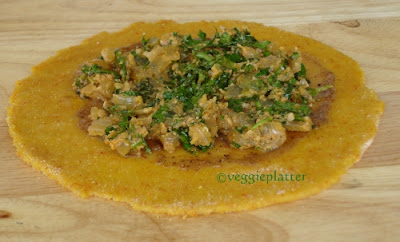
Srivalli chose Maharashtrian Pudachi Wadi or cilantro rolls inspired from this recipe, for this month's Indian Cooking Challenge. A spicy filling of cilantro - coconut mixture encased in a chickpea & wheat flour dough is deep fried. This is a perfect tea time snack, especially for spicy food lovers. I guess I was generous with the usage of spices and chili powder in this recipe and these wadis turned out to be a treat for our spice / heat loving palates. I did not even need green or tamarind chutney to savor them.
I am not at all happy at the way these images have turned out. I was super exhausted on that particular day and had very little time to capture these delicious wadis. And also it was a cloudy day. All factors combined lead to this poor representation of this fabulous wadis. :(

Ingredients for about 10 - 12 vadis:
Don't be put off by the long list of ingredients. The process is not as complicated as it seems.

For outer covering:
3/4 cup chickpea flour / besan
3/4 cup wheat flour / atta
3 Tbsp hot oil

1/2 tsp chilli powder
1/4 tsp turmeric powder
Salt to taste

For the stuffing:
2 cups cilantro / coriander leaves
1/4 cup grated dry coconut / copra 

1 Tbsp poppy seeds / khus khus
1 Tbsp sesame seeds
1 onion, finely chopped
1 Tbsp oil
1 tsp ginger - green chilli paste (I ground 1 big Serrano pepper and one inch piece of ginger adding a few Tbsp of water in my blender.)
3 cloves garlic chopped fine (I did not use it.)
1/2 tsp chilli powder

Salt to taste
1 Tbsp lime / lemon juice

1/2 tsp sugar

For the paste:
2 tsp oil
1 tsp kala masala / garam masala
2 tsp thick tamarind pulp

For deep frying:
Oil

Preparation:

1. Wash the cilantro leaves. Spread on a dry towel for a few minutes. I put the leaves between two layers of a thick towel so that the water was absorbed by the time I finished other prep work.
If you still feel the leaves are wet then just pat them gently with the towel. Finely mince the cilantro and keep aside.
Adding dry leaves is crucial since you want to avoid the final stuffing mixture turning soggy because of the watery cilantro.
2. Lightly toast the sesame seeds, poppy seeds and the coconut. Let cool and powder them.
3. Mix all the ingredients mentioned under "for the outer covering" and form a firm dough adding water as needed.
4. In a small cup, combine the ingredients mentioned under "for the paste".


5. Now comes the stuffing preparation. Heat a Tbsp of oil in a kadai and add the onions. Saute them until translucent. Add the ginger - chili paste, garlic if using, roasted & ground powders (from step 2), salt, sugar, lime juice, chilli powder and mix well. Fry for a couple of minutes. Then add the cilantro leaves, mix well and cook for a minute or so and turn off the stove.


Method:
* Pinch a small ball of dough and roll it thinly into a circle using some flour for dusting. How big the rolled circle should be depends upon one's preference. It can be anywhere between 3 to 6 inches of diameter. Leaving the edges, smear the center of the rolled dough with the paste. And then spread a few spoons of stuffing mixture.


* Cover from both sides as shown in the pictures. And then fold one end and seal it. (The recipe says to use water to seal but I did not.) Repeat with the other end.


* Repeat these steps until you use up all the covering dough and the stuffed mixture.
Actually I made these in different shapes - triangles like samosas and even half moon shaped like these kajjikayalu.
* Heat a few cups of oil in a deep pan or a kadai. When the oil is hot enough to deep fry, slowly drop the stuffed rolls and fry flipping them until wadis turn golden brown on both sides.


People who are participating in the ICC has been exempted from posting for blogging marathon "with the theme" today and so this is going to be my 7th day (or the final) post in the first group of this blogging marathon #5. From tomorrow, the second group's marathon starts and check out my sweet dishes during the run. J

I have enjoyed working with this first group in BM#5 though there had been some blogger mishaps and we have lost some posts in the process. Check what the other marathoners are cooking on this final day.
Curry in a hurry under 30 min: Cool Lassi(e), Harini, Kalyani, Priya Mahadevan along with me
Seven Days of Colorful Dishes Kid's Special: Priya Suresh, Veena 
Seven Days of Indian Sweets: Shylaja, Srivalli  
Seven Days of Regional Specials: Priya Yallapantula  
Under 15 mins Quick Breakfast: Aarthi, Vaishali

Comments

Saturday, May 14, 2011

Cabbage - Sesame Seeds Curry

Recipe Source: Deepthi

My husband comes from a large, close-knit family and is the youngest one among nine siblings. Some of his nieces and nephews are older than me and so obviously, they are our contemporaries than being the next generation. Though I am the youngest daughter- in-law in our family, there have been many DILs after me since M’s nephews got married in the recent years. Those girls are like my younger sisters because of the little age gap between us.
These new cooks and the experienced ones in our family who like my idea of preserving family / traditional recipes keep sharing recipes with me. It becomes more interesting when recipes come from people who have different regional backgrounds than me.
This particular recipe is also courtesy of a relative. I truly enjoyed this different dry version of cabbage curry and thought of sharing it today. 

Ingredients:
4 cups chopped cabbage
1 small lime sized tamarind
3 Tbsp sesame seeds
6 red chillies
For tadka: 2 tsp oil, 1 tsp chana dal, 1 tsp mustard seeds, 1 tsp cumin seeds, a pinch of asafoetida, 1/4 tsp turmeric powder, few curry leaves
1/2 cup shredded fresh coconut (optional but recommended)
1/2 tsp sugar (optional)
Salt to taste


Preparation:
* Soak tamarind in about 1/4 cup of water until it softens. Or place the tamarind along with water in a microwave for 2 - 3 minutes. Squeeze the thick tamarind juice and keep aside.
* Slightly toast the sesame seeds and red chillies. Let cool and powder them.

Method:
* Cook the cabbage adding about 2 Tbsp of thick tamarind juice in a pressure cooker. Sprinkle some water also if needed or if you think the cabbage may burn. If the variety of cabbage you get leaves a lot of water when cooked then sprinkle only a little water.
* Add oil in a pan and add the tadka ingredients in the order mentioned. When the dals start turning reddish, add the cabbage, salt, sesame seed powder, coconut and sugar if using. Mix well and cook for a couple of minutes more. Turn off the stove.
* Serve with rotis / rice.

Notes:
1. Actually I did the tadka in a pan and then cooked the cabbage adding tamarind juice. It takes longer this way because of the sour ness of tamarind I guess and surely doesn't qualify for the "curry in a hurry" theme. Then I came to learn that the cabbage is cooked in a pressure cooker in this recipe.
2. If you don't own a pressure cooker, then follow this method to cook it faster. Heat the oil to a pan / kadai and add the tadka ingredients. When the dals start turning reddish, add the chopped cabbage and cook covered on low flame until done. Then add the tamarind juice, coconut, sesame seed powder, salt and sugar if using. Mix well to combine and cook for a few minutes more for the flavors to mingle.
3. Also the original recipe did not have the coconut or sugar. 


Check what the other marathoners in BM#5 are cooking today.

Curry in a hurry under 30 min: Cool Lassi(e), Harini, Kalyani, Priya Mahadevan along with me
Seven Days of Colorful Dishes Kid's Special: Priya Suresh, Veena 
Seven Days of Indian Sweets: Shylaja, Srivalli  
Seven Days of Regional Specials: Priya Yallapantula  
Under 15 mins Quick Breakfast: Aarthi, Vaishali

Comments

Friday, May 13, 2011

Kakarakayi Podi & Methi - Aloo Sukke


I could not post for blogging marathon yesterday due to blogger maintenance issues and so I am posting two recipes today.
The first recipe is kakarakaya podi or a dry bitter gourd curry from my baamma's (paternal grand mother) kitchen. Bitter gourds are obviously bitter and not a favorite of many though they are healthier. I too use to despise these gourds. The only bitter gourd preparation I used to eat was this podi until I tasted my MIL's bitter gourd curry. The Indian versions of bitter gourd preparation usually contain a sweetener like jaggery / sugar and a souring agent like tamarind to mask the bitterness.
This podi is quite different from those kind of recipes. The bitterness is considerably reduced even though no sweetener is added because of the addition of besan and the frying of gourds until crispy. M got to taste this for the first time when my mother visited us recently and I should say that he has fallen in love with this podi.
The only drawback is that this recipe requires a lot of oil and that's why I don't make it frequently. J

Ingredients:
12 small sized tender, bitter gourds (2 cups chopped)
6 Tbsp oil (or more if needed)
About 1/2 cup besan / chickpea powder
Salt & chili powder to taste

Preparation:
Wash the bitter gourds and trim the edges. Chop them very fine. This step is really important since they need to be done crisply.
Combine the besan, salt and chili powder in a bowl and keep aside.


Method:
Heat 2 Tbsp of oil and add the bitter gourd pieces. Keep frying them on medium flame until they turn super crisp. Keep adding the extra oil as needed.
Then add the besan mixture to the bitter gourds and stir well to combine. The quantity of the besan added should be such that it not only coats the bitter gourd pieces but there should be some left in the cooking pan as powder in the final curry. That's why, you see the word 'podi' (powder in Telugu) in the title. Cook until the raw smell of the besan disappears.
This stays fresh for a few days, even without refrigeration. It is usually served with rice.

Methi - Aloo Sukke


During my last India trip, I got this recipe from M's aunt's handwritten cookbook, which keeps circulating in our family circles. Sukke belongs to Konkani cuisine and so, was a little surprised to notice it in that book. I know that the aunt has lived in various parts of India and so I am guessing that she might have got this recipe probably from a friend.
This is a dry version of methi-aloo and certainly the spice mixture added makes a difference. The basic aloo - methi subzi turns more flavorful and yummier. I truly enjoyed it, like the rest of the traditional recipes I have so far tried from her book.

Ingredients for 4 - 5 generous servings:
2 cups peeled & chopped potato cubes (3 medium sized potatoes)
2 cups washed & roughly chopped fenugreek greens / methi leaves
Salt to taste
For tadka: 2-3 tsp oil, 1 tsp mustard seeds, 1 tsp chana dal, 1 tsp cumin seeds, a pinch of asafoetida
To dry roast and grind:
3 Tbsp uraddal, 1.5 tsp coriander seeds, 1 tsp cumin seeds, 1/4 tsp fenugreek seeds, 4 - 6 red chillies, 3 Tbsp dry coconut

Note: The original recipe had about 1/2 cup fresh coconut added finally. Instead, I added some dried coconut while grinding.

Method:
* Cook the potato cubes until done but not mushy. (I cooked them in a microwave for about 6 minutes.) Drain them and keep aside.
* Heat oil in a kadai or a deep pan and add the tadka ingredients. When mustard seeds start to pop and the chana dal starts turning reddish, add the methi leaves. Sauté the leaves on low flame for a few minutes, until the raw smell of methi disappears.
* Mean while, dry roast all the ingredients mentioned under 'to roast and grind' except the coconut. The ingredients can be toasted individually if preferred. Cool them and grind fine.
* Add the cooked potato cubes, salt and the ground spice mixture (Use this mixture as needed if you prefer the subzi to be a milder version). Mix well and let it cook for a couple of minutes before turning off the stove.
Serve with rotis / rice.


This methi - aloo sukke is being linked to


And my menu for the event is going to be
Main menu: Mango-Peanut-Cilantro Chutney, Methi - Aloo Sukke, Sweet Potato Pulusu, Mango - Coconut Quinoa, Dal Tadka
Dessert: Hayagreeva, Strawberry Cake

2. Herbs & flowers in my platter - Fenugreek , started by PJ and guest hosted by Kalyani.


Check what the other marathoners in BM#5 are cooking today.

Curry in a hurry under 30 min: Cool Lassi(e), Harini, Kalyani, Priya Mahadevan 
Seven Days of Colorful Dishes Kid's Special: Priya Suresh, Veena 
Seven Days of Indian Sweets: Shylaja, Srivalli  
Seven Days of Regional Specials: Priya Yallapantula  
Under 15 mins Quick Breakfast: Aarthi, Vaishali

Tuesday, May 10, 2011

BM#5 ~ Aratikaya - Pesarapappu Koora


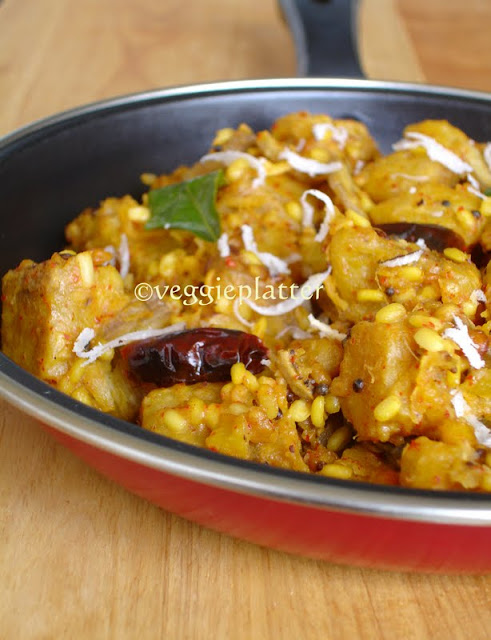
Adding dals (beans) like moong, chana or toor to dry vegetable preparations is a mundane thing in Andhra cooking. However, recently I came across a recipe using plantains and moong and the combo sounded interesting and also somewhat strange. When dals are added, the usual vegetables preferred are cabbage, beans, greens, beetroot, some gourds and even carrot. I had never heard about adding moong to a plantain preparation and was curious to see how this unusual alliance works. A plantain to me is either this sweet - tangy curry or chips or plantain fry. I decided to try it to see whether this could be added to my "plantain dishes" list since the preparation sounded simple and quick.
I must say that initially I was skeptical that the curry would end up bland. The final subzi proved me wrong and I ended up making this delicious koora twice last week.


Ingredients for 3 servings:
1 plantain
2 Tbsp moong dal
2 tsp oil
1 tsp each - chana dal, urad dal, mustard seeds & cumin seeds
2 dry red chilies - broken into bits
1/4 tsp turmeric powder
Few curry leaves
Pinch of asafoetida
Salt to taste
Chili powder to taste (1/2 - 1 tsp)
1/4 cup Shredded fresh coconut / grated dry coconut (optional but recommended)

Don't be put off by the long list of ingredients. All most all of them go into the tadka / popu.

Cooking:
* Boil a cup of water to soak moong dal. Drain the soaking water after 10 - 12 minutes.
* Mean while, prepare the plantain. Chop the ends, peel and quarter the plantain. Then cut the plantain crosswise to end up with cubes.
* Cook the plantain cubes adding water, directly in a small pressure cooker or a pressure pan. Cook until the plantains are done but still holding their shape. 
* Heat oil in a kadai / pan. Then add chana dal, urad dal, mustard seeds, cumin seeds, red chilies, curry leaves, turmeric powder and asafoetida. When dals turn reddish, add the cooked plantain cubes, salt, chili powder, coconut and moong dal. Stir well, cook for 2 -3 minutes more and turn off the stove.


Check what the other marathoners in BM#5 are cooking today.

Curry in a hurry under 30 min: Cool Lassi(e), Harini, Kalyani, Priya Mahadevan 
Seven Days of Colorful Dishes Kid's Special: Priya Suresh, Veena 
Seven Days of Indian Sweets: Shylaja, Srivalli  
Seven Days of Regional Specials: Priya Yallapantula  
Under 15 mins Quick Breakfast: Aarthi, Vaishali

Comments

Monday, May 9, 2011

Gobhi - Gajar - Matar


Gobhi-Gajar-Matar = Cauliflower-Carrot-Peas in Hindi

Followers of this blog may probably know that I keep posting recipes under a series named "simple and quick subzis". The recipes published would hardly take around 10 – 15 minutes to put together and represent my style of every day cooking.
I chose the theme “curry in a hurry under 30 minutes” for blogging marathon # 5 , which is starting today. I have decided to continue posting simple ones in this marathon as well. However, some of these recipes may take a little longer than 15 minutes since Srivalli has been generous enough to grant more time. J
I am presenting gobhi - gajar - matar on the first day that happens to be a sukhi subzi or a dry curry. The commonly found vegetables in any Indian home like the cauliflower, peas and carrots are sautéed in a small amount of oil and then flavored with simple spices. This North Indian style subzi sans onion - tomato goes well with both rotis and rice.

Ingredients for 2 -3 servings:
For tadka : 2 -3 tsp oil, 1 tsp mustard seeds, 1 tsp cumin seeds, 1/4 tsp turmeric powder
2 cups cauliflower florets
1 big sized carrot (peeled and cubed)
1/4 cup peas (I used frozen)
1/2 tsp coriander powder
1/2 tsp cumin powder
Chili powder to taste
Salt to taste
Minced cilantro to garnish


Method:
1. Heat oil and add mustard and cumin seeds. When cumin seeds start to brown and mustard seeds start popping, add turmeric powder, cauliflower florets and carrot. Stir once, cover and cook until tender. If using fresh peas, they can be added as well now. Sprinkle a Tbsp of water if needed in between.
2. Then add the peas (if using frozen), salt and the spice powders. Sauté for a couple of minutes more and turn of the stove.
3. Garnish with cilantro and serve warm with rotis / rice. 


Check what the other marathoners are cooking today.

Curry in a hurry under 30 min: Cool Lassi(e), Harini, Kalyani, Priya Mahadevan 
Seven Days of Colorful Dishes Kid's Special: Priya Suresh, Veena 
Seven Days of Indian Sweets: Shylaja, Srivalli  
Seven Days of Regional Specials: Priya Yallapantula  
Under 15 mins Quick Breakfast: Aarthi, Vaishali

Comments

Thursday, May 5, 2011

Hayagreeva


The name Hayagreeva stands for two important things in the Madhwa Brahmin community of Karnataka - a deity and a sweet dish.
The belief is that Lord Hayagreeva or Hayavadana is an avatar of Vishnu and is the god of knowledge and wisdom. He is a god with human body and a horse's head and hence the name. According to the religious belief, he is brilliant white in color, adorns white garments and sits on a white lotus.
And hayagreeva also happens to be a delicious sweet item that is commonly prepared during the religious celebrations at Madhwa homes and temples (Rayara mata / Raghavendra Swamy temple).
One of my close pals whom I have known since my preschool days happens to be a Madhwa brahmin. Her mother introduced me to this delicacy, which remains to be one of my favorite dishes even for today. My friend would always remember to invite me over to her house whenever her mother made hayagreeva or would lure me with this if she wanted me to visit her. :) Thanks Kala.
Three ingredients remain constant in hayagreeva preparation - the chana dal, jaggery and the dry coconut. Some versions use poppy seeds as well but that is not mandatory. I don't remember my friend's mother ever using it. Ditto with ghee. If you are not counting calories, you can liberally use it or use sparingly as I did. And of course there is cardamom for flavor like the rest of Indian sweet dishes. Though the list of ingredients used strike a resemblance to the other delicacy of the Indian region, the chana dal kheer, the two dishes are way apart. Hayagreeva doesn't use milk and is fairly on the thicker side when done. The dal is cooked until just done so that the shape of the dal is retained in the end product.
When Design a Menu - 2 was announced and I saw chana dal in the list, I knew what was going to be my dessert. In fact, I have a whole menu with chana dal alone but since that is not the rule, we will go with this for the dessert part.


And also linking this to Akila's Dish name starts with H.


Ingredients for 4 - 5 servings:
1 cup chana dal
Jaggery powder to taste (1 - 1.5 cup depending upon the sweetness preferred)
1/2 cup grated copra / dry coconut
1 tsp cardamom powder
1 Tbsp ghee roasted cashews and raisins (optional)

Method:
* Cook chana dal in a pressure cooker adding 2 cups of water. The chana dal should not turn mushy but still hold their shape when cooked.
* Add the cooked chana dal, jaggery, grated dry coconut and cardamom powder to a sturdy pan or non stick pan. Start cooking on medium flame till all the jaggery melts and gets incorporated into the chana - coconut mixture. Turn off the stove.
* Add the toasted raisins and cashews if using.

Note:
Don't add water when jaggery is added since hayagreeva should be a thick mass. And also the chana dal should hold its shape. Mine was a little mushy since I added overnight soaked chana dal.


Monday, May 2, 2011

Mango - Peanut - Cilantro Chutney


I keep jotting down the recipes that interest me with an honest intention of trying them in near future. J I have been doing this even before I started to cook on my own and this has resulted so far in 3 books filled with hundreds of recipes. Particularly, when the recipe comes from my mother or any family member I have to note it down since there is no option of copying the link as in the case of websites / books. I must however admit that so far I have mastered a very small fraction of those recipes while majority of them haven’t been tried at all. L
Today’s post is one such recipe from my book. This mango peanut cilantro chutney from a Telugu cook show caught my attention because of the unusual combination of the ingredients. It was tempting enough that I tried it immediately after entering it promptly in my cookbook.
Mango pachadi / chutney needs no introduction but the aromatic curry leaves – cilantro combo and the sweet peanuts add new flavors to this yummy chutney. We liked it so much that M got another mango the next day for some more chutney.

Ingredients:
1 Tbsp oil
2 Tbsp urad dal
1 tsp cumin seeds
Green chillies (I used small sized 6 Serrano peppers.)
2 stalks of Curry leaves (or about 15 - 20 leaves)
1/4 cup peanuts
1 cup green mango cubes
1/4 cup cilantro / coriander leaves
A pinch of asafoetida
Salt to taste


Method:
* Heat the oil in a pan and add urad dal, cumin seeds and peanuts.
* When they all start to turn reddish add green chilies and curry leaves. 
* Sauté for a few seconds and then add the mango cubes, cilantro, salt, asafoetida and continue toasting.
* Continue to cook for about five minutes, stirring and turn off the stove.
* Cool the mixture and grind it coarsely.

This is going to be a part of Design a Menu - Second edition.

Comments