HOME        |        ABOUT        |        COPYRIGHT        |        CONTACT        |         RECIPE INDEX        |         INDIAN THAALIS        |         MILLET RECIPES        |        EVENTS' ROUNDUP        

Showing posts with label Breakfast Recipes. Show all posts

Monday, July 12, 2021

Oats Idli / Steel Cut Oats Idli

If one is looking to incorporate oats in diet, especially Indians who are looking for other than porridge / instant cereal ideas, here are some healthy idlis to try. These idlis are prepared using steel cut oats and not the quick cooking version. They are therefore prepared the traditional way, by soaking the ingredients, grinding and fermenting the batter. These idlis are nutritious, gluten-free, and vegan like many idli versions I have posted so far in this idli series. They make a filling and wholesome meal when served with sambhar and chutney. 
The different types of oats available in the market - the steel cut version, rolled oats and the quick cooking oats, all start from oat groats. When the tougher outer shells aka hulls are removed from oat kernels, they are called oat groats. The difference among the oat varieties lies in the way they are prepared and processed. Steel cut oats aka Irish meal is the less refined of all the three. They are oat groats chopped into 2 to 3 pieces using a steel blade and hence the name. They have a chewier and coarser texture and take longer to cook of all the three varieties. Rolled oats or old fashioned oats are oat groats that have gone through steaming and flattening process. Quick cooking oats are further processed for a quicker cooking time.
I have posted two versions of idli below, the second version has less oats compared to the first version. Second version idlis are a tad lighter compared to the first version and makes a delicious meal, served with sambhar. If using idli rava (cream of rice) instead of idli rice, then soak it in water individually and don't grind it along with the ingredients. After grinding the rest of the ingredients, squeeze the water out of the idli rava and just mix it with the ground batter.

Version 1
Ingredients: (Yield - 20 idlis)
1 cup steel cuts oats
1/2 cup idli rice
1/2 cup skinned black gram / urad dal
A handful of flattened rice
1/4 tsp. fenugreek seeds
2 & 1/4 tsp. salt
1 & 1/4 cup water to grind

Version 2
Ingredients: (Yield - 16 idlis)
1/2 cup steel cut oats
1/2 cup idli rice
1/2 cup skinned black gram/ urad dal
2 tbsp. flattened rice / poha
1/4 tsp. fenugreek seeds / methi seeds
About 2 tsp. salt
1 & 1/4 cup water to grind
Directions:
1. Add steel cut oats, idli rice, skinned black gram, flattened rice and fenugreek seeds to a container. 
2. Rinse them twice with water and drain. Soak them together in water, in a wide bowl for about 4 - 5 hours and drain the water (used for soaking) completely. 
3. Grind them together adding salt and water as needed to grind into a smooth and thick batter. (The salt can be added just before making idlis if living in a warm climate. I add it while grinding since I live in a cold climate and the batter takes longer to ferment.)
4. Transfer the batter to a container large enough to hold the fermented batter. (The batter raises while fermenting and so plan accordingly and use a big container.) Cover the container and allow it to ferment overnight (if the batter was ground in the evening) or for about 10 - 12 hours in a warm place. If living in a cold climate, leaving the batter in an oven with the lights on (without turning on the oven) helps. Or use yogurt setting in an instant pot.
5. The fermented batter looks like below - thicker than when grounded, airy, and slightly sour smelling. Refrigerate the batter if not using it immediately and bring to room temperature or leave it outside for a couple of hours when ready to use it.
 
* Heat about 2 cups of water in a idli cooker base or a idli cooker or a steamer on medium heat. 
5. Gently stir the batter a couple of times with a ladle.
6. Grease the idli moulds with ghee / oil and fill them with batter.
* Place the idli stand in the prepared cooker / steamer and close the lid. Don't use the valve for the lid if using a pressure cooker.
7. Steam the idlis on low heat setting for about 20 - 25 minutes or until done. (The idlis should not stick when touched with moist fingers.) Check the water level in the steamer base and add extra if needed.
* Wait for about 10 minutes and then remove the idlis by running a spoon around the edges.
* Drizzle melted ghee over the idlis and serve them with a chutney and /or sambhar. Mine were served with tomato chutney, roasted gram chutney and sambhar.
* Refrigerate any left over idlis and use in a day or two. Or they can be cooled down immediately after preparation and frozen to use later. Just nuke them in a microwave, covered and enjoy hot, piping idlis when needed. 

Sunday, July 11, 2021

A - Z Idli Series ~ N for Navadhanya Idli


I had planned another traditional idli recipe from Karnataka for today but could not source an ingredient needed for it and had to discard the idea. I then went ahead and as an experiment, prepared these idlis using navadhanya. To be honest, the idea would never have occurred to me if not for this series and these protein rich idlis turned out soft and fluffy. Navadhanya refers to the nine grains used in Hindu religious rituals - Bengal gram, black gram, black sesame seeds, chickpeas, green gram, horse gram, rice, wheat, and white colored beans (I used black eyed peas for it). 

These idlis are simple to make though advanced planning is needed as the ingredients need to be soaked, ground and fermented before steaming the batter in the idli moulds. Though the process sounds tedious, the steps are quite simple and doesn't need much of one's energy. The idlis can be made in advance and can be refrigerated or even frozen to have a healthy breakfast ready in the morning rush hours with a simple step of reheating them in a microwave.

Navadhanya idli turned out fluffy with a subtle flavor to them, because of the wheat used in the recipe. These navdhanya idlis served with chutney and / or sambhar  make a filling breakfast or dinner option as they are super healthy, nutritious and vegan. Ours were served with peanut chutney and erra karam, Andhra style onion chutney.
I used navadhanya as I mentioned above but some ingredients may be substituted or omitted from the recipe as per preference. Brown rice can also be replaced with idli rice. Wheat can be completely omitted from the recipe as well if it's flavor in the idli is not to your taste. Whole black gram can be replaced with skinned variety as it needs only a couple of hours of soaking and also doesn't need thorough rinsing to get rid off the skins. Omitting one or two beans that are not on hand works too.

Some of the beans used here like chickpeas, black gram and horse gram need to be soaked overnight or for at least 8 hours. It is hard to sort out and soak the ingredients individually according to their soaking periods and therefore I soaked rice, wheat, Bengal gram, green gram, black eyed peas, chickpeas and horse gram in water in one container and black gram in another bowl. The black gram needs some thorough rinsing to get rid off the skins as much as possible and so they were soaked separately.

I soaked the ingredients overnight and ground the batter in the morning. The batter fermented quickly, in about 7 hours which never happens with my regular idli batter. It maybe partly because of the quantity of the beans used in the recipe and partly because of the weather the day I made these idlis, at 80 deg F / 27 deg C. I would recommend to grind the batter in the morning to keep an eye on the fermentation process. I am not sure but guessing that too much fermentation may cause the batter to start smelling foul because of the beans used here.

Ingredients: (Yield - 28 idlis)
1 cup idli rice 
1/2 cup brown rice
1/4 cup wheat kernels
1/2 cup + a handful of black gram *
6 tbsp. each - Bengal gram, green gram, black eyed peas, chickpeas, and horse gram **
Toasted black sesame seeds as needed
Salt to taste (I used about 2.5 tsp. salt.)
Water to grind the ingredients
Notes:
* I used whole black gram but it can be substituted with skinned black gram which takes only about 2 hours of soaking. 
** Some of the ingredients used here like black gram, chickpeas, horse gram need overnight or about 8 hours of soaking.

Directions:
1. Add idli rice, brown rice, wheat, Bengal gram, green gram, black eyed peas, chickpeas and horse gram to a container. Rinse them with water twice and drain. Add enough water and soak them overnight or for at least 8 - 10 hours.  
* Add black gram to another bowl and rinse. Drain and add water to the bowl and soak it also overnight or for at least 8 hours. (Or skinned black gram can be substituted which needs soaking for only a couple of hours.)
After the soaking, drain the water from the rice - lentil container and rinse again twice with water and keep aside. However the black gram needs some thorough rinsing to get rid off the skins as much as possible. I used whole black gram since it is used in navdhanya but skinned black gram can be substituted to skip the rinsing part.
2. Add all the soaked and drained ingredients to a grinder. Grind them adding salt and enough water into a smooth and thick batter. If using a mixer then grind them in 2 batches. (The salt can be added just before making idlis if living in a warm climate. I add it while grinding since I live in a cold climate and the batter takes longer to ferment.)
* Transfer the batter to a container large enough to allow the batter to raise during fermentation. Cover the container and allow it to ferment for about 7 - 8 hours. (It took me about 7 hours to ferment the batter when the temperature was about 80 deg F / 27 deg C and it may take longer in  cold climate. Leaving the batter out after fermentation may turn smelly.)
3. The fermented batter looks like above in the picture 3. Refrigerate the batter if not using immediately and use within a couple of days. Leave the refrigerated batter on the counter for a couple of hours before using.
* Heat about 2 cups of water in a idli cooker base or a idli cooker or a steamer on medium heat. 
4. Grease the idli moulds with ghee / oil and sprinkle black sesame seeds over them.
5. Gently stir the batter a couple of times with a ladle. Pour the batter into the idli moulds carefully without spilling.
6. Place the idli stand in the prepared cooker / steamer and close the lid. Don't use the valve for the lid if using a pressure cooker.
Steam the idlis on low heat setting for about 20 - 25 minutes or until done. (The idlis should not stick when touched with moist fingers.) Check the water level in the steamer base and add extra if needed.
7. Wait for about 10 minutes and then remove the idlis from idli stand. Remove the idlis by running a spoon around the edges.

Serving the idlis: 
* Drizzle melted ghee over the idlis and serve them with a chutney, and sambhar if preferred. Mine were served with peanut chutney and erra karam / Andhra style onion chutney.

What to do with leftover idlis:
1. Refrigerate the left over idlis and use in a day or two. 
2. Or they can be cooled down immediately after preparation and frozen to use later. Nuke them in a microwave, covered and enjoy hot, piping idlis when needed.

Saturday, July 10, 2021

A - Z Idli Series ~ M for Mallige Idli

So far in my idli series,
D for Dal Idli
J for Jowar Idli
L for Lauki Idli

Here are some spongy and pillowy soft idlis from Karnataka called mallige idli, for some breakfast indulgence. These idlis which are popular in the Mysore area are made with rice, urad dal, along with the addition of flattened rice and tapioca pearls. These idlis are named after another specialty of the region, Mysore mallige, a renowned variety of jasmine flowers in the state. It is an allusion to the color and texture of these idis.
The texture of these plump and soft mallige idlis is so splendid that I would recommend it to all idli connoisseurs out there. This is a 'must try' idli and I prefer them over the regular version idlis any day.  There is a similar version of idlis  in Tamil Nadu called khusboo idli, named after a popular south Indian actress. 
The recipe of these idli vary from home to home and this dish needs some advance planning as the ingredients need to be soaked, ground and fermented. The secret behind 'perefct' idlis is always well fermented batter and here are some tips to make good idlis. These idlis pair superbly with coconut chutney and serve it with sambhar to make it a complete meal. We enjoyed our mallige idli with peanut chutney and tomato - onion chutney.

Ingredients: (Yield - 32 idlis)
2 cups idli rice / Selam akki
1/2 cup / skinned black gram / urad dal / uddina bele
1/2 cup flattened rice / poha / avalakki
1/4 cup tapioca pearls / sago / sabudana / sabbakki
Water to grind (I used about 1 & 3/4 cups.)
2 tsp. salt or to taste
Directions:
1. Rinse idli rice, skinned black gram, flattened rice and tapioca pearls together and drain. Soak them together in water, in a wide bowl for about 4 to 5 hours and drain the water used to soak completely.
2. Grind them together adding salt and water, only as much needed to grind them into a smooth and thick batter. (The salt can be added just before making idlis if living in a warm climate. I add it while grinding since I live in a cold climate and the batter takes longer to ferment.)
2. Transfer the batter to a container large enough to allow the batter to raise during fermentation. (Compare the pictures 2 and 3 to see the volume of the batter increasing after fermentation). Cover the container and allow it to ferment overnight (if the batter was ground in the evening) or for about 10 - 12 hours in a warm place. If living in a cold climate, leaving the batter in an oven with the lights on (without turning on the oven) helps. Or use yogurt setting in an instant pot.

3 & 4. The fermented batter looks like above in the picture - thicker than when grounded, airy, and slightly sour smelling. 
* Heat about 2 cups of water in a idli cooker base or a idli cooker or a steamer on medium heat. 
* Grease the idli moulds with ghee / oil. 
* Gently stir the batter a couple of times with a ladle. 
5. Ladle the batter into the idli moulds carefully without spilling.
 Place the idli stand in the prepared cooker / steamer and close the lid. Don't use the valve for the lid if using a pressure cooker.
6. Steam the idlis on low heat setting for about 20 - 25 minutes or until done. (The idlis should not stick when touched with moist fingers.) Check the water level in the steamer base and add extra if needed.
7. Wait for about 10 minutes and then remove the idlis from idli stand. 
8. Remove the idlis by running a spoon around the edges.

Serving the idlis:
Drizzle melted ghee over the idlis and serve them with a chutney, and sambhar if preferred. Mine were served with peanut chutney and tomato - onion chutney.

What to do with leftover idlis:
1. Refrigerate the left over idlis and use in a day or two. 
2. Or they can be cooled down immediately after preparation and frozen to use later. Nuke them in a microwave, covered and enjoy hot, piping idlis when needed. 

Saturday, June 26, 2021

Barnyard Millet Dosa / Oodhala Dosa

Barnyard millet is a healthy ingredient that would prove beneficial to include in one's diet, especially for diabetics. This pseudo cereal which has a low glycemic index is gluten-free, low in calories, and a good source of iron and fiber. It is easy to incorporate it in Indian cuisine even if one is not used to it and it can replace rice in many of the dishes. This is a popular ingredient during fasting in certain regions of India as cereal grains are not allowed during the period. 
This is one of my favorite millets to substitute in south Indian style breakfast dishes as it can replace rice easily. Today's barnyard dosa are a healthy twist to the traditional dosa recipe which is prepared with a fermented batter of rice and black gram. This is one of those millet recipes one can try if one is skeptical towards millets or new to millet cooking. These dosas are similar to traditional version, texture and tastewise and none would be the wiser. These dosas can be served for breakfast / dinner along with coconut chutney and sambhar for a wholesome meal. 
Ingredients: (Yield - 12 dosa)
1 cup sanwa / barnyard millet
1/4 cup urad dal / skinned black gram 
1 tbsp. chana dal / split chickpeas / 
2 tbsp. poha / flattened rice
1/2 tsp. methi /fenugreek seeds 
1 tsp. salt
About 1/2 cup water to grind
Oil to make dosas
Directions:
* Add millet, skinned black gram, split chickpeas, flattened rice, fenugreek seeds and rinse twice with water and drain.
* Soak them in water for 3 - 4 hours. Drain the water used to soak before grinding. 
* Add the soaked ingredients and salt to a blender / grinder and grind finely adding water as required to form a thick, pourable consistency batter.
* Transfer the batter to a container, cover and let it ferment in a warm place overnight or for more time if living in a cold place.
* Heat a griddle and pour a ladleful batter at the center and spread it thinly with the back of the ladle. (I made medium sized, thick ones but the dosas are made thinner and griddle sized.) Drizzle oil around the edges and cook until the surface appears dry. 
* Flip the dosa and cook on the other side as well for few seconds.
* Remove it with a spatula and repeat the dosa making process.
* Serve them warm with chutney of your choice.
This post is an entry for Blogging Marathon and check the link to find out what other marathoners are cooking.

Saturday, June 12, 2021

Lauki Idli / Sorekayi Idli / Sorakaya Idli / Bottle Gourd Idli

I had two kind of idlis on my mind for alphabet 'L' and in fact, I had already cooked one of those 'L' idlis, about an year ago. Lauki idlis / bottle gourd idlis was not on that list and to be honest, the idea did not even occur to me. The suggestion came from my husband at the last minute. Bottle gourd is one of those low calorie vegetables and I try to sneak in our diet as much as possible and so, I thought why not? A quick google search showed me that there are enough creative minds who had already experimented with the idea. 

I would have thought of a different batter if I had time but I had to keep it quick since these were made for today's breakfast with no advance preparation. I used an instant batter made with semolina aka rava idli batter for these idlis. And so there is no soaking, grinding or fermenting the batter. If one has toasted semolina on hand or a MTR rava idli packet, 😀 the idli preparation becomes a breeze. One can do the toasting semolina part in the recipe in advance and keep it handy. If one has never tried idli making, rava idli is an easy and instant version to try. 
The semolina is toasted with a seasoning and soaked in yogurt for about 20 -30 minutes and the batter is ready to go. I usually add grated carrot and peas to the rava idli batter to make it nutritious and today, bottle gourd went in instead. They turned out good and one would not even notice the difference between regular rava idlis and these. They make a great meal anytime of the day though these are considered a breakfast dish. We enjoyed them today with a chutney made with fried gram sans coconut. Vegetable saagu would be a delicious accompaniment to these idlis.
Ingredients: (Yield - 14 idli)
2 tbsp. oil
1 to 2 tbsp. cashews 
1 tsp. split chickpeas / Bengal gram / chana dal
1 tsp. skinned black gram / urad dal
1/2 tsp. mustard seeds
1 tsp. cumin seeds
1 inch ginger piece, finely chopped / grated
1 or 2 green chili, finely chopped
1 sprig of curry leaves
1 & 1/2 cups semolina (medium coarse)
3/4 cup peeled & grated bottle gourd
1/2 cup yogurt
3/4 cup water
1 tsp. salt or to taste
2 tbsp. minced cilantro
1/2 tsp. Eno's fruit salt

Directions:
1. Heat oil in  a pan and add cashews. Toast them until golden brown, by turning them once. Transfer them into a small bowl with a slotted spoon.
* Add Bengal gram, skinned black gram, mustard and cumin seeds to the same oil. When the lentils start to turn reddish brown, add ginger, green chillies and curry leaves. Sauté for about a minute. 
2. Next add semolina to the pan and toast on medium flame, continuously stirring until you start to smell the aroma and it starts to slightly change the color.
* Turn off the stove and transfer the mixture into a bowl and let it come to room temperature. (This can be done in advance and the mixture can be stored in air tight container for weeks.)
3. Add grated bottle gourd, salt and minced cilantro to the semolina bowl.
4. Next add yogurt and water to the bowl and mix well. Cover and keep it aside for about 30 minutes.
5. Stir the mixture once and if the mixture appears too thick, add some water. 
* Grease the idli moulds with oil / ghee. Place a cashew at the center of each idli mould. (Or the cashews can be added to the batter.)
* Heat about 2 cups of water in a idli cooker base or a idli cooker or a steamer on medium heat.
6. Add Eno's fruit salt to the semolina bowl just before making idlis and sprinkle a tsp. of water over it and mix well. 
* Ladle the batter into the idli moulds.
* Place the idli stand in the prepared cooker / steamer and close the lid. Don't use the valve for the lid if using a pressure cooker.
* Steam the idlis on low heat setting for about 20 - 25 minutes or until done. (The idlis should not stick when touched with moist fingers or a toothpick / knife inserted in the center should come out clean.) Check the water level in the steamer base and add extra if needed.
* Wait for about 10 minutes and then remove the idlis by running a spoon around the edges.
* Drizzle melted ghee over the idlis and serve them with a chutney / saagu.
* Refrigerate the left over idlis and use in a day or two. Or they can be cooled down immediately after preparation and frozen to use later. Nuke them covered in a microwave, and enjoy hot, piping idlis when needed. 

Monday, May 3, 2021

A - Z Idli Series ~ G for Greengram Idli

So far in this idli series,
D for Dal Idli

I have started a 'A - Z' Idli' series last month and it's turn for the alphabet G today. For the uninitiated, idli is an iconic breakfast dish from the south Indian cuisine, made with a fermented batter of rice and skinned black gram. Idlis taste bland on their own but make a delicious meal when served along with a chutney (usually a coconut based one), sambhar - a lentil preparation and podi - a spicy lentil powder.

Today's idli is a protein rich and nutritious option for breakfast which I prepared on a whim sometime ago using my pesarattu batter. I have always felt that pesarattu is something that you either love or hate. These green gram based pancakes from Andhra are mostly loved in the coastal regions than the rest of the state. I have no problems with pesarattu whereas my husband is not a great fan of those. Why I am mentioning it here is that it applies to these idlis as well. If one doesn't mind pesarattu then these greengram idlis taste fine as well since the batter used in both cases is the same one. My husband surprisingly did not mind the flavor of these idlis.
Here is another version of green gram idli that I posted a while ago that contains rice and black gram as well. These idlis were made with just green gram alone and no rice / idli rava or black gram went into the preparation. In this version, the green gram is soaked for a few hours and then ground with ginger, chillies and salt. The batter needs no fermentation, making this idli an instant version. The green gram can be soaked previous night and ground in the morning for breakfast. Stir in Eno's fruit salt into the batter just before preparing idlis.  

These guilt-free idlis are obviously healthy, gluten-free and diabetic-friendly.  Grease the idli moulds with oil instead of ghee, if following vegan diet. They make a filling and enjoyable meal when served along with chutney and sambhar. 

Ingredients: (Yield - 12 idlis)
1 cup green gram / sabut moong / pesalu
1 inch piece of ginger
2 green chilies
Salt to taste 
1 tsp. cumin seeds
1 tsp. fruit salt / 1 Eno's sachet
Ghee / oil for greasing the idli moulds
Directions:
* Rinse and soak green gram for about 3 to 4 hours in sufficient water.
* Drain the water used to soak the green gram. 
* Grind the soaked green gram, ginger and chili in a blender, adding a few tablespoons of water if needed. (I added 2 tbsp. of water to grind the ingredients.)
* Transfer the ground batter to a container. Add salt and cumin seeds to the batter and stir to combine.
* Grease the idli plates with ghee / oil. 
* Heat water in an idli cooker / pressure cooker base or in a steamer.
* Add fruit salt to the batter and sprinkle some water over it. Gently stir the mixture to incorporate the fruit salt into the batter. (Add fruit salt just before steaming idlis.)
* Spoon the batter into the greased idli moulds and place the idli stand in the cooker / steamer and close the lid. Don't use the pressure valve if using pressure cooker. 
* Steam on low medium flame for about 20 minutes or until done. (When you touch the tops of idlis with moist fingers, the idlis should not stick.)
* Wait for about 5 to 10 minutes and remove the idlis by running a spoon around the edges. 
* Drizzle a spoon of ghee over the idlis and serve with chutney and/or sambhar.

Saturday, April 17, 2021

A - Z Idli Series ~ D for Dal Idli


I have been planning to post a idli series for sometime now and was able to put together some traditional recipes these past few months, in 'A - Z'  style format. I am starting the series this week with alphabet "D' and going forward, I am going to post 3 idli recipes each month. It's dal idli or diabetic idli for alphabet 'D' today.

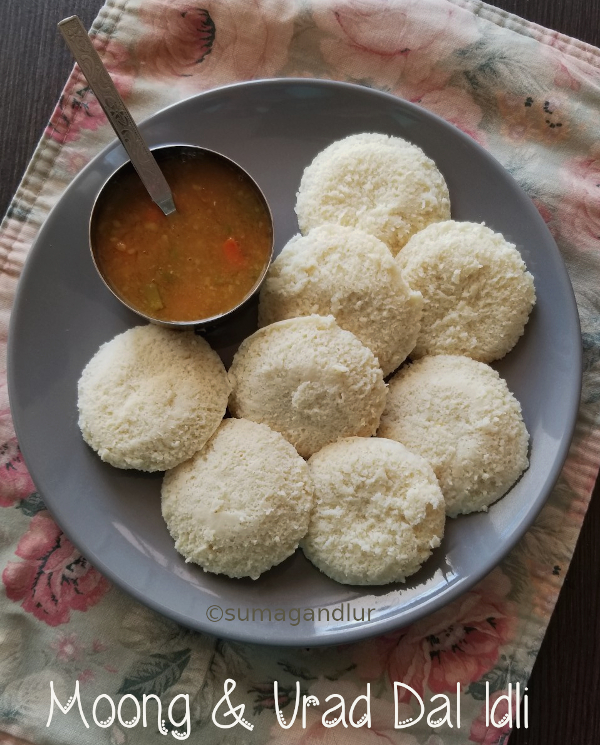
Idli is a classic south Indian dish that makes a healthy and guilt free breakfast or brunch item. The standard version contains rice and skinned black gram / urad dal, making it gluten-free as well. Today's version of dal idli totally skips rice and is prepared using only two types of lentils, moong dal (skinned green gram) and urad dal (skinned black gram) thus making it more nutritious and protein rich. Moong dal idlis are traditionally made in Andhra and I have added a handful of black gram to the recipe. Basically, one is replacing the rice with moong dal in the idli recipe, thus making it a great meal option for diabetics as well.

Ingredients: (Yield - 24 idlis)
1 cup skinned green gram / yellow moong dal
1/4 cup skinned black gram / urad dal
Salt to taste (I added about 1 tsp. salt)
About 1 cup water to grind the batter

Directions:
* Rinse moong dal and urad dal and drain. Soak them together in water, in a bowl for about 2 to 3 hours and drain the water used to soak completely.
* Grind them together adding salt and water just enough to grind them into a smooth and slightly thick batter with pouring consistency. (Salt can be added just before making idlis if living in a warm climate.)
* Transfer the batter to a container and cover it. Allow it to ferment overnight (if the batter was ground in the evening) or for about 10 - 12 hours in a warm place or in an oven with the lights on.
* The fermented batter doesn't raise much like the regular idli batter but raises slightly.
* Stir the fermented batter gently with a ladle. The batter would be airy and frothy.
* Heat about 2 cups of water in a idli cooker base or a idli cooker or a steamer on medium heat. Grease the idli moulds with ghee / oil and spoon the batter into idli plates.
* Place the idli stand in the prepared cooker / steamer and close the lid. Don't use the valve for the lid if using a pressure cooker.
* Steam the idli on low heat setting for about 20 - 25 minutes or until done. (The idlis should not stick when touched with moist fingers.)
* Wait for about 10 minutes and then demold the idlis by running a spoon around the edges.
* Serve them warm with any chutney / sambhar.

Monday, April 5, 2021

Musthi Polo

I thought of posting one more dosa recipe today which happens to be a popular and traditional breakfast dish from Konkani households. Polo means dose / dosa in Konkani while musthi means 'fist' in both Konkani and Kannada. Most of the ingredients used in the recipe were measured by fistfuls which would amount to approximately to 1/4 cup and hence the name. These polo are soft and fluffy and are prepared on the similar lines as the set dose, a breakfast popular in the eateries across Bangalore. Served along with coconut chutney or any other chutney of preference, these spongy dosas make a delicious breakfast.

Ingredients:
1 cup rice *
1/4 cup skinned black gram / urad dal
1/4 cup flattened rice / poha
1/2 tsp. fenugreek seeds / methi seeds
1/4 cup fresh coconut
Salt to taste
Water to grind (I used a little more than a cup of water.)
* (I use extra long grain rice. Any rice can be used but not aromatic variety). 
Directions:
* Rinse and soak rice, black gram, flattened rice and methi seeds for about 4 hours. Drain the water used to soak before grinding.
* Grind finely the soaked ingredients along with coconut, salt and enough water to form a pourable but not runny batter. 
* Transfer the batter to a container, cover and let it ferment in a warm place overnight or for more time if living in a cold place.
* Heat a griddle and pour a ladleful batter at the center and spread only a little with the back of the ladle. These dosa are made smaller and thicker than the regular dosa. Drizzle oil around the edges and cook until the surface appears dry. The surface turns all porous if the batter is fermented well.
* The dosa can be removed at this point or flipped and cooked on the other side as well for few seconds.
* Remove the polo with a spatula and repeat the polo making process.
* Serve them warm with chutney of your choice.

Friday, December 18, 2020

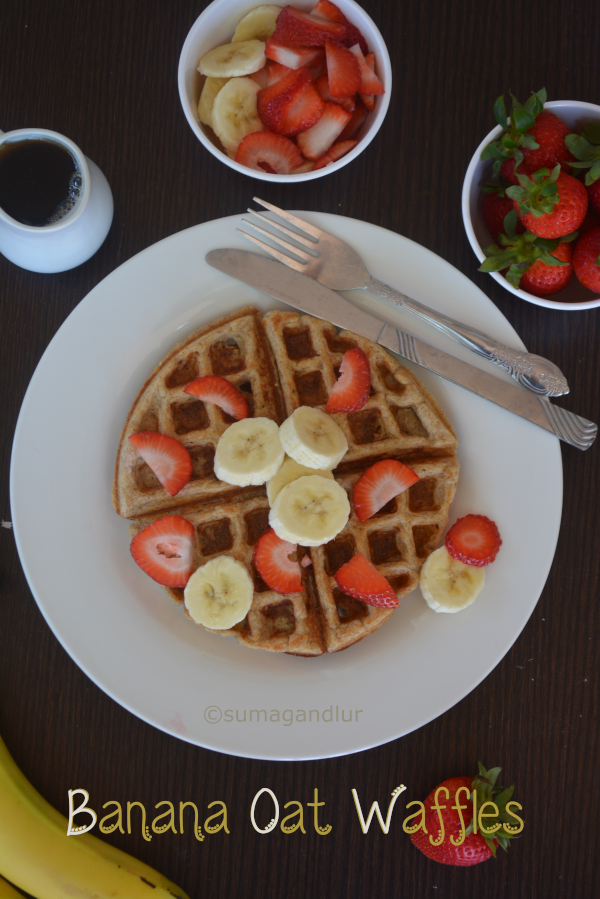
Vegan Banana Oat Waffles

I was cleaning up our pantry a few months ago and finding ways to use up those odds and bits from the bins. This recipe was an interesting find to finish off that last portion of the oats that were lying untouched in the can for months. Of course I could make only a small portion which my daughter thoroughly enjoyed for her lunch that day. 

These light and fluffy pancakes are gluten-free and vegan. These are made with oats, banana, almond milk and flax eggs. They make an easy and fuss-free breakfast. In fact, all you need to do is blend the ingredients and make waffles. They can be made in a big batch and extras can be refrigerated or frozen, stored in plastic wraps. They can be reheated in a toaster oven when needed.
Recipe source: Here
Ingredients: (Yield - about 4)
2 flax eggs
2 cups old fashioned oats
1 cup unsweetened almond milk or milk of choice
1 medium sized ripe banana
1.5 tsp vanilla extract
1 tsp. cinnamon
1 tsp. baking powder
1 packet stevia / preferred sweetener

Directions:
* For flax eggs, combine 2 tbsp. flax meal and 6 tbsp. water in  a small bowl.
* Blend all ingredients until smooth in a blender and let it sit for about 10 minutes.
* Meanwhile preheat the waffle iron. 
* Cook waffles in the waffle iron as per the manufacturer's instructions. Leave the waffles a little longer after the waffle iron goes off to make the waffles a little crisper.
* Enjoy them warm with any preferred toppings like maple syrup, fruits, honey / others.

Thursday, December 17, 2020

Chuda Santhula

Poha is a quick and tasty breakfast dish prepared in India under various regional names and variations. Poha, though usually associated with the state of Maharashtra is equally popular in other regions as well. The basic recipe involves rinsed flattened rice being tossed with sautéed onions and spices. There may be extra additions like vegetables, ground peanuts or coconut depending upon the region. Today's version comes from Odisha, a state from the eastern parts. This version is tasty as well and fennel seeds lend their unique flavor to it.
Below are some versions that have been posted earlier.
Ingredients:
2 cups thick flattened rice / poha
2 tbsp. oil
1 tbsp. peanuts (optional)
1 tsp. mustard seeds
1/2 tsp. fennel seeds
1 sprig of curry leaves
1/2 tsp. grated / finely chopped ginger
2 green chilies, chopped finely (adjust the quantity as needed.)
1 big sized onion, sliced
1 tomato, finely chopped
1/8 tsp. ground turmeric
1 tsp. salt


Directions:
* Rinse flattened rice with water and drain in a colander and leave it aside. Or if needed, soak for few minutes until they soften.
* Heat oil in a pan / kadai and add peanuts if using, mustard seeds and fennel seeds. 
* When the peanuts start to turn brownish, add ginger and green chilis and sauté for few seconds. Next add onion to the pan and stir. 
* Saute onion on low heat until it turns translucent. 
* Next add tomato and turmeric to the pan and stir well. 
* Cook until the tomato turns almost mushy. 
* Finally add the rinsed beaten rice and salt. 
* Mix well with a spatula, and if the mixture appears dry, sprinkle one or two tbsp. of water and toss again. Adjust the quantity of salt if needed. 
* Cover the pan and continue to cook on low heat for about 5 to 6 minutes and turn off the stove. Serve it hot immediately.