HOME        |        ABOUT        |        COPYRIGHT        |        CONTACT        |         RECIPE INDEX        |         INDIAN THAALIS        |         MILLET RECIPES        |        EVENTS' ROUNDUP        

Showing posts with label Healthy Breakfast. Show all posts

Wednesday, November 10, 2021

A - Z Idli series ~ Y for Yellow Moong Idlis

Readers who follow my blog might have noticed that I am posting recipes as part of 'A - Z' Idli series these past few months. I am concluding the series this week and am going to post a recap of the whole series on Friday. Alphabet of the penultimate day happens to be 'Y'. Today's idlis are made only using yellow colored moong dal which are skinned mung beans (green ones). Moong dal is rich in protein like any other lentil and is easily digestible. These idlis are obviously healthy and protein rich, besides being diabetic friendly as well. These are gluten free and the recipe can be easily veganized by skipping yogurt. These idlis when served with a chutney and sambar make a wholesome meal.

The dal idlis I posted earlier in the series used both moong dal and black gram. These idlis need just moong dal as I mentioned above and do not need either rice or skinned black gram as the standard version idlis do. This idli preparation involves soaking but doesn't need fermentation of the batter, making these idlis a quick fix variety. Moong dal soak quickly and it takes about a couple of hours soaking. The dal can be soaked overnight to cut time, ground in the morning and idlis would be ready in less than an hour. I added carrots and peas to the batter for extra nutrition. Yogurt was added to lend a bit of tanginess to idlis. I added Eno's fruit salt to instantly ferment the batter as this idli batter was being used without any fermentation. 
Ingredients: (Yield - 8 idlis)
3/4 cup moong dal (Skinned mung beans / yellow colored one)
1.5 tsp. salt or to taste
2 tbsp. yogurt
1 tbsp. oil
1 tbsp. cashew pieces
1 tsp. mustard seeds
1 tsp. Bengal gram / chana dal
1 tsp. cumin seeds
1/2 tsp. grated ginger
1 small green chili, finely minced
1 sprig of curry leaves
2 tbsp. yogurt
3 tbsp. grated carrot
1 to 2 tbsp. frozen / fresh peas
1 tbsp. finely minced cilantro
2 tbsp. water (optional)
1/2 Eno's packet
Directions:
1. Rinse moong dal with water twice and drain. Soak moong dal in enough water for about 2 hours and drain the water completely.
2. Grind together the soaked moong dal, salt and yogurt in a blender to a smooth consistency. Add a little quantity of water if needed to grind the batter. Transfer the ground batter to a bowl.
3. Heat oil in  a pan and add cashews. Toast them until golden brown, by turning them once. Transfer them into a small bowl with a slotted spoon.
* Add Bengal gram, mustard and cumin seeds to the same oil. When the lentils start to turn reddish brown, add ginger, green chilis and curry leaves. Sauté for about a minute and turn off the stove
* Transfer the above sautéed tempering, cashews, grated carrot, peas and minced cilantro to the bowl.
4. Mix well and cover the bowl. Keep it aside for about 30 minutes.
Stir the mixture well after the resting period. Add water if the mixture appears too thick at this point. 
* Grease the idli moulds with oil / ghee. 
* Heat about 2 cups of water in a idli cooker base or a idli cooker or a steamer on medium heat.
5. Add Eno's fruit salt to the batter just before making idlis.
6. Sprinkle a tbsp. of water over the fruit salt and mix well. 
7. Ladle the batter into the idli moulds. Place the idli stand in the prepared cooker / steamer and close the lid. Don't use the valve for the lid if using a pressure cooker.
* Steam the idlis on low heat setting for about 20 minutes or until done. (The idlis should not stick when touched with moist fingers or a toothpick / knife inserted in the center should come out clean.) Check the water level in the steamer base and add extra if needed.
8. Wait for about 10 minutes and then remove the idlis by running a spoon around the edges.
* Drizzle melted ghee over the idlis and serve them with a chutney / sambhar.
* Refrigerate the left over idlis and use in a day or two. Or they can be cooled down immediately after preparation and frozen to use later. Nuke them covered in a microwave, and enjoy hot, piping idlis when needed. 

Saturday, June 26, 2021

Barnyard Millet Dosa / Oodhala Dosa

Barnyard millet is a healthy ingredient that would prove beneficial to include in one's diet, especially for diabetics. This pseudo cereal which has a low glycemic index is gluten-free, low in calories, and a good source of iron and fiber. It is easy to incorporate it in Indian cuisine even if one is not used to it and it can replace rice in many of the dishes. This is a popular ingredient during fasting in certain regions of India as cereal grains are not allowed during the period. 
This is one of my favorite millets to substitute in south Indian style breakfast dishes as it can replace rice easily. Today's barnyard dosa are a healthy twist to the traditional dosa recipe which is prepared with a fermented batter of rice and black gram. This is one of those millet recipes one can try if one is skeptical towards millets or new to millet cooking. These dosas are similar to traditional version, texture and tastewise and none would be the wiser. These dosas can be served for breakfast / dinner along with coconut chutney and sambhar for a wholesome meal. 
Ingredients: (Yield - 12 dosa)
1 cup sanwa / barnyard millet
1/4 cup urad dal / skinned black gram 
1 tbsp. chana dal / split chickpeas / 
2 tbsp. poha / flattened rice
1/2 tsp. methi /fenugreek seeds 
1 tsp. salt
About 1/2 cup water to grind
Oil to make dosas
Directions:
* Add millet, skinned black gram, split chickpeas, flattened rice, fenugreek seeds and rinse twice with water and drain.
* Soak them in water for 3 - 4 hours. Drain the water used to soak before grinding. 
* Add the soaked ingredients and salt to a blender / grinder and grind finely adding water as required to form a thick, pourable consistency batter.
* Transfer the batter to a container, cover and let it ferment in a warm place overnight or for more time if living in a cold place.
* Heat a griddle and pour a ladleful batter at the center and spread it thinly with the back of the ladle. (I made medium sized, thick ones but the dosas are made thinner and griddle sized.) Drizzle oil around the edges and cook until the surface appears dry. 
* Flip the dosa and cook on the other side as well for few seconds.
* Remove it with a spatula and repeat the dosa making process.
* Serve them warm with chutney of your choice.
This post is an entry for Blogging Marathon and check the link to find out what other marathoners are cooking.

Thursday, June 24, 2021

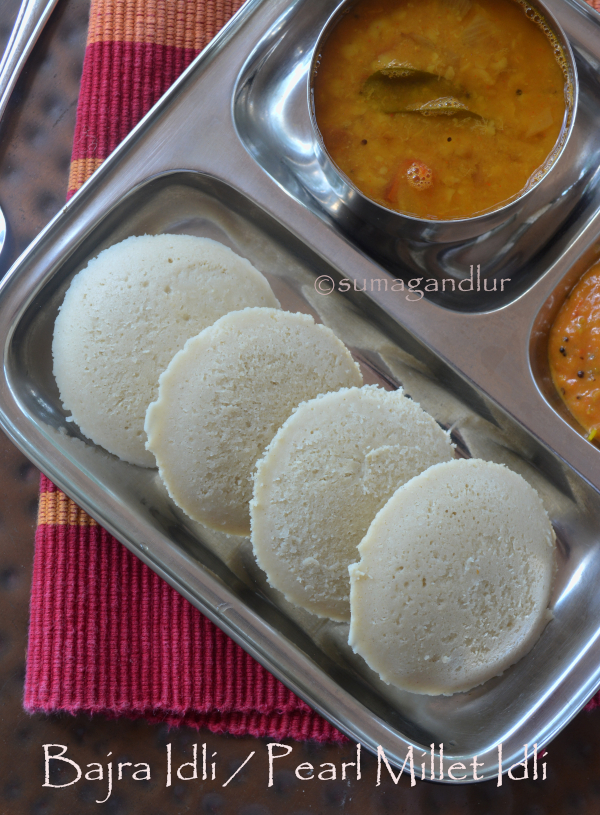
A - Z Idli Series ~ B for Bajra Flour Idlis

These healthy idlis are made using ground pearl millet or bajre ka atta / bajra flour. Bajra / pearl millet / sajja, a whole grain has been grown from ancient times in Indian sub-continent and Africa and used in cooking, both in grain and ground forms. Bajra has been a poor man's staple food in many regions of India and only recently, bajra and other millets have been gaining popularity among the urban class for their nutritional value. 

Pearl millet is a gluten-free grain, nutritious, rich in protein, iron, and fiber making it a great alternative over rice and wheat. It is also a complex carbohydrate, which takes longer to digest thus help managing blood sugar spikes after meals, making it suitable for diabetics. These idlis are obviously gluten-free, vegan and makes a wholesome and filling meal, when served with a lentil side dish like a sambhar.
Flat breads and porridges / khichdis are the most common preparations in India using this grain. However many south Indian breakfast dishes can be given a healthy twist by incorporating millets into recipes. I have replaced a portion of rice with pearl millet / bajra flour in my idli recipe to make them healthier. I have also tried a version, replacing rice with bajra rava / coarsely ground pearl millet. I have not completely replaced the rice in both the cases since I am not sure the flour alone would lend structure to the idlis. These idlis are not very different texture or tastewise from the standard version and can be easily incorporated into one's diet.

Ingredients: (Yield - 27 idlis)
1/2 cup bajra flour / pearl millet flour
1/2 cup idli rice
1/2 cup  urad dal / skinned black gram
1 tbsp. poha / flattened rice 
1/4 tsp. methi / fenugreek seeds
Salt to taste
Water to grind (I used slightly less than 1.5 cups of water.)
Directions:
* Rinse and soak idli rice, skinned black gram, flattened rice and fenugreek seeds in water for about 3 - 4 hours and drain the water. Let the water level be at least an inch above the level of the ingredients during the entire soaking period.
* Grind the soaked ingredients along with pearl millet flour / bajra flour adding salt and water as needed to form a thick, smooth batter. The final batter should not be runny. (I used less than 1.5 cup water to grind the ingredients.)
* Transfer the batter to a container and cover it. Allow the batter to rest in a warm place overnight. The batter may take anywhere between 8 to 16 hours to ferment depending upon the local weather. 
* Stir the fermented batter and fill the greased idli plates. 
* Heat water in a steamer / idli cooker / pressure cooker on medium flame. Place the idli stand in it and cover the lid. There is no need to put the pressure valve on if using the pressure cooker to steam idlis.
* Cook on low medium flame until idlis are done, about 20 minutes. (To check whether idlis are done, touch the surface of the idlis with wet fingers. If they are not sticky then that means idlis are cooked perfectly. If they are sticky, cook for some more time.)

* Turn off the stove and wait for at least 5 minutes and carefully remove the idli stand. Run a spoon around the edges of idli and remove them.
* Serve with a spicy chutney and / or sambhar. Our idlis were served with tomato chutney and sambhar.

Note:
The batter may not raise as much as the regular idli batter. Especially for those living in cold climates, if the batter smells sour and has not raised even after enough fermentation, add a little Eno fruit salt / baking soda to the batter and make idlis. (I haven't tried it but it will definitely be helpful.)

Thursday, June 10, 2021

Jowar Flour Idli / Jonna Pindi Idli / Sorghum Flour Idli

Sorghum, a millet is an important cereal crop grown in the world, for ages. This grain which is called jowar in Hindi, jonnalu in Telugu, jola in Kannada and cholam in Tamil is a traditional staple in south and western parts of India. Sorghum is gluten-free, nutritious, rich in protein and iron, making it a great alternative to rice. It is also a complex carbohydrate, meaning it takes longer to digest thus helping manage blood sugar spikes after meals, making it suitable for diabetics.

I have been trying to incorporate millets in our diet as much as possible in the recent years. These idlis which are made with this healthy grain is one such experiment. The standard, traditional version of idlis are made with urad dal / skinned black gram and rice or cream of rice. I have been making idlis replacing a portion of rice with jowar flour to make them healthier. 
I use rice / rice rava and sorghum flours in equal proportions or sometimes slightly more sorghum flour than rice in the recipe. I am guessing that replacing the entire rice with sorghum flour will interfere with the texture of the idlis. I don't have access to sorghum grain, either in whole or cracked form and so I haven't experimented much with the proportions or replaced the rice entirely with sorghum. Maybe using sorghum grain works if rice needs to be completely eliminated. I will update the recipe when I can get hold of some sorghum grain.

Using rice rava / idli rice and sorghum flour in equal proportions will yield soft, fluffy idlis and one would not find these idlis any different from the regular version. They make a healthy, gluten free and guilt free meal for anytime of the day. Serve them warm with chutney and sambhar. Here is a version made with idli rice and sorghum flour and check the recipe to know the consistency of the idli batter.
Ingredients: 
3/4 cup sorghum flour / jowar flour 
3/4 cup cream of rice / idli rava
1/2 cup skinned black gram / urad dal
1 & 3/4 tsp. salt
Water to grind the batter (I used a little more than a cup.)
Directions:
* Rinse black gram / urad dal thoroughly twice with water and soak in water in a container for about 3 hours. Similarly rinse cream of rice / idli rava with water and soak in water in another bowl. 
* Drain the water from both black gram and cream of rice containers. Squeeze out the water from the idli rava as much as possible.
* Add black gram, salt and water (as needed) to a blender and grind finely. (Skip adding salt while grinding if living in a hot climate. Add salt to the fermented batter before making idlis.)
* When the black gram is ground, add cream of rice / idli rava and run the blender for a couple of minutes to blend. Next add the sorghum flour and again run the blender to combine. Add extra water if needed. The final batter should be of thick, pouring consistency.
* Transfer the batter to a container and cover it. Leave it in a warm place to ferment overnight. 
 If living in a cold place, leave the batter container in the oven with the light on. Don't turn on the oven. The batter may take 8 - 10 hours to ferment in a warm place. It may take longer to ferment in cold climate, may be up to 16 - 18 hours.
* Heat water in a idli cooker / pressure cooker / steamer base on medium heat.
* Grease the idli plates and fill the moulds with the batter. Place the idli stand in the steamer and close the lid. Don't use the pressure valve if using pressure cooker.
* On low medium flame, steam for about 20 - 25 minutes or until when the surface of the idlis don't stick when touched with moist fingers. Turn off the stove and let sit for about 10 minutes.
* Run a sharp spoon around the edges of idlis and remove the idlis.
* Serve them warm for breakfast along with coconut chutney and/or sambhar.

Monday, September 28, 2020

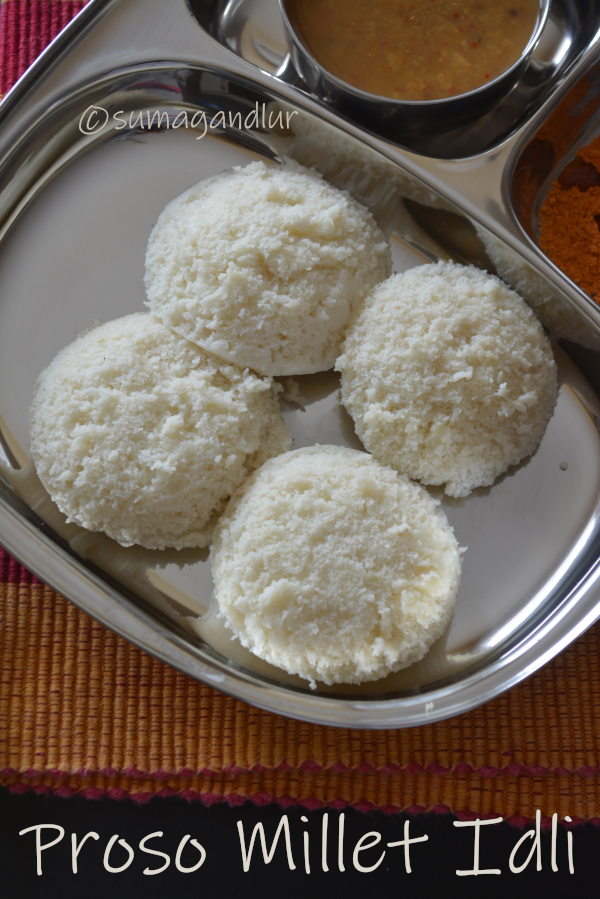
Idli Platter ~ Proso Millet Idli

Idli is a popular breakfast dish from the southern parts of India, that is prepared by steaming a fermented batter of rice and black gram. They are steamed in special moulds called an idli stand which holds about two dozen idlis, the ones typically used in a household setting. Whereas the moulds used in restaurants are naturally bigger in size to hold more idlis, to cater their customers. The fact that they are steamed and use no fat in the preparation makes them an healthy breakfast choice for everyone including toddlers, the ailing or convalescing. The idlis are bland by themselves are usually served with a chutney and/or a soupy lentil gravy called sambhar.
The standard version idlis use rice and black gram that need soaking, grinding and fermenting before steaming which means that they need advance planning. There are versions with other grains substituted for rice which basically follow the same method. There are a second set of idlis where the ingredients are mixed and soaked for a short amount of time and steamed which make them instant versions. I have a few varieties of idlis in my platter today which fall under these two categories. I chose to go with about ten varieties though there are plenty of other variations. Most of the idlis in my idli platter are from Karnataka and the accompaniments I have are those side dishes popularly served in Bangalore restaurants - chutney, sambhar and saagu. Check my breakfasts page for more idli ideas.

I have the following in my idli platter.
Idli - Standard version prepared using idli rice and black gram.
Semolina idli / Rave idli (Recipe here)
Cucumber idli / Southekayi idli
Field beans Idli / Avarekayi Idli
Pumpkin idli / Kumbalakayi idli (Recipe here.)
Horse gram idli / Kulitha idli 
Flattened rice idli / Avalakki idli
Pearl millet idli / Bajra idli / Sajje idli
Proso millet idli / Baragina idli
Finger Millet idli / Ragi idli
I am posting the the proso millet idli recipe for today. I replace a portion of idli rice with either millets or millet flours in my regular idli recipe to make them healthier and nutritious. I haven't liked those idlis that much which are made adding no rice. We enjoy the version I am posting today and as far as I have noticed, the millets do not change the taste of idli at these proportions. They make a healthy and delicious breakfast or lunch along with some chutney and/or sambhar. My husband loves idli and so, I usually make a big batch of idlis and freeze them so that I don't need to make them every other day. The idlis can be refrigerated or frozen given that there are no power cuts in the area you live. If freezing, cool the idli immediately after they are demolded and put them in the freezer.  When ready to eat, heat them in the microwave, covered and you will have fresh, piping hot idlis.
Ingredients:
1/2 cup proso millet
1/2 cup idli rice
1/2 cup black gram / urad dal
Salt to taste

Directions:
* Rinse and soak the ingredients in water for about 3 to 4 hours.
* Grind them together to a thick batter adding as much as water needed. Add salt as well if living in a cold climate. 
* Transfer the batter to a container big enough (to allow the batter rise), cover and leave it aside to ferment. The fermentation may take anywhere between 8 to 14 hours depending upon the local climate. Make sure to place the batter in a warm place if living in cold climate.
* The fermented batter should look like the one below, light and frothy slightly smelling sour. Add salt if it was not added while grinding and gently mix to combine.
* Add water up to 2 inches in a steamer / idli cooker / pressure cooker base and heat it.
* Grease the idli plates and spoon the batter into moulds. Place the filled idli stand into the cooker and close the lid. Do not use the pressure valve on the lid if using a pressure cooker,.
* Steam the idlis on low heat until done, about 20 minutes or until the surface of the idli doesn't stick if touched with wet fingers. Turn off the stove.
* Let it sit for about 10 minutes and then remove the lid. Run a sharp spoon along the edges to demould the idlis.
* Serve them warm with chutney / sambhar. 
* These can be refrigerated or frozen as well.

Saturday, December 3, 2016

Vermicelli - Cracked Wheat Idli / Semya - Godhuma Rava Idli

Here is an idli idea using vermicelli and cracked wheat that needs no grinding and fermenting. These idli would be ready in less than an hour that includes the prep work and the steaming part. They would be great for any meal of the day and when served along with a sambhar would make a wholesome meal. Cracked wheat in the recipe can be replaced with semolina if preferred. I used the plate idli moulds here and cut the big idlis into triangles.

Ingredients:
1 cup vermicelli
1 cup fine cracked wheat
1.5 cup yogurt or 1 cup yogurt + 1/2 cup water
1 tbsp. oil
1 tsp. mustard seeds
1 tsp. roasted chickpeas / chana dal
1 tsp. skinned black gram / urad dal 
1 green chillie, finely chopped (optional)
Few curry leaves, roughly chopped (optional)
1/8 tsp. turmeric powder
1/4 cup peeled and grated carrot
2 tbsp. fresh / frozen peas 
2 to 3 tbsp. fresh, shredded coconut 
1 tbsp. toasted cashew pieces (optional) 
1 to 2 tbsp. chopped cilantro
Salt to taste
1/4 tsp. baking soda / Eno's salt
1 tsp. ghee / oil to grease the idli plates
(I had added some toasted onions too.)

Method:
* Roast vermicelli and cracked wheat until golden brown and set aside to cool. This step can be done ahead in advance.
* Heat oil in a pan and add mustard seeds, chana dal and urad dal. When mustard seeds start to crackle and the dals turn gold brown, add green chillies, curry leaves, turmeric, carrot and peas. Saute for a minute and turn off the stove. Let it cool a bit.
* Add the roasted vermicelli, cracked wheat, coconut, cilantro, cashews, yogurt and salt to the pan and mix well to form a thick batter of idli consistency. (The amount of yogurt mentioned in the list should be sufficient for the right consistency of the batter. However if the batter seems to thick, add a little amount of water.)
* Allow the batter to rest for about 15 minutes and add baking soda / eno's salt to the batter just before steaming the idli and mix well.
* Pour the batter into greased idli plates and place them in a prepared idli cooker / steamer or a pressure cooker without the valve on.
* Steam them on medium flame until the idlis are cooked, about 20 minutes. Turn off the stove and leave them for about five minutes before demoulding the idlis.
* Serve them warm with chutney / sambhar.
  
This goes to Blogging marathon #71, under the theme 'One Ingredient - Three Courses'. Check here to find out what the other marathoners are cooking as part of the BM.

Comments

Friday, March 4, 2016

Microwave Coconut Oatmeal

 
Everyone out there knows that oatmeal is one of the quickest and healthy breakfast options around and I don't need to reiterate the benefits of this humble dish. However oatmeal may get monotonous after certain point, if one sticks to the plain version despite the healthy goal dangling in front of our eyes. I usually keep rotating the variations for the same reason and today's version uses coconut. I finish off the preparation of oatmeal with a generous dose of coconut milk and use some fresh fruit and a sprinkling of sweetened desiccated coconut in place of the sweetener and the result is a tasty bowl of jazzed up oatmeal that can be prepared in a jiffy.
 
Ingredients: (1 serving)
1/2 cup old fashioned oats
3/4 cup dairy milk / water
3/4 cup coconut milk
2 tbsp. toasted desiccated sweetened coconut
1/4 cup chopped fresh fruit / dry fruits / nuts
Sweetener to taste if preferred

Method:
* Add the desiccated coconut to a pan and toast until it turns golden brown, stirring constantly to avoid burning. Remove from the fire and keep it aside.
* Meanwhile, add oats and water / dairy milk to a microwave safe bowl and place it in the microwave. Cook until the oats are done.
* Remove the bowl and stir in the coconut milk, toasted coconut, fresh fruit and sweetener if using. Serve immediately.


This is going to be a part of Blogging marathon #62 under the theme 'coconut' and check here to find out what other marathoners are cooking today.

Comments

Sunday, January 3, 2016

Microwave Apple Oatmeal

I wish all my readers a happy, healthy and prosperous new year. May all your wishes and dreams come true this year.
 
I am starting the new year on a healthy note, with this simple, humble dish that takes about five minutes from start to finish. There is no need for any sweeteners in this fiber rich breakfast as the apple does the job. If still one prefers extra sweetness, a sweetener of choice can be added. Besides the natural sweetness, the crunchy apple bits lend a nice texture to the oatmeal.
Ingredients:
1/2 cup old fashioned oats
1 cup milk (I use fat-free milk.)
One small sized apple, finely diced
1/4 tsp. ground cinnamon (optional)
2 tbsp. nuts / dry fruits of your choice

Method:
* Add everything except the toppings to a big sized microwave safe glass bowl. Microwave for 4 to 5 minutes or until done, stirring intermittently once or twice. Keep an eye on the oatmeal to avoid the milk flowing over into the microwave.
* Remove the container and add extra warm milk if needed, to reach the desired consistency.
* Add toppings of choice and serve immediately.

This goes to Blogging marathon #60 under the theme 'Healthy Recipes / Diabetic Recipes'. Check the link to see what other marathoners are cooking.

Comments