HOME        |        ABOUT        |        COPYRIGHT        |        CONTACT        |         RECIPE INDEX        |         INDIAN THAALIS        |         MILLET RECIPES        |        EVENTS' ROUNDUP        

Tuesday, January 18, 2022

A - Z Tamil Nadu Recipe Series ~ B for Brinji / Tamilnadu Style Brinji Rice Cooked in Coconut Milk

Brinji or vegetable brinji is a simple, delicious and easy one pot meal made with rice and mixed veggies, with it's origins in Tamil Nadu. Some believe the dish has Persian roots, since rice is called berenj in Iran, thus indicating that the dish might be a borrowed one. This rice dish is considered to be in existence way before biryani/pulao arrived in the region. Being older, the south Indian ingredients like coconut and pepper are incorporated into the recipe, thus making it different than biryani / pulao / tahiri dishes. Also the Tamil word for bay leaves, brinji elai comes from being generously used in the preparation of brinji.  
South Indian style short grain rice is preferred to make brinji. Flavored rice like seeraga samba would be a perfect fit but Basmati would be a nice substitution which is easy to source. It is possible that the earlier version used little or no vegetables but the modern versions uses the standard vegetables used in a pulao recipe. Also the early recipe must have relied only on pepper for the heat since chilies were still an unknown ingredient in the Indian subcontinent. A garnish of fried bread cubes or soya nuggets chunks to the finished dish is also common.

Over the years, I have been seeing brinji recipe where the standard spices like cloves, cinnamon and cardamom being used and onions get sautéed. I made a small portion following the recipe here which does not use those spices and also onion or tomatoes do not get sautéed. It is hard to even notice the fact that they were not sautéed.  I even skipped the garlic from the recipe as I am not a fan of it's flavor. The recipe still is a keeper as the dish is absolutely delicious and very easy to remember or follow. This is a fuss-free dish where all you do is chop a few vegetables and layer it to pressure cook. The recipe is a quick one if you overlook the one hour wait time that is needed for marinating the veggies in coconut-ginger-garlic paste and soaking the rice part. 

Here are some other rice based dishes from Tamil Nadu for you to enjoy.
Ingredients for marinating: (Yield 4 servings)
1/2 cup peeled and cubed potatoes
1/2 cup peeled and chopped carrot
1/2 cup shelled fresh / frozen peas
1/2 cup chopped mint leaves (I used both mint & cilantro)
1 tsp. red chili powder
1/2 tsp. ground pepper
1/2 cup coconut paste *
2 tbsp. ginger-garlic paste **(I omitted garlic.)
1 tsp. salt
* Grind 1/4 cup coconut to a paste using 1/4 cup water
** 6 garlic cloves and an inch piece of ginger ground to paste with little water. Use 1 tbsp. paste if using store bought one.

Ingredients for brinji:
1 cup Basmati rice
1 tbsp. ghee
3 bay leaves, crushed
2 medium sized onions, chopped
1 tomato, chopped
1/3 cup light coconut milk
2/3 cup water

Directions:
1. Add all ingredients mentioned under marination list to a wide bowl and mix well. Cover and leave it aside to marinate for about an hour. The mixture would release liquid after marination.
2. Rinse and soak rice in water for about an hour. Drain the rice after soaking period.
3. Add ghee to a 3 liter sized / small pressure cooker and add the torn bay leaves. 
4. Top it with chopped onions and tomatoes uniformly.
5. Spread half of the marinated vegetables along with the liquid over onion and tomato mixture.
6. Next add rice over the veggies in an even layer.
7. Layer it again with the remaining veggies.
8. Pour the coconut milk and water over it and close the lid.
9. Cook on medium flame for two whistles and turn off the stove. Wait until the cooker's valve pressure is gone. 
10. Wait for 15 - 20 minutes and open the lid. Fluff and serve with raita or vegetable korma.

This is going to be my contribution to this week's Blogging marathon, with the theme 'A -Z Series'. Check the page link to see what other marathoners are cooking.


Monday, January 17, 2022

'A- Z' Tamil Nadu Recipe Series ~ A for Akkaravadisal / Akkara Adisal


Starting from this month, I am going to explore one of the flavorful cuisines from the southern parts of India, from Tamil Nadu to be exact. I grew up in a neighboring state and so, I am kind of familiar with and fond of the cuisine. I am doing a vegetarian recipe series in a 'A- Z' style and each month, three recipes from the region are going to be posted. Previously, I have covered two more southern states, mentioned below.

'A - Z' Karnataka Vegetarian Recipe Series

'A' is the alphabet of the day and here are few 'A' dishes from the state. There is the popular breakfast combo, adai - avial which can also be served as a light dinner. Adai are the protein rich crepes made with rice - lentil batter while avial is vegetable based curry in a coconut base. Azhagar kovil dosai are dosa that are served as a prasadam to devotees in a Lord Vishnu Temple located near Madurai. Arisi upma is a spicy breakfast dish made with cream of rice. There is aadi koozh, a healthy porridge made in the month of aadi (around July). 

Here are ammini kozhukattai, steamed and tempered rice balls that make a guilt-free snack. A simple and quick one pot meal from Kongu nadu is arisi paruppu sadam that is prepared with rice and lentils. There is arachuvitta sambhar, a Tambram, lentil and vegetable based side dish made with toasted and ground spices. There is another gravy dish called arai puli kuzhambu. There are arakeerai and avarakkai, amaranth greens and broad beans respectively with which many side dishes are prepared to go with rice. There is aval aka flattened rice that is used to make many dishes such as upma, payasam, laddu, kozhukaatai, etc. Athirasam is a popular and deep fried sweet dish prepared with rice flour and jaggery. Arcot makkan peda is another sweet delicacy. (This is not an extensive list. I have mentioned those off the top of my head.)

And there is a festive dish called akkaravadisal or akkara adisal, with which I am starting this A- Z series. Akkaravadisal is a sweet rice pudding made as an offering to god during auspicious occasions at temples and homes across the state. Akkara means jaggery / sugar in Tamil while the second part vadisal refers to the cooking part, as cooking rice in this instance.

I have made this a few times before and coincidentally had again prepared it a few days back on Sankranthi day. An authentic Iyengar recipe, akkaravadisil sounds similar to sweet pongal or sakkari pongal at first glance. However akkaravadisal is more richer, creamier and delicious since the rice and moong dal mixture is cooked entirely in milk and oodles of ghee also goes into the preparation. 

Akkaravadisal can be prepared in a pressure cooker or in an instant pot, for a short-cut method. The rice, moong dal and milk can also be cooked together in a pot on stovetop until it reaches a creamy consistency. Using a non stick pan avoids the rice sticking to the bottom of the pan and burning. The mixture needs to be frequently stirred and the milk quantity needs to be adjusted as needed. Leaving a ladle in the pan prevents the milk from boiling over.

Using jaggery that is darker in color lends an inviting hue to the dish. Warm the jaggery with water until it melts and strain the mixture if it has impurities. Powdered jaggery can be directly added to the cooked rice at the end and mixed if the jaggery is clean. A portion of jaggery can be replaced by sugar. A large quantity of ghee is added traditionally but can be cut down to a minimum. The rice is cooked in full fat milk for a richer taste but again, it can be cooked in fat-free milk to cut down the calories. A pinch of edible camphor added at the end makes it absolutely divine.

 Akkara vadisal is on a thicker side and the mixture thickens while cooling down. Add milk accordingly. I took these images soon after cooking and it thickened to right consistency after cooling down.

Ingredients: (Yield 4 servings)
1/2 cup rice (I used sona masuri rice.)
2 tbsp. yellow moong dal
3/4 cup powdered jaggery
2 to 2.5 cups of milk
2 - 3 tbsp. ghee
2 tbsp. cashews
1/8 tsp. ground cardamom 

Directions:
* Boil about a cup milk on stove top or in a microwave and let it cool down.
1. Rinse and soak rice and moong dal in water for about 10 minutes and drain.
2. Meanwhile, heat jaggery and about 1/3 cup water in a pan until the jaggery melts. Let it cool a bit and strain the syrup if any impurities are present (I did not have to strain mine.)
3. Heat ghee in a pan and add cashews. Toast them on low flame, stirring continuously until they turn golden brown. (They burn quickly and so keep an eye). Transfer the toasted cashews onto a plate. 
4. To the same ghee pan, add the rice and moong dal mixture and sauté for couple of minutes, on low medium flame. Turn off the stove.
5. Transfer the mixture directly to small pressure cooker or a to steel container that fits into a pressure cooker. Add 1.5 cups milk to the rice mixture. Cook for 6 - 8 whistles and turn off the stove.
6 &7. When the valve pressure is gone, mash the rice-dal mixture well with the back of a ladle.
8. Add the melted jaggery, (boiled and cooled) milk as needed, ground cardamom, toasted cashews with the remaining ghee and mix well with a ladle.
* Serve it warm, as part of a festive meal or as a dessert. 

This is going to be my contribution to this week's Blogging marathon, with the theme 'A -Z Series'. Check the page link to see what other marathoners are cooking.


Wednesday, January 12, 2022

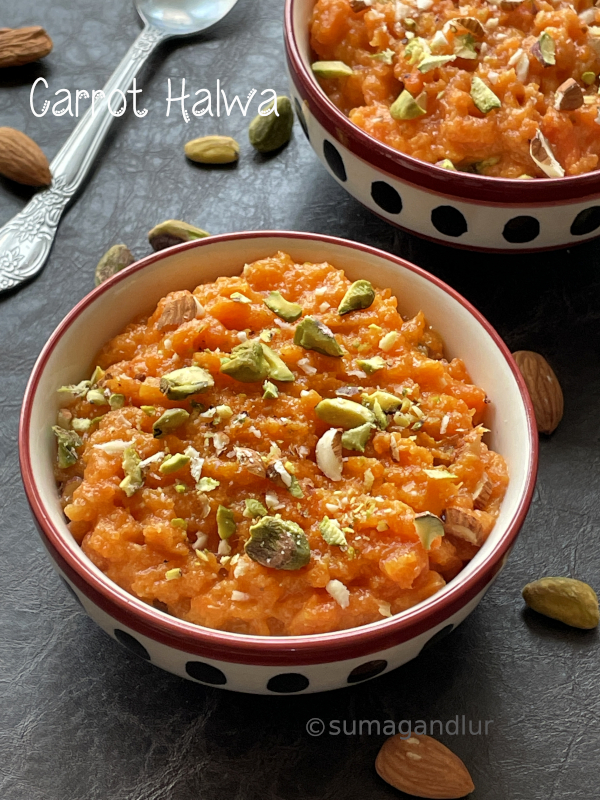
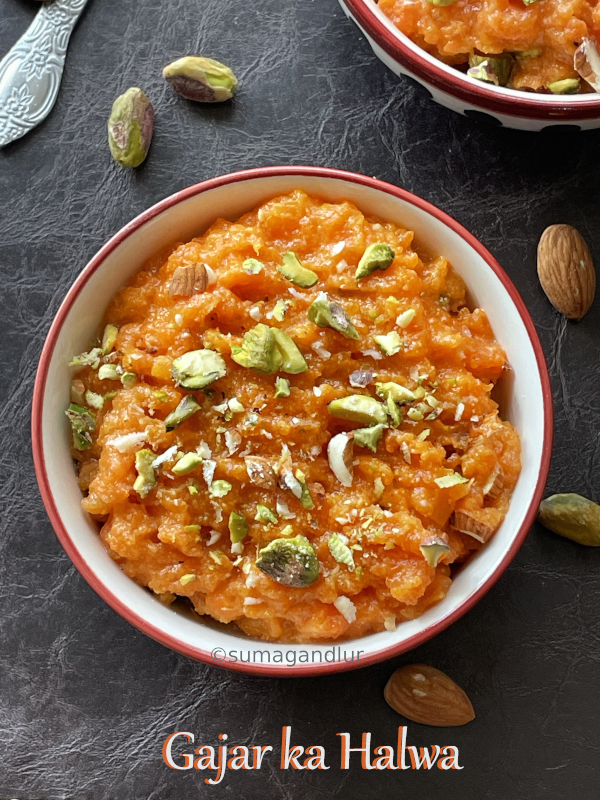
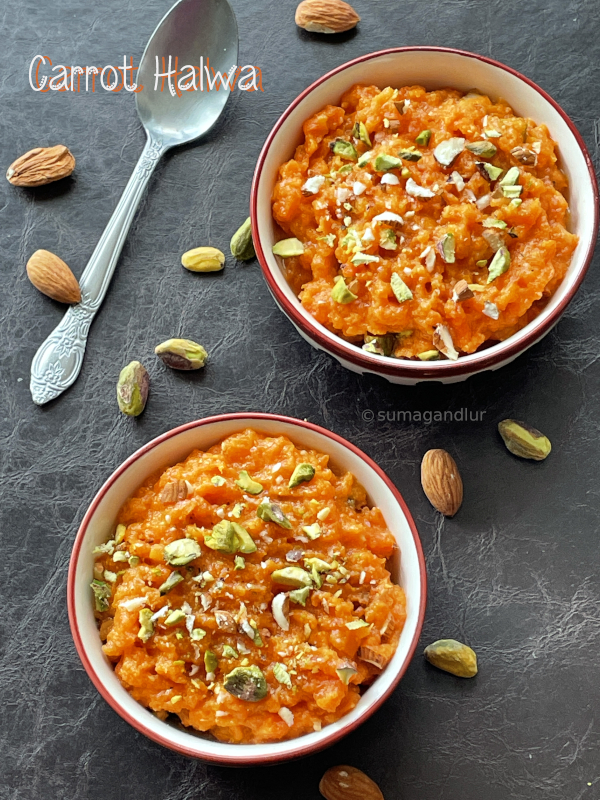
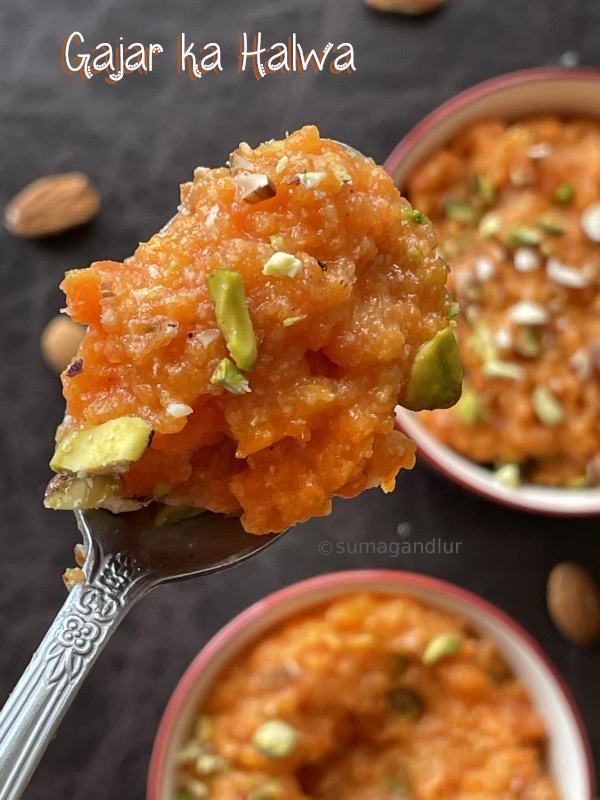
15th Blogging Anniversary ~ Gajar Ka Halwa / Carrot Halwa Without Grating

Time sure flies by. The idea of an online recipe journal gave birth to this blog, 15 years ago. I would never have believed then that I would either be actively blogging after over a decade or I would still retain my enthusiasm and energy towards it. This virtual kitchen has helped me along the way in nurturing my love for cooking, exploring new cuisines and developing new friendships. I would like to take this opportunity to thank my readers who invest their time in going through my blog and drop an encouraging line.  

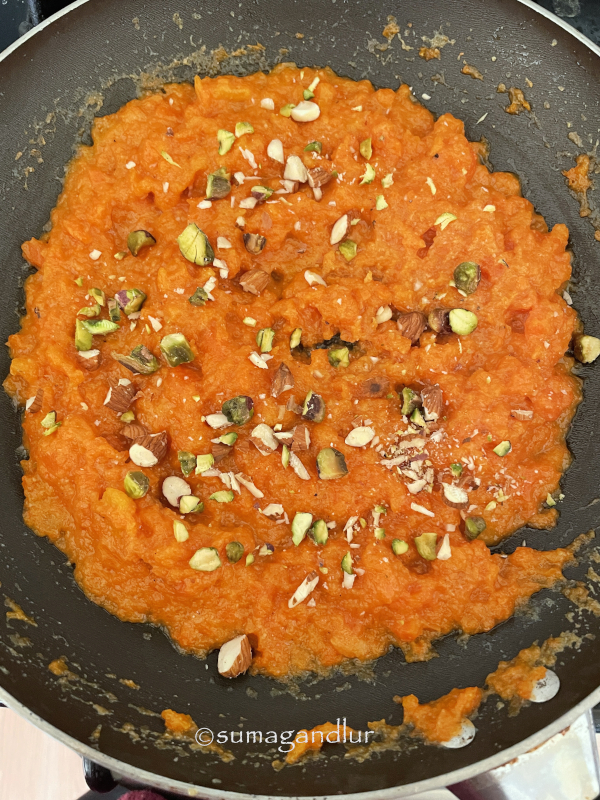
Here is some yummy halwa to celebrate the occasion. Carrot halwa which is called gajar ka halwa in Hindi and gajrela in Punjab is a popular sweet dish from the Indian sub continent, with it's origins in northern parts of India. This popular dessert is prepared especially during winter months as the red carrots which are the most preferred variety to prepare this halwa are available during the time. 
Carrot halwa tastes super delicious, even though it is made with only basic ingredients like carrots, milk, sugar, ghee and flavored with cardamom. Red carrots are preferable for the preparation if available but halwa is prepared with orange ones mostly as red carrots are not available everywhere. Forget about calories and use full fat milk for this halwa preparation. The grated carrots are simmered in milk until the milk is completely reduced, which takes time and patience if preparing in large quantities. There are versions made with khoya (milk solids), condensed milk etc. which are richer. Here are some versions I posted previously.
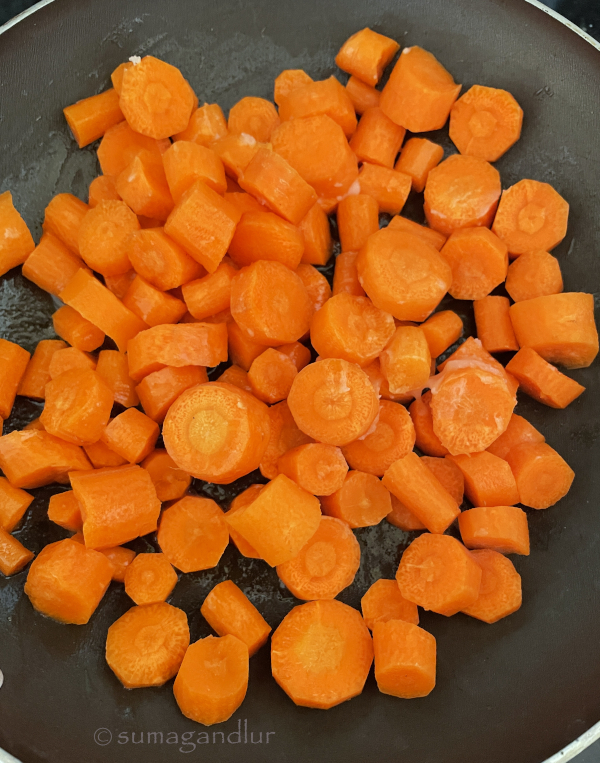
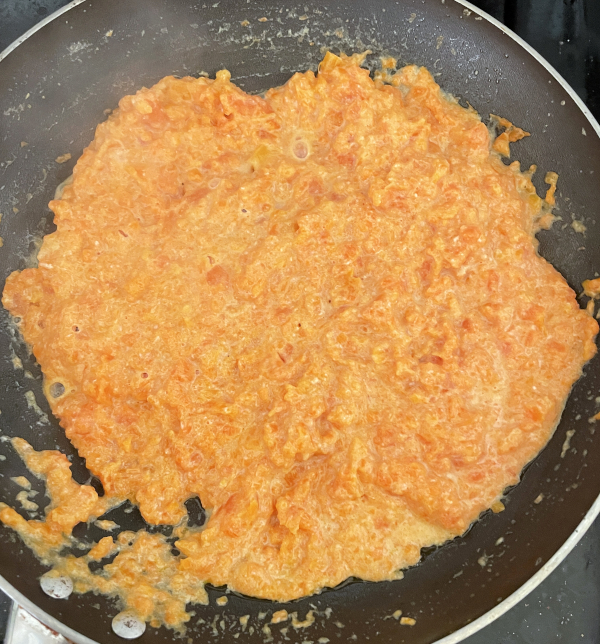
I have come across versions which involved no grating carrots and decided to try a small portion this time. The carrots are cut into chunks instead of grating and sautéed in ghee and then pressure cooked and slightly mashed in this method. I did not miss the taste but surely missed the texture of the grated carrots which I am more used to but this method definitely saves the time and work.
Ingredients: 2 - 3 servings
1 pound carrots / 2 cups, peeled carrots cut into chunks
1 cup full fat milk
2 to 3 tbsp. ghee
1/2 cup sugar (I used about 2 tbsp. less sugar)
1/8 tsp. ground cardamom 

Directions:
* Heat ghee in a pan, preferably a non-stick one. Add carrot chunks to it and sauté for a couple of minutes.
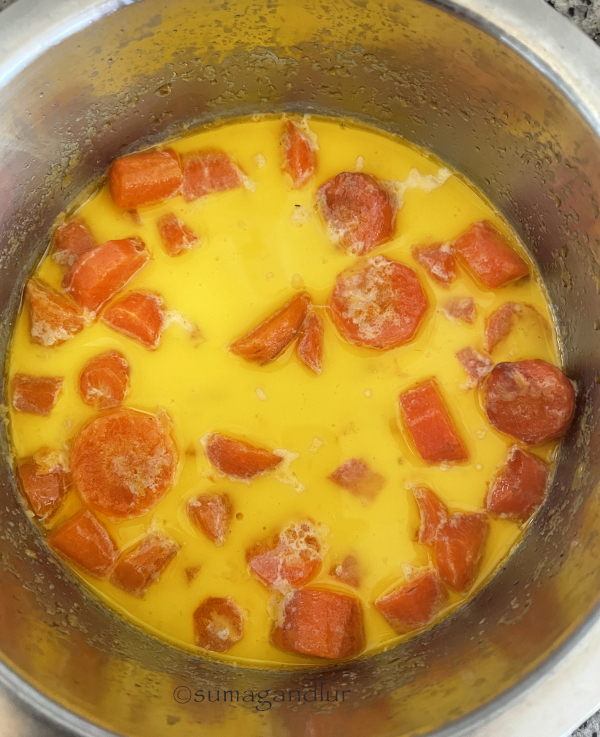
* Add the sautéed carrot chunks and milk to a steel vessel and pressure cook for 3 whistles.
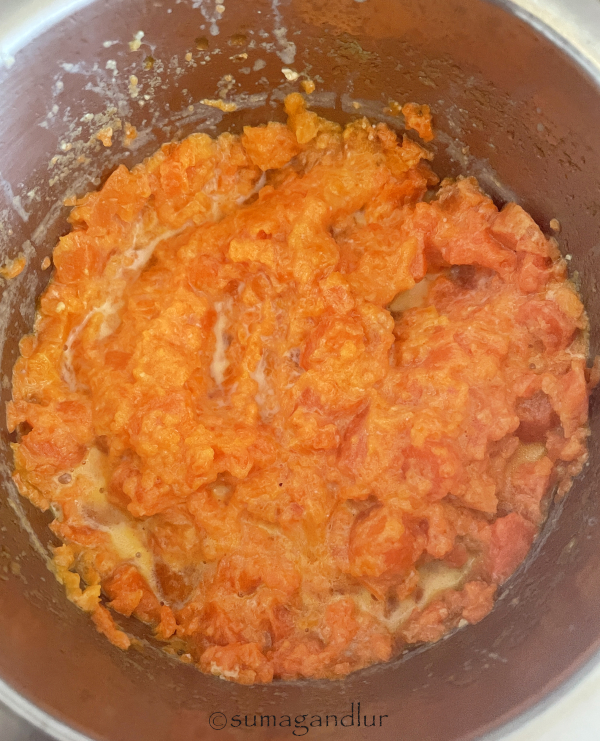
* When the valve pressure is gone, remove the carrots and mash them with a masher or back of a wooden spoon.
* Add the mashed carrots along with the milk back to the pan and cook, stirring now and then. Mash if any big chunks of carrots are seen. 
* The mixture begins to thicken as the milk  starts to reduce in quantity.
* Add sugar and cardamom when carrot-milk mixture begins one big mass or only a lit bit of milk is left in the pan.
* Keep cooking as the mixture again becomes loose because of the addition of sugar. Cook until the mixture slightly thickens and turn off the stove. 
* Garnish with nuts. Halwa can be served either chilled or warm. 

This is going to be my contribution to this week's Blogging marathon, with the theme 'Winter Produce'. Check the page link to see what other marathoners are cooking.


Tuesday, January 11, 2022

Aloo Gobhi / North Indian Style Potato & Cauliflower Curry

 (Originally published on 2/23/2011)

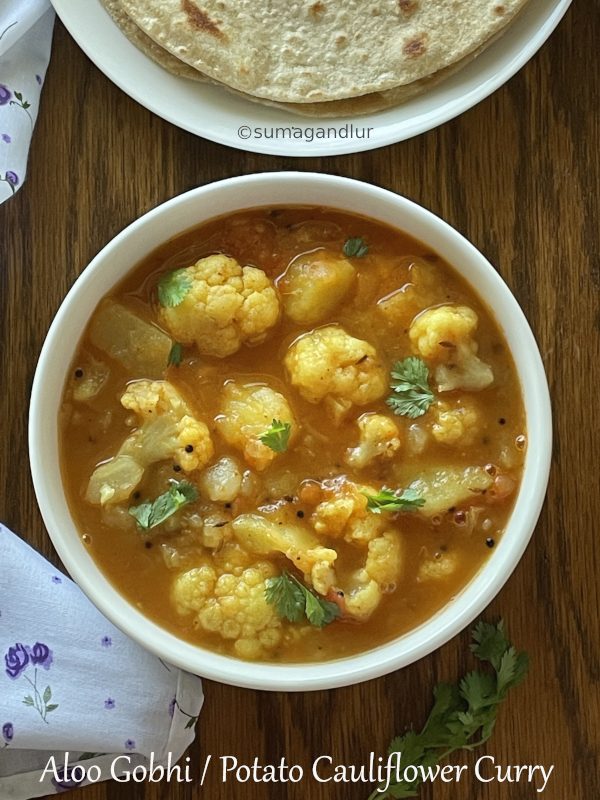
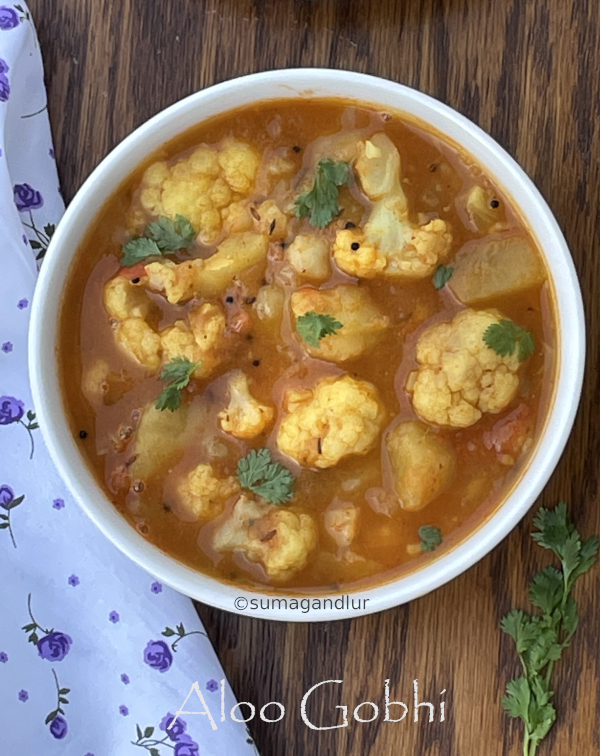
Aloo gobhi is a delicious, home style vegetable preparation from North India that has become popular through out the Indian subcontinent. In fact, it is so popular that it has made its way into the Indian restaurants everywhere. This is reflected in the fact that it is one of the mandatory side dishes you will find on any Indian restaurant menu in the western hemisphere and an equally ubiquitous one even in our blog world. :) Simple enough in terms of preparation even to a novice cook and palate pleasing, it's no surprise that aloo gobhi is a favorite to many.

There are no hard and fast rules when it comes to aloo gobhi preparation. It can be prepared dry or with some gravy clinging to potato - cauliflower mixture. Onions & / tomatoes can be added or omitted. It can be prepared according to one's taste preference and here is my version of our favorite "aloo gobhi".

Ingredients: (Yield - 4 servings)
1 big sized onion (about 1/2 cup chopped)
2 tomatoes (1 cup chopped)
1 small sized cauliflower (2 cups florets after the leaves and hard parts removed)
3 medium sized potatoes (2 cups peeled & cubed potatoes)
1 tsp grated ginger
1 tbsp. oil
1 tsp cumin seeds
1/8 tsp. turmeric powder
1 tsp. coriander powder
1 tsp. chili powder
1/2 tsp. garam masala
Salt to taste
Minced cilantro to garnish
Directions:
* Heat oil in a kadai / pan and add grated ginger and cumin seeds to it. Add turmeric powder and chopped onions when they slightly brown. Cook them covered until they turn translucent. 
* Next add the tomatoes and cook until they turn slightly mush.
* Add potato cubes and about a cup of water and. Continue to cook until potatoes are 3/4th done. 
* Add the cauliflower florets and salt. Add some more water if needed. When the cauliflower turn almost tender, add chili powder, coriander powder and garam masala to it and mix well. Mash  cooked potatoes cubes slightly without mashing cauliflower. Simmer the curry for a couple of minutes more and turn off the stove. Garnish with cilantro. (I add cauliflower almost at the end as cauliflower gets cooked in about 5 to 6 minutes and softens furthen even after turning off the stove.) 
* Serve the curry warm with some hot roti / phulka and yogurt for a complete meal.

This is going to be my contribution to this week's Blogging marathon, with the theme 'Winter Produce'. Check the page link to see what other marathoners are cooking.


Monday, January 10, 2022

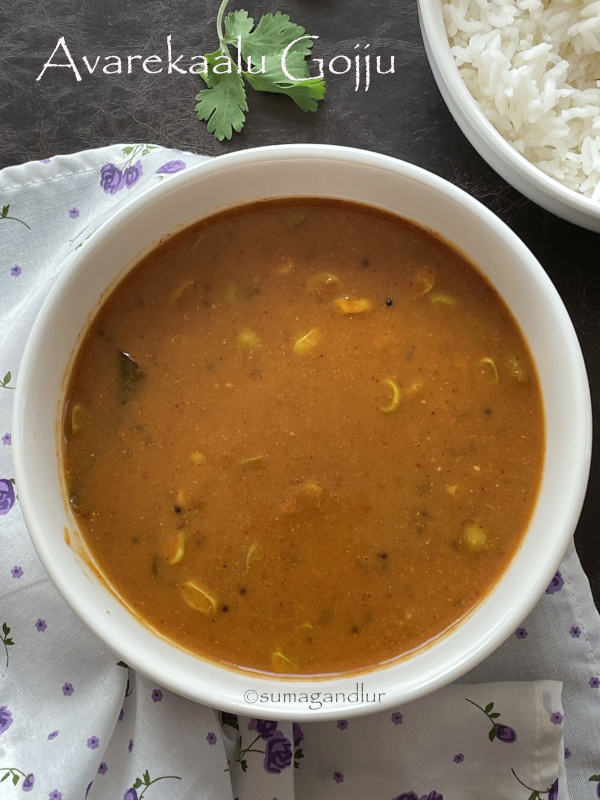
Avarekaalu Gojju

Avarekaalu, the fresh field beans is the most awaited winter produce in and around Bangalore. Come December, every kitchen is flooded  with avarekalu preparations, ranging from breakfast dishes to desserts. In fact, 'thindi beedi' aka eat street in V.V.Puram which has become a focal point for street food in Bangalore in the recent years hosts an annual 'avarekayi mela'. It has been a hit among patrons, which showcases avarekayi delicacies. 

Here are some of the recipes I have posted previously featuring avare kaalu aka fresh field beans.

Today, I thought of posting a gojju recipe using avarekaalu. Gojju, a sweet and spicy gravy made with some select vegetables or even fruits is a side dish from Karnataka. A special spice powder goes into the preparation and is commonly prepared at homes or even served at functions / festive meals in the region. I have made this gojju following the traditional method but I have seen preparations online using tomato, onions and other spices.

Here are some of the gojju recipes I have posted previously.

The preparation is quite simple and don't be put off by the long list of the ingredients given here. Some go into tempering and some for grinding. Try this if you haven't earlier and you would not be disappointed. A large batch of gojju pudi can be prepared in advance and stored, which makes this gojju preparation, a quick and easy one. 

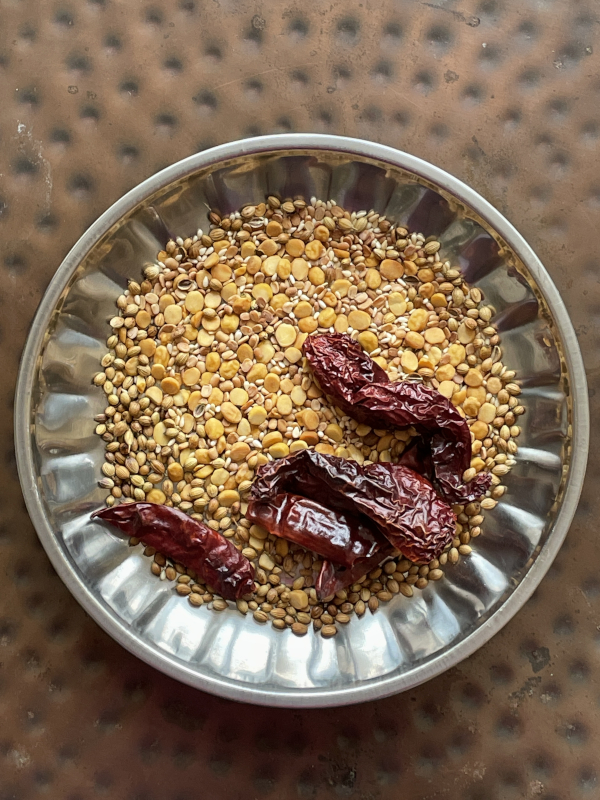
Ingredients for spice powder / gojju pudi:
1 tbsp. Bengal gram / split chickpeas / chana dal
1/2 tbsp. skinned black gram / urad dal
1 tbsp. coriander seeds / sabut dhaniya
3 red chilis, spicy variety
2 Byadagi red chilis
1 tsp. white sesame seeds
1/4 cup grated, dry coconut

Ingredients for gojju:
1 tsp. oil
1/2 tsp. mustard seeds
2 pinches asafetida powder
1 sprig of curry leaves
1/8 tsp. turmeric powder
1/2 tsp. salt
Jaggery to taste (I used 2 stevia packets.)
1 cup water
2 tbsp. thick, tamarind pulp or to taste* 
1/2 cup avarekaalu
1/4 cup gojju powder
* Use tamarind to taste

Preparing spice powder:
* Toast Bengal gram and skinned black gram separately in a sauté pan till they turn reddish and remove. Add coriander seeds to the pan and sauté on low flame till they turn a few shades darker. Similarly toast sesame seeds, methi seeds and chilies for a few seconds.
 
* Cool the toasted ingredients and grind into a fine powder adding coconut. (Oil can be used to toast the spices but I skip it.)
Preparing gojju:
* Soak a big lemon sized tamarind in water, in advance. Squeeze The tamarind well using fingers to collect the thick pulp.  
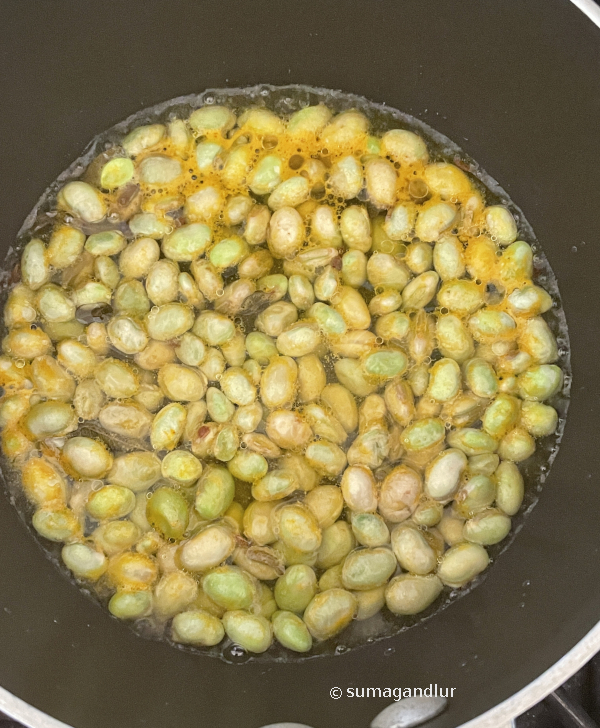
* Heat oil in a kadai/pan and add mustard seeds. When the they start to sputter, add asafetida powder and curry leaves. Then add the avare kaalu / fresh field beans, turmeric powder, salt and about 1/2 cup of water. Cook until the avarekaalu turn fork tender. (Avarekaalu can be cooked in advance in a microwave with a little water.)
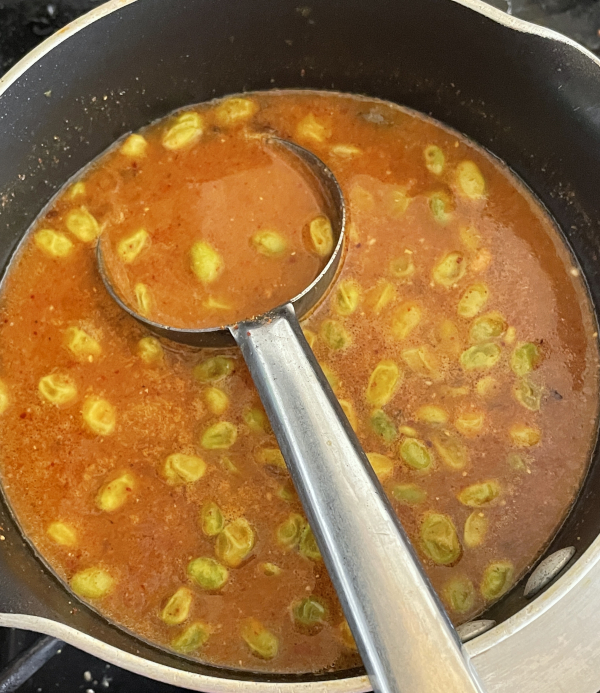
* Then add the gojju powder, tamarind, jaggery, and about a cup of water (or as needed). Stir well and let the mixture cook on medium flame. Check the flavor and adjust the seasonings, if any needed.
* Let the mixture come to a boil. Lower the heat setting and cook until the gojju thickens.
* Serve it warm with rotis / rice.

This is going to be my contribution to this week's Blogging marathon, with the theme 'Winter Produce'. Check the page link to see what other marathoners are cooking.
Wednesday, January 5, 2022

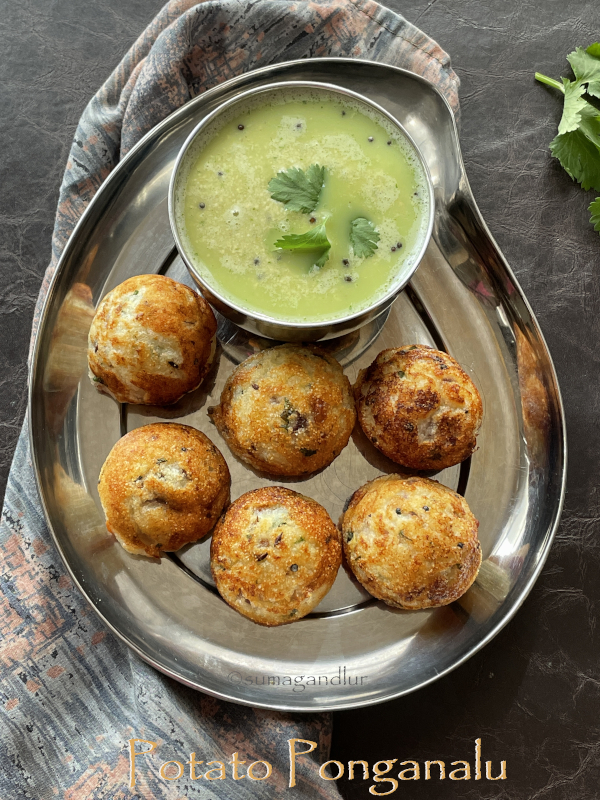
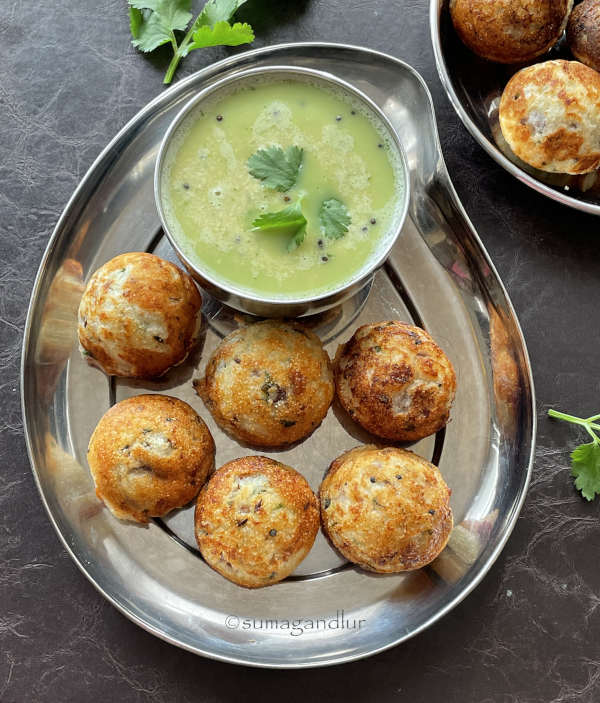
Potato Appe / Aloo Appe / Aloo Ponganalu

Appe / ponganalu / paniyaram / paddu are a breakfast or a snack item from the south Indian cuisine. They are prepared either using a fresh batter or using leftover batters used to make idli / dosas, the most popular breakfasts of the region. The batters are made with soaked rice and lentils that are ground and fermented, which usually needs advance planning.

There are a few instant versions as well like the one using semolina. Here is an interesting, instant kind that uses potato. I had bookmarked it from a weekly magazine a while ago because of the usage of potato in an appe recipe though I was equally skeptical because of the same reason. 

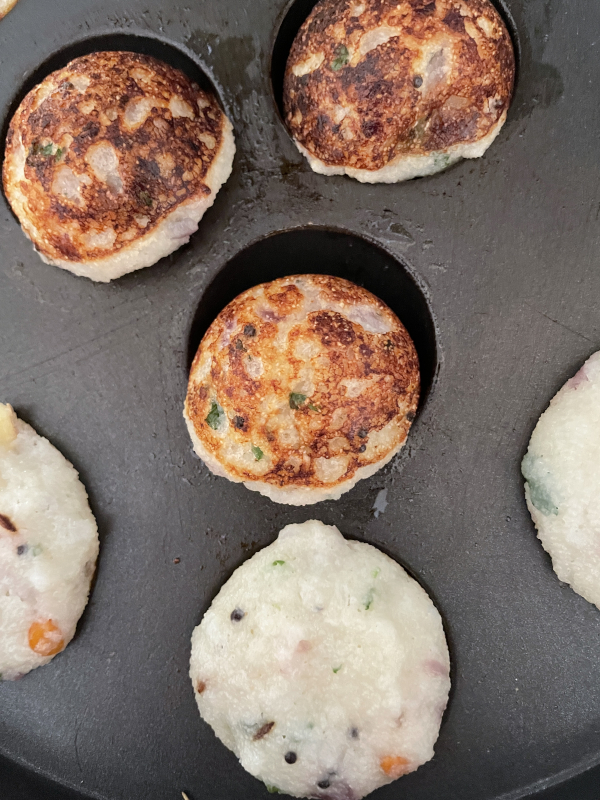
I kept wondering until the last minute of  preparation whether the mixture is going to stick to the pan and whether I should use the batter to prepare something else. There was no need to worry as they rise well and can be easily flipped if one waits patiently to let the bottom sides cook. They appear fragile at the beginning stages of cooking compared to the ones made with fermented batter. And they taste fabulous, served warm with a chutney on side.
 
Ingredients for tempering:
2 tsp. oil
1 tsp. each - Bengal gram (split chickpeas), mustard seeds, & cumin seeds 
1 tbsp. minced curry leaves
Ingredients for appe: (Yield - 18 - 20)
1 tbsp. flattened rice / poha 
1/2 cup semolina
2 tbsp. rice flour 
1 large sized potato / 1/2 cup mashed potato 
Salt to taste
1 green chili, finely minced
1 onion, peeled & finely chopped
1 tsp. finely grated ginger
A handful of cilantro, finely minced 
1/2 to 3/4 cup milk (Skim milk will do.)
1/4 tsp. baking soda or Eno's fruit salt
Oil to make appe

Prep work:
* Peel a large potato, cut into chunks and boil in water. Let it cool down and mash it finely.
* Wash and soak the flattened rice / poha in water for 5 to 10 minutes. Drain the water.
* Chop onion, ginger, chili, curry leaves and cilantro. 
* Heat 2 tsp. oil in a small pan. Add Bengal gram, mustard seeds, and cumin seeds to the oil. When Bengal gram starts turning reddish, add the minced curry leaves.

Directions:
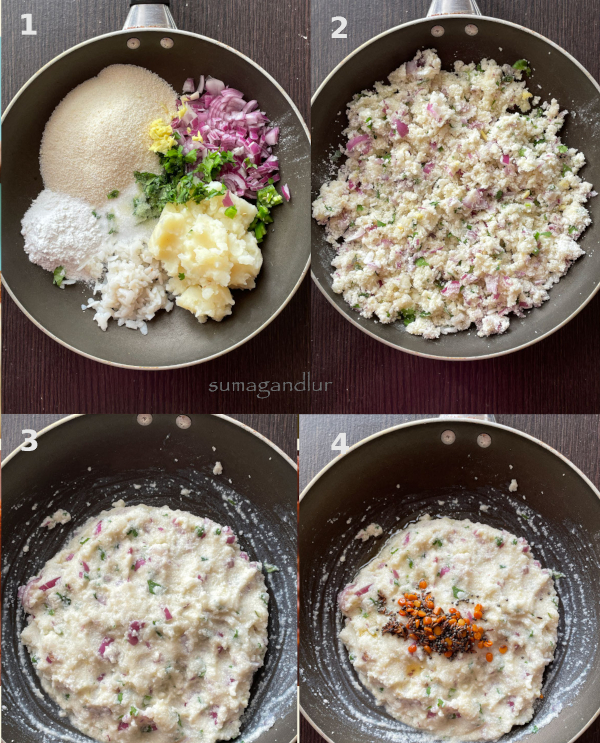
1. Add semolina, rice flour, poha and mashed potato to a bowl. Next add minced onion, cilantro, ginger, chili, and salt to the bowl.
2. Mix all the ingredients well to combine. Make sure that there are no potato lumps in the mixture.
3. Pour 1/2 cup milk to the mixture and stir well to combine. Cover and let the mixture sit for about 15 - 30 minutes. 
4. Add the tempering / tadka to the semolina mixture. Add extra milk if needed at this point and stir well. (I soaked the mixture for about 30 minutes and added extra 1/4 cup milk.)
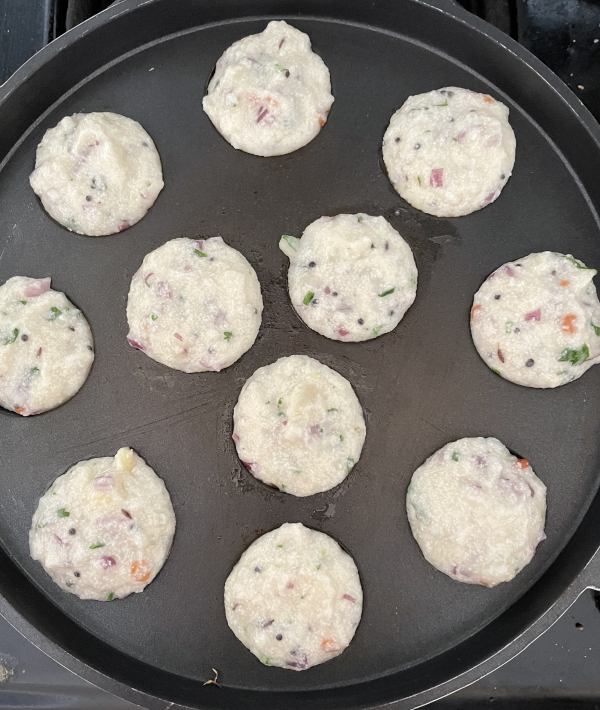
5. Heat the ponganalu / appe skillet and add a few drops of oil in each mold. 
6. Add baking soda or fruit salt to the mixture and mix well vigorously. (I added about a little more than 1/4 tsp. Eno's fruit salt, sprinkled a tbsp. water over it and mixed well.)
7. Fill the molds with batter, cover the skillet with a lid and cook on low medium heat until the batter doesn't appear raw on the surface. Or use a skewer and gently lift to check the bottom to notice if any golden brown spots formed.
8. If golden brown spots are formed, add a drop or two of oil on the surface of each of the ponganalu and flip them using a flat spoon/skewer. 

9. Cook until the other side lightly browns as well. (The appe would be slightly fragile compared to the regular appe because of the addition of potato. Be careful while flipping them and wait until the bottom sides of the appe are cooked well.)
10. Remove them and repeat the process with the remaining batter. Serve them warm with a chutney of your choice.  

This is going to be my contribution to this week's Blogging marathon. Check the page link to see what other marathoners are cooking.
Tuesday, January 4, 2022

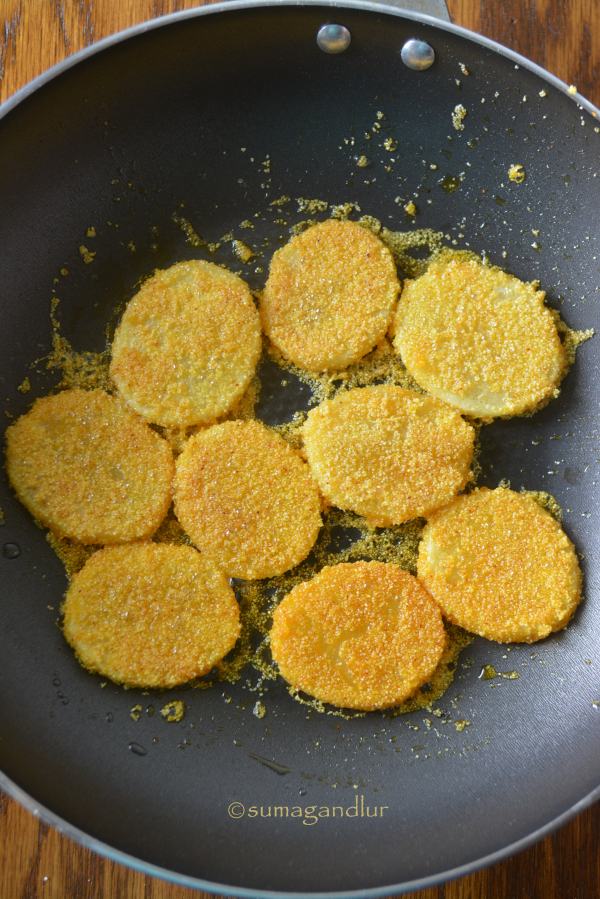
Batata Kaap ~ Shallow Fried, Crispy Potatoes

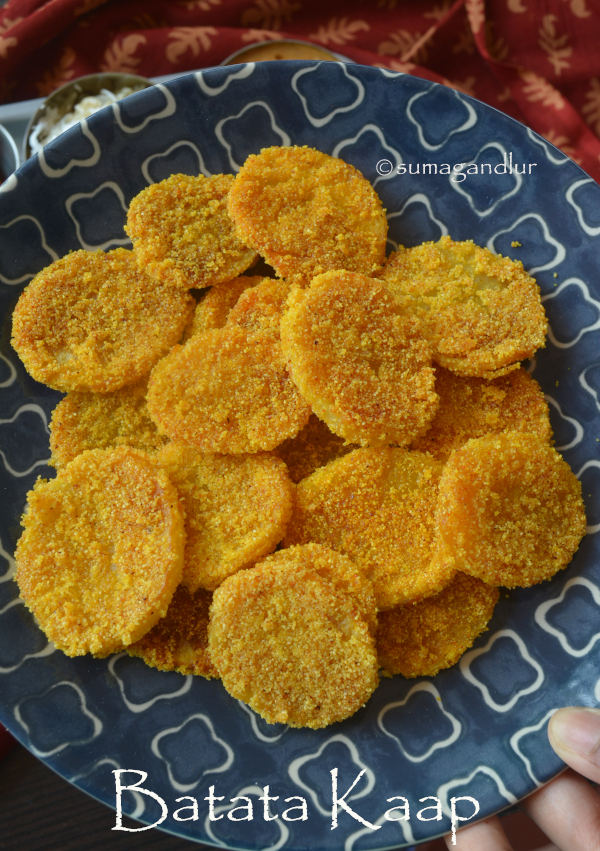
Batata kaap, from Konkan cuisine are semolina coated potato slices that are shallow fried to golden brown. The preparation is a simple and easy one and all one need are some potatoes, semolina and basic spices. They make a delicious, crisp side dish to rice and are a common preparation in Konkani households and I had made it as part of the Goan vegetarian meal. 

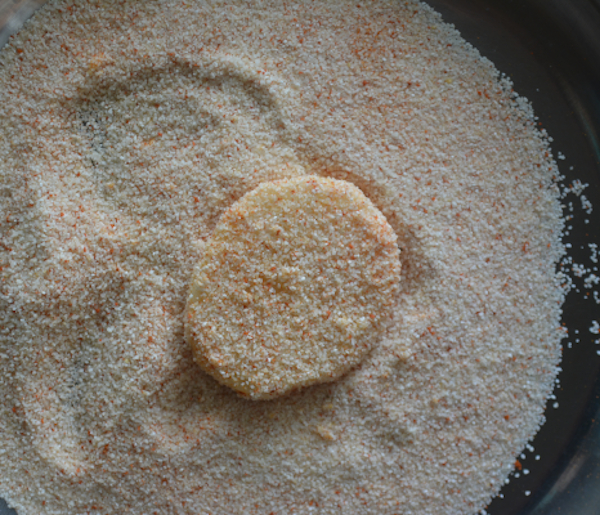
The potatoes are thinly sliced, coated with spices and dipped in semolina. Or semolina and spices are mixed and then the potato slices are dipped in as I have done in this recipe. Rice flour is used in place of semolina in some areas. They are then shallow fried in a pan until the potatoes inside turn soft and the outsides turn crisp, pretty inviting. They are served as a side dish to rice.
Ingredients:
4 potatoes
1/3 cup semolina
1/8 tsp. turmeric powder
Salt to taste
Chili powder to taste
Oil as needed

Directions:
* Peel and slice the potatoes into discs of uniform thickness, about 1/8 inch. Place them in a bowl of water to avoid discoloration.
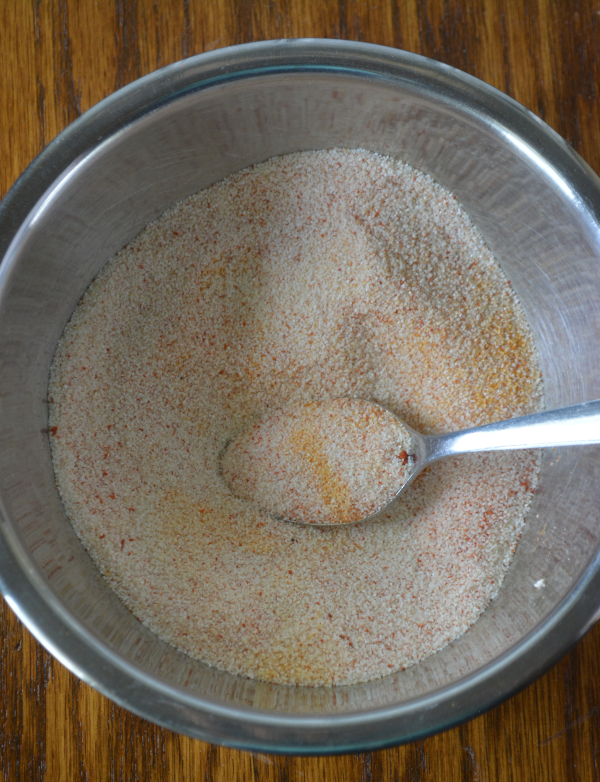
* Combine semolina, salt, turmeric and chili powder in a wide plate. 
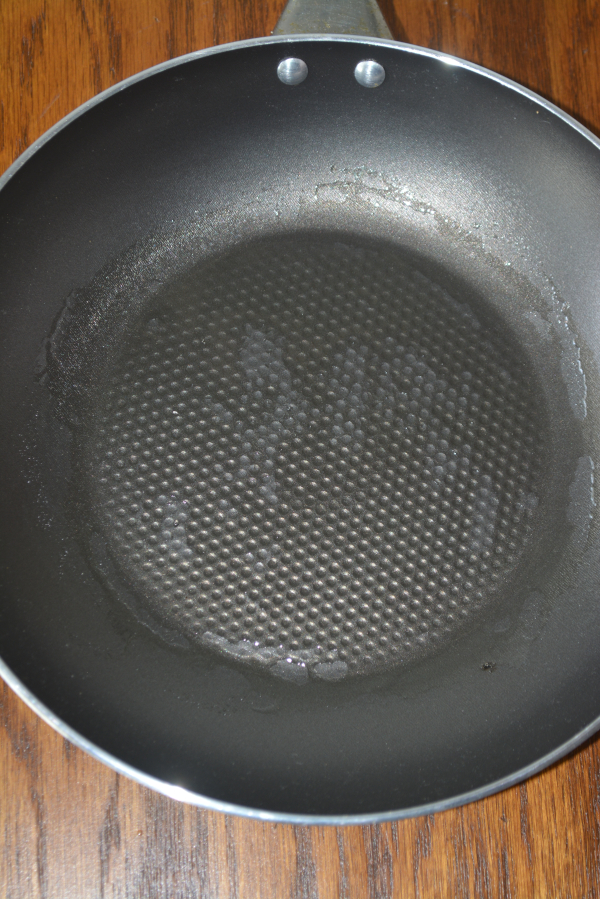
* Heat a non stick pan and brush a tsp. oil so that the whole surface of the pan is coated with oil.
* Pat the potato slices with a napkin so that they are still damp. Dip them in the semolina mixture so that they are coated well on both sides. 
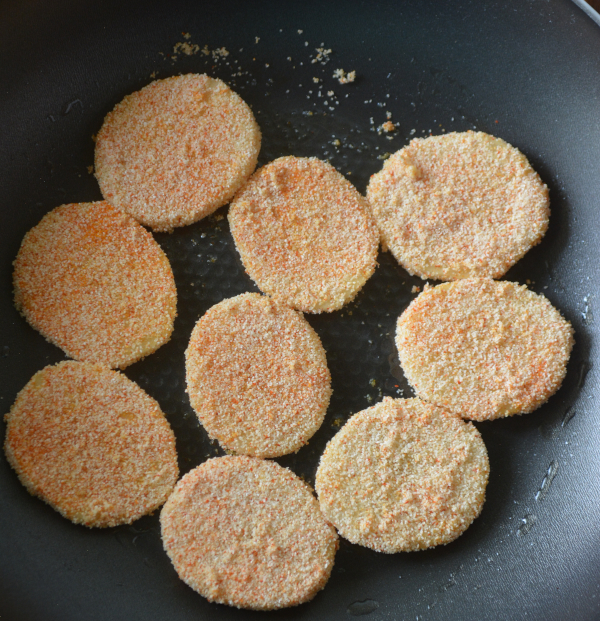
* Place the semolina dipped potato slices without overcrowding.
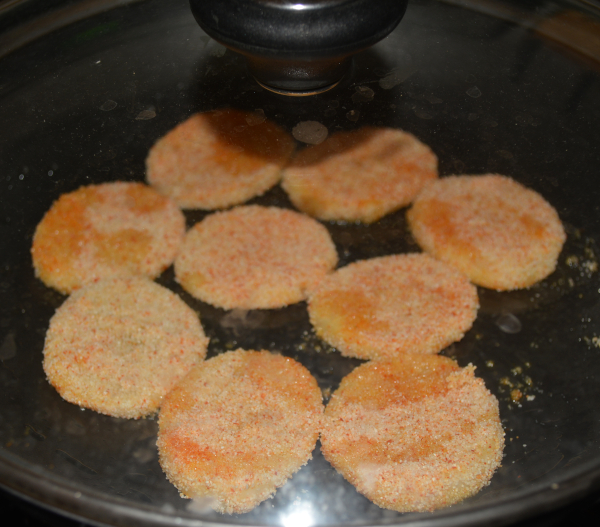
* Cover and cook on low medium flame until the bottom sides turn crisp. Add a tsp. of oil if needed.
* Flip the potato slices, add 1 or 2 tsp. oil and cook until the other sides turn crisp too. (The potatoes need to cook as well while shallow frying and so, don't cook on high heat setting.)
* Remove and repeat the procedure with the remaining potato slices.
This post is an entry for Blogging Marathon and check the link to find out what other marathoners are cooking.
Monday, January 3, 2022

Aloo Thechauni / Aloo Thechwani / Aloo Thichodi

I would like to start the first post of the year by wishing all my readers a happy, healthy and prosperous new year. Let us hope the chaos going around for the past couple of years will come to a stop this year.  
I am going to post three potato based dishes this week and the first one is going to be a curry. Potato curry happens to be a popular side dish to go with breads or rice in Indian cuisine and one can find myriad versions of the same, with regional variations thrown in. Today's curry comes from the Uttarakhand region which is a locally popular one that is usually served along with rice though it can be served with rotis as well. 
Going by the list of ingredients, this pahadi subzi / curry from the Himalayan region seems to be another mundane version of potato curry that gets prepared across homes in India. The dish varies from the other curry preparations in the way how the potatoes are chopped and use of a local variety wild mustard seeds called jakhiya. I was looking for an authentic version of this curry and stumbled upon this recipe from a local girl. Usually onions are sautéed first, followed by tomatoes and then potatoes are cooked in the mixture, adding water. In her recipe, onions, potatoes, and tomatoes are sautéed in that order and water is added at the final stage. 
The interesting part here is one doesn't chop potatoes. The unpeeled potatoes are roughly pounded  into fine pieces, using a suitable tool like pestle, stone or hammer. In fact, the dish gets it name from the word 'theechna' meaning pounding in the local dialect. Potatoes can be replaced with local radish. Of course the potatoes need to be scrubbed before using and any parts that need to be discarded should be peeled. I peeled the potatoes anyway and realized while mashing that it is not that easy when you have big potatoes on hand. Use small potatoes while preparing the dish which makes it suitable for the pounding part.  

Ingredients:
3 potatoes (about 2 cups roughly mashed potatoes)
1 - 2 tbsp. oil
1 tsp. jakhiya / mustard seeds *
1 bay leaf
A pinch of asafoetida
1 tsp. ginger - garlic paste
1 green chili, finely chopped 
1 big sized onion, finely minced
Salt to taste
2 pinches of ground turmeric
1/2 tsp. coriander powder
1/2 tsp. chili powder or to taste
1 big sized tomato, finely chopped
1 cup water
1 /2 tsp. garam masala
* Locally grown wild mustard seeds used in Garhwali cuisine
Directions:
* Scrub the potatoes well and peel any parts that need to be discarded. Pound or mash the potatoes roughly into small pieces using a pestle.  
* Heat oil in a pan and add mustard seeds. When they start to pop, add bay leaf, asafoetida and garlic - ginger paste. Sauté for few seconds and add green chili. Stir for few seconds.
* Next add onion and sauté until onion are cooked and add pounded potatoes. Stir for about a minute. Add salt, turmeric, coriander powder and chili powder to pan and mix well. Cover and cook until potatoes soften. 
* Next add chopped tomato to teh potato pan and mix well once. Again cover and cook until tomatoes are done.
* Next add about a cup of water and bring it to a boil. Add garam masala and cook the mixture about five minutes and turn off the stove. 
* Serve warm with hot steamed rice or rotis.
This post is an entry for Blogging Marathon and check the link to find out what other marathoners are cooking.