HOME        |        ABOUT        |        COPYRIGHT        |        CONTACT        |         RECIPE INDEX        |         INDIAN THAALIS        |         MILLET RECIPES        |        EVENTS' ROUNDUP        

Showing posts with label Tamil Nadu Recipes. Show all posts

Wednesday, January 19, 2022

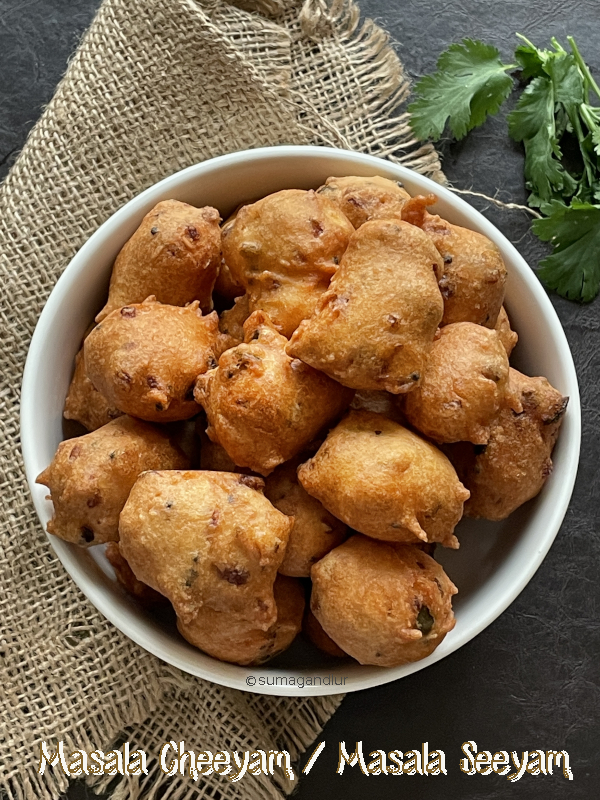
'A - Z' Tamil Nadu Recipe Series ~ C for Chettinad Masala Cheeyam / Masala Seeyam

Southern India is predominantly a rice growing region and the various local cuisines reflect the fact. I did not realize until now that the recipes I planned for this week were all rice based. Akkaravadisal is a sweet rice pudding usually served as an offering to god while brinji is a rice and vegetable based spicy one pot meal. Today's post cheeyam or seeyam is also rice based and is a popular snack from Chettinad cuisine.
 
Chettinad cuisine is perhaps the most well known one among the various regional cuisines of Tamil Nadu, though surprisingly Chettinad / Chettinadu region relatively forms a smaller portion of the state in a geographical sense. It is located mainly in the Sivaganga district and some portion of Pudukottai district. Chettinad is the home of a prosperous banking and business community called Natukottai Chettiars / Nagarathars and in fact, Chettinadu literally means 'Land of Chettiars'.

The Chettiars are known to be traders of salt and spices which is reflected in their cuisine where dishes are made with freshly ground spices. They also use a lot of dried meats and salted vegetables owing to the dry environment of the region. Most of the dishes are either eaten with rice or rice based. The cuisine boasts of both vegetarian and non vegetarian dishes.
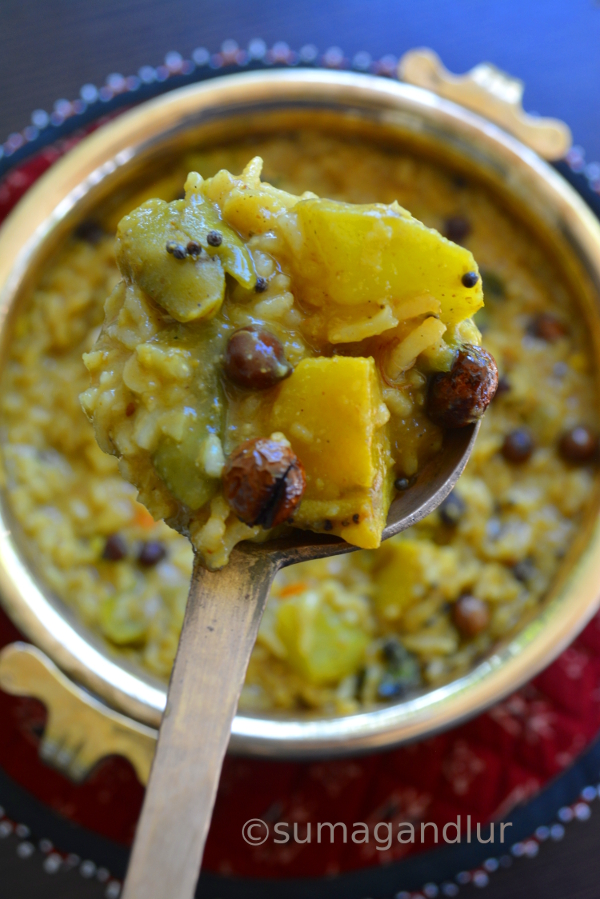
Some of the dishes I have previously tried from Chettinad region are

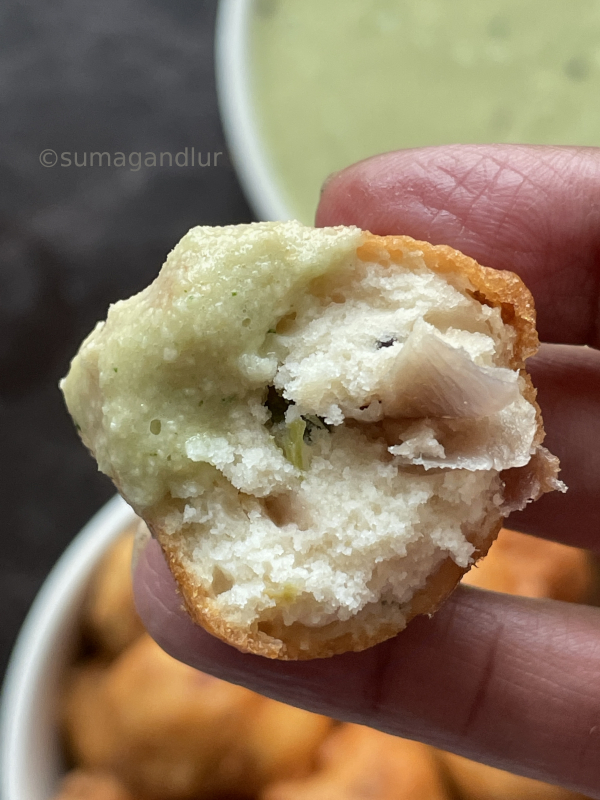
Today's masala cheeyam / masala seeyam also come from Chettinad region as I mentioned above. They are a popular snack from the region, made with a ground batter of rice and skinned black gram. This is a spicy version while there is also a sweet version of seeyam. These delicious fritters make a great evening snack and I read somewhere that people who are fasting also prepare this as an evening meal. 

This spicy version needs advance planning as the rice and black gram needs to be soaked for 2 - 3 hours. Grind the batter fluffy and fine like one does idli batter. Remember not to make it runny. Onions and green chilis are sautéed and added to the batter which add flavor to these fritters though I think the step of sautéing onions can be skipped. Adding raw onions to the batter is not  going to make that of a big difference as they are going to be deep fried anyway.
Ingredients:
1/2 cup rice
1/2 cup skinned black gram / urad dal
Salt to taste
Oil to deep fry 
Ingredients for sautéing:
1 tbsp. oil
1/2 tsp. mustard seeds
1 small sprig of curry leaves, finely minced
1 or 2 green chilies, finely minced
1 medium sized onion, finely minced
2 tbsp. fresh, shredded coconut

Directions:
1. Rinse and soak rice and skinned black gram in water for at least two hours. Drain the water completely after the soaking period.
2. Grind them together into a thick, fluffy batter adding water in small increments. Do not make the batter runny. (Using a grinder would help to use small quantity of water to while grinding. If the batter turns runny, adding a small quantity of rice flour would help but adding too much would turn the cheeyam harder.)
3. Meanwhile, heat a tbsp. oil in a pan and add mustard seeds. When they start to sputter add, green chili and curry leaves. Stir them for few seconds and add onions and salt enough for the onions.
4. Sauté until onion turns translucent and add the coconut. Stir once and turn off the stove.
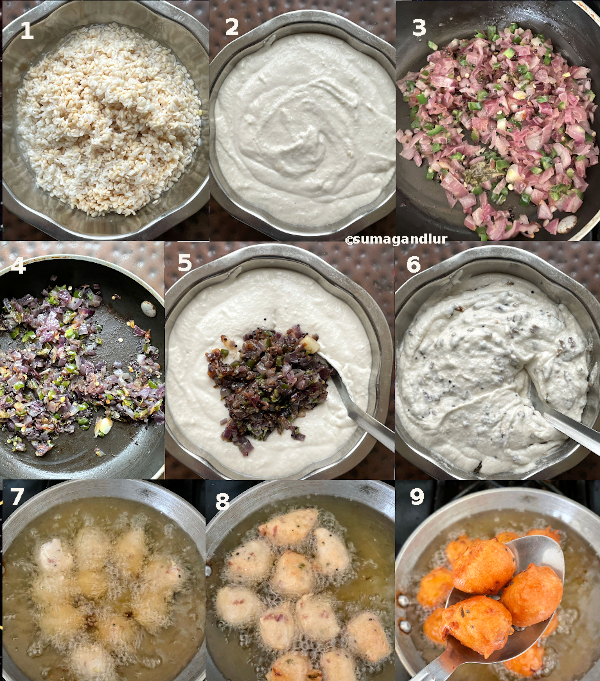
5 & 6. Add the sautéed onions and salt to the batter. (Keep in mind that onions contain salt too). Mix the batter well with a spoon and keep aside.
7. Heat oil for deep frying in a frying pan on medium heat. Drop a pinch of batter to the oil. If it swims to the surface, the oil is ready for frying. If not, heat the oil a little more. Dip your fingers / hand into the batter and shape a small ball. Gently drop into the oil. Repeat the step and drop as many balls as the pan can hold, without overcrowding. (There is no need to fret over the shapes. They don't to be exactly round.)
8. First they sink and soon float to the surface. Keep gently flipping them with a perforated spoon. Lower the heat to low - medium setting and fry until they turn golden brown throughout.
9. Remove them when done and transfer them onto a plate laden with paper towels to absorb the extra grease.
10. Reheat the oil if needed and repeat the steps with the remaining batter.
11. Serve them warm and enjoy with a spicy chutney or some ketchup.

This is going to be my contribution to this week's Blogging marathon, with the theme 'A -Z Series'. Check the page link to see what other marathoners are cooking.


Monday, January 17, 2022

'A- Z' Tamil Nadu Recipe Series ~ A for Akkaravadisal / Akkara Adisal


Starting from this month, I am going to explore one of the flavorful cuisines from the southern parts of India, from Tamil Nadu to be exact. I grew up in a neighboring state and so, I am kind of familiar with and fond of the cuisine. I am doing a vegetarian recipe series in a 'A- Z' style and each month, three recipes from the region are going to be posted. Previously, I have covered two more southern states, mentioned below.

'A - Z' Karnataka Vegetarian Recipe Series

'A' is the alphabet of the day and here are few 'A' dishes from the state. There is the popular breakfast combo, adai - avial which can also be served as a light dinner. Adai are the protein rich crepes made with rice - lentil batter while avial is vegetable based curry in a coconut base. Azhagar kovil dosai are dosa that are served as a prasadam to devotees in a Lord Vishnu Temple located near Madurai. Arisi upma is a spicy breakfast dish made with cream of rice. There is aadi koozh, a healthy porridge made in the month of aadi (around July). 

Here are ammini kozhukattai, steamed and tempered rice balls that make a guilt-free snack. A simple and quick one pot meal from Kongu nadu is arisi paruppu sadam that is prepared with rice and lentils. There is arachuvitta sambhar, a Tambram, lentil and vegetable based side dish made with toasted and ground spices. There is another gravy dish called arai puli kuzhambu. There are arakeerai and avarakkai, amaranth greens and broad beans respectively with which many side dishes are prepared to go with rice. There is aval aka flattened rice that is used to make many dishes such as upma, payasam, laddu, kozhukaatai, etc. Athirasam is a popular and deep fried sweet dish prepared with rice flour and jaggery. Arcot makkan peda is another sweet delicacy. (This is not an extensive list. I have mentioned those off the top of my head.)

And there is a festive dish called akkaravadisal or akkara adisal, with which I am starting this A- Z series. Akkaravadisal is a sweet rice pudding made as an offering to god during auspicious occasions at temples and homes across the state. Akkara means jaggery / sugar in Tamil while the second part vadisal refers to the cooking part, as cooking rice in this instance.

I have made this a few times before and coincidentally had again prepared it a few days back on Sankranthi day. An authentic Iyengar recipe, akkaravadisil sounds similar to sweet pongal or sakkari pongal at first glance. However akkaravadisal is more richer, creamier and delicious since the rice and moong dal mixture is cooked entirely in milk and oodles of ghee also goes into the preparation. 

Akkaravadisal can be prepared in a pressure cooker or in an instant pot, for a short-cut method. The rice, moong dal and milk can also be cooked together in a pot on stovetop until it reaches a creamy consistency. Using a non stick pan avoids the rice sticking to the bottom of the pan and burning. The mixture needs to be frequently stirred and the milk quantity needs to be adjusted as needed. Leaving a ladle in the pan prevents the milk from boiling over.

Using jaggery that is darker in color lends an inviting hue to the dish. Warm the jaggery with water until it melts and strain the mixture if it has impurities. Powdered jaggery can be directly added to the cooked rice at the end and mixed if the jaggery is clean. A portion of jaggery can be replaced by sugar. A large quantity of ghee is added traditionally but can be cut down to a minimum. The rice is cooked in full fat milk for a richer taste but again, it can be cooked in fat-free milk to cut down the calories. A pinch of edible camphor added at the end makes it absolutely divine.

 Akkara vadisal is on a thicker side and the mixture thickens while cooling down. Add milk accordingly. I took these images soon after cooking and it thickened to right consistency after cooling down.

Ingredients: (Yield 4 servings)
1/2 cup rice (I used sona masuri rice.)
2 tbsp. yellow moong dal
3/4 cup powdered jaggery
2 to 2.5 cups of milk
2 - 3 tbsp. ghee
2 tbsp. cashews
1/8 tsp. ground cardamom 

Directions:
* Boil about a cup milk on stove top or in a microwave and let it cool down.
1. Rinse and soak rice and moong dal in water for about 10 minutes and drain.
2. Meanwhile, heat jaggery and about 1/3 cup water in a pan until the jaggery melts. Let it cool a bit and strain the syrup if any impurities are present (I did not have to strain mine.)
3. Heat ghee in a pan and add cashews. Toast them on low flame, stirring continuously until they turn golden brown. (They burn quickly and so keep an eye). Transfer the toasted cashews onto a plate. 
4. To the same ghee pan, add the rice and moong dal mixture and sauté for couple of minutes, on low medium flame. Turn off the stove.
5. Transfer the mixture directly to small pressure cooker or a to steel container that fits into a pressure cooker. Add 1.5 cups milk to the rice mixture. Cook for 6 - 8 whistles and turn off the stove.
6 &7. When the valve pressure is gone, mash the rice-dal mixture well with the back of a ladle.
8. Add the melted jaggery, (boiled and cooled) milk as needed, ground cardamom, toasted cashews with the remaining ghee and mix well with a ladle.
* Serve it warm, as part of a festive meal or as a dessert. 

This is going to be my contribution to this week's Blogging marathon, with the theme 'A -Z Series'. Check the page link to see what other marathoners are cooking.


Sunday, June 3, 2018

Paal Payasam ~ South Indian Milk Pudding


The past month for us marked two birthdays, visits from extended family members and a bout of illness that affected every one at home. After that unplanned month break, I am back in business with a traditional sweet dish from the southern parts of India. Payasam, the south Indian term and kheer, the north Indian name basically refer to the same dish - an eggless sweetened milk pudding cooked on stove top adding either a grain or lentil or vegetable and so on. Milk is the star ingredient in today's payasam where only a tiny quantity of rice is added, similar to the case of a kheer preparation. Usually milk and water are cooked until the quantity is reduced to half here, allowing a slow caramelization that lends the payasam a light cream colored hue. 

To be honest, I have never seen my mother or grand mothers preparing this since this seems to be a typical preparation from Tamil nadu and Kerala. Our go to dish when it comes to traditional payasams in Andhra happens to be paramannam. I am not sure how many modern kitchens still prepare it but it also happens to be a rice based payasam. 
I just went through recipes from online when I tried it for the first time, that were basically the same. One either cooks in a pot that happens to be the traditional aka tedious process or use a pressure cooker which cuts down the cooking time considerably. The short cut method however doesn't compromise in the taste department and so I usually go with it.
Ingredients:
4 cups milk / 1 litre milk
1 tsp. ghee
2 to 3 Tbsp. rice
1/4 cup + 2 tbsp. sugar (or according to taste)
2 cardamom pods
1 tbsp. cashews 


Method:
* Heat the ghee in a small saute pan and fry the cashews if using, to golden brown. Transfer the cashews onto a plate with a slotted spoon. 
* Add rice to the same ghee and fry rice for a couple of minutes on a slow flame. Next pulse the rice a couple of times just to break the grains. There is no need to coarsely grind the rice. 
* Grease inside bottom of the cooker with little ghee and add the broken rice grains and milk to it. Drop a small spoon into the milk to prevent the milk from spilling over while pressure cooked. 
(I usually drop a spoon even when I am boiling the milk in a pot or leave a ladle in the pan to avoid the milk from boiling over.)
* Cook the milk on lowest setting of heat for one whistle. When the pressure subsides, remove the lid and continue to cook on low flame until the milk turns thick and creamy or until the milk coats the back of the ladle.
* Next add the sugar and ground cardamom seeds and continue to cook until the sugar dissolves. Turn off the stove and add the toasted cashews. 
* Serve warm or cold.
bmlogo
This goes to Blogging marathon # 89, under the 'Indian Sweets - Payasams' theme. Check out the page here to read what other marathoners are cooking.

Comments

Saturday, September 10, 2016

A - Z Rice Dishes ~ I for Iyengar Style Kadambam

Today, it's time for kadambam, a traditional rice dish that literally tastes divine. Kadambam, in Tamil can be referred to as a medley of similar things though a strand/garland made with a mixture of aromatic flowers is commonly referred to as so. Here in culinary terms, a kadambam is a medley of rice, lentils and vegetables cooked with flavorful spices, steamed lentil balls and fried sun-dried berries. According to the source recipe, this dish happens to be a specialty of Iyengar community and this is a famous prasadam served in Perumal temples across the state. Though on-set, this kadambam sounds similar to sambhar saadam or kadhamba saadam, it is not the case. A kadambam dish makes use of country vegetables like ash gourd, pumpkin, plantain, flat beans and others. Onion, garlic, cilantro, whole spices like cinnamon & cloves, non-local vegetables like carrot, beans, potatoes are all avoided in this recipe. 

The recipe has a long list of ingredients and comes across as a tedious one though apart from the paruppu urundai preparation which takes a little extra time, the dish is not that difficult to put together. The fried sun dried berries, sundakkai add a nice crunch to the dish and paruppu urundai are an interesting addition..
Source: Here
Ingredients to grind:
1 tsp. oil
3 tbsp. coriander seeds
2 tsp. split chick peas / Bengal gram
2 tsp. black gram / urad dal
1/4 tsp. fenugreek seeds / methi seeds
1/2 tsp. peppercorns
2 dried red chiilies
2 tbsp. grated coconut
1/8 tsp. asafoetida powder
Ingredients for paruppu urundai:
1/2 cup toor dal / lentils
2 dried red chillies
Salt to taste
2 tbsp. oil 
Ingredients for kadambam:
1 tbsp. dry sundakkai
1 cup rice
1/2 cup toor dal
3 cups mixed vegetables cut into big pieces (vegetables like ash gourd, broad beans, cluster beans, pumpkin and plantain)
1 tbsp. black garbanzo beans / kala chana
A lemon sized ball of tamarind
1/8 tsp. turmeric powder
1 tbsp. + 1 tsp. sesame oil
Salt to taste
Ingredients for tempering:
1 tsp. ghee
2 dry red chillies
1/4 tsp. mustard seeds
A sprig of curry leaves

Prep work: 
* Soak black garbanzo beans overnight.
* Soak tamarind in water for about 30 minutes. Extract pulp from the tamarind. 
* Heat a tsp. oil and toast all the ingredients except coconut under the list 'to grind' until light brown. Add coconut next and fry until it changes color. Let cool and grind finely.

Method:
* For paruppu urundai, soak lentils and red chilies in water for an hour. Drain the water and grind to a coarse paste adding salt. Heat oil, add this paste and saute well until the color changes. Shape into big marble sized balls and steam cook until done. Keep them aside.
* Heat a tsp. of ghee and fry sundakkais until dark brown.
* Wash rice and toor dal thoroughly with water and drain. Pressure cook rice, toor dal and black garbanzo adding 3 cups of water. When the valve pressure is gone, remove the lid, mash the cooked mixture well and keep aside.
* Meanwhile, cook vegetables adding about a cup water, a tbsp. of oil and turmeric in a pan, until almost done. Next add tamarind and cook until the raw smell of tamarind leaves. Now add the cooked rice and lentils mixture, paruppu urundai, sundakkais, ground spice powder and salt to the pan. Mix well with a ladle thoroughly so that there are not any lumps. Add any extra water if needed to reach the desired consistency and cook for about another five minutes, stirring frequently.
* Heat a tsp. ghee for tempering in a small pan. Add mustard seeds, red chillies and curry leaves. When the mustard seeds start to splutter, turn off the stove and add this tempering to the above rice, kadambam.
* Finally add a tsp.of raw sesame oil to the kadambam and mix well.
* Serve with papad / wadis.

Recipes so far in A - Z Rice Dishes,
A for Achaari Chole Pulao
B for Bhuna Khichuri
C for Chintapandu Pulihora
D for Dindigul Thalapakatti Veg Biryani
E for Ellorai / Ellotharai  
F for Fodnicha Bhaat 
G for Gongura Pulihora 
H for Hare Moong ki Chaaswaali Khichdi

Check out the Blogging Marathon page for the other Blogging Marathoners doing BM# 68.

Wednesday, September 23, 2015

Kanchipuram Dosa

Event: Blogging Marathon #56
Theme: Breakfast
Country: India

I have been noticing this dosa in the web world for years now but never got around making it though I prepare dosa batter quite frequently. The dosa batter being the prerequisite for the recipe. I kept wondering whether the folks at home would love a spicy version of their beloved dosa and stuck to that apprehension until I tried Kanchipuram idli and Azhagar kovil dosai. Surprisingly the two spicy versions were received well at home and they have become a regular feature in my kitchen.

Most of the Kanchipuram dosa versions I found online were similar and so there was no particular source I can link this recipe to. There seems to be another masala version which has piqued my curiosity and is quite different than the regular masala dosa. Now that is for another time and let's come back to Kanchipuram dosas. If one is used to the regular dosa making, then this recipe would come across as a breeze. The batter used here is similar to the regular version except the addition of yogurt and spices to it. Those subtle changes create altogether a different and yummy version that yields soft, spongy and spicy dosas.

Ingredients:
2 cups rice *
1/2 cup urad dal / black gram
1 tbsp. chana dal /split chick peas
1 tsp. methi / fenugreek seeds
1/2 to 3/4 cup yogurt
Salt to taste
1/4 tsp. turmeric powder
1 to 2 tsp. freshly cracked black pepper
1/8 tsp. asafoetida powder
1 tsp. grated ginger
Oil to make dosas (I use canola oil.)

* I used 1 cup of extra long grain rice and 1 cup of idli rice for this dosa. Any Indian variety rice except Basmati can be used.

Dosa batter preparation:
* Rinse rice, urad dal, chana dal and methi thoroughly and soak them in water for at least 3 to 4 hours. Drain before grinding.
* Grind the ingredients into a smooth, thick batter using water as needed. The batter should be on a very thicker side and not be runny.
* Transfer the batter to a container. Add salt and yogurt to the batter and mix well. The spices too can be added to the batter at this stage but I added them just before making dosas.
(The container should be big enough to allow the increase in volume of the batter during fermentation. If the batter is fermented properly, there will be an increase in the quantity of the batter and so always use a container which can hold more than the ground batter.)
* Cover the batter and allow it to ferment overnight or for at least 8 - 12 hours in a warm place depending upon the climate outside. 
* Add turmeric, black pepper powder, ginger and asafoetida to the fermented batter before making the dosas.

Making dosas:
* Heat a griddle / non stick pan on medium flame until a drop of water dropped beads on it.
* Pour a ladleful of batter on the griddle and with the backside of the ladle, gently shape it into a circle. Don't try to spread the batter thinly since these dosas are on a thicker side. Pour ½ tsp. of oil around the edges of the dosas and cook on medium flame until the lower side turns golden brown. Flip the dosa and cook on the other side too if needed. Remove the dosa with a spatula.
* Repeat the process of dosa making with the remaining batter.
* Serve dosas warm with chutney or a side dish of your choice.
Check out the Blogging Marathon page for the other Blogging Marathoners doing BM# 56

Comments